Industrial Furnace Cooling and Gas System
I. Industry Background: The Heat Challenge and the Vitality of Auxiliary Systems
In the modern industrial landscape, the Industrial Furnace serves as the heart of thermal processing, widely used in metal heat treatment, glass manufacturing, ceramics sintering, and chemical cracking. Whether it is a vacuum furnace for precision parts quenching, a continuous mesh belt furnace, or a gas-fired kiln, these systems share a common characteristic: operation at extreme temperatures. As the industry pushes for higher thermal efficiency and automation under the Industry 4.0 framework, the requirements for equipment safety and stability have become increasingly stringent.
Within the complex architecture of an industrial furnace, beyond the heating elements and control systems, the cooling system and gas protection system act as the critical "lifelines." Components such as furnace walls, electrode holders, fan bearings, and power cabinets require continuous cooling-water circulation to dissipate excess heat. If the cooling water flow is interrupted due to pump failure, pipe blockage, or valve error, the consequences can be immediate and severe: equipment overheating, deformation of furnace chambers, or even catastrophic safety incidents. Similarly, in gas protection systems, the stability of nitrogen, argon, or hydrogen flow directly determines the surface quality of the treated products. Too little flow leads to oxidation; too much leads to waste.
Therefore, achieving real-time, reliable monitoring of cooling water and shielding gas is paramount. Traditional mechanical flow switches (like paddle or piston types) often fail in these environments because their moving parts can easily jam due to rust or scale in the water, or suffer from spring fatigue. This reliability gap has driven the industry toward Thermal Dispersion Flow Switches, which offer a robust, solid-state solution for guarding industrial furnace safety.
II. Technical Analysis: ZINACA Instruments Thermal Flow Switch Mechanism and Application
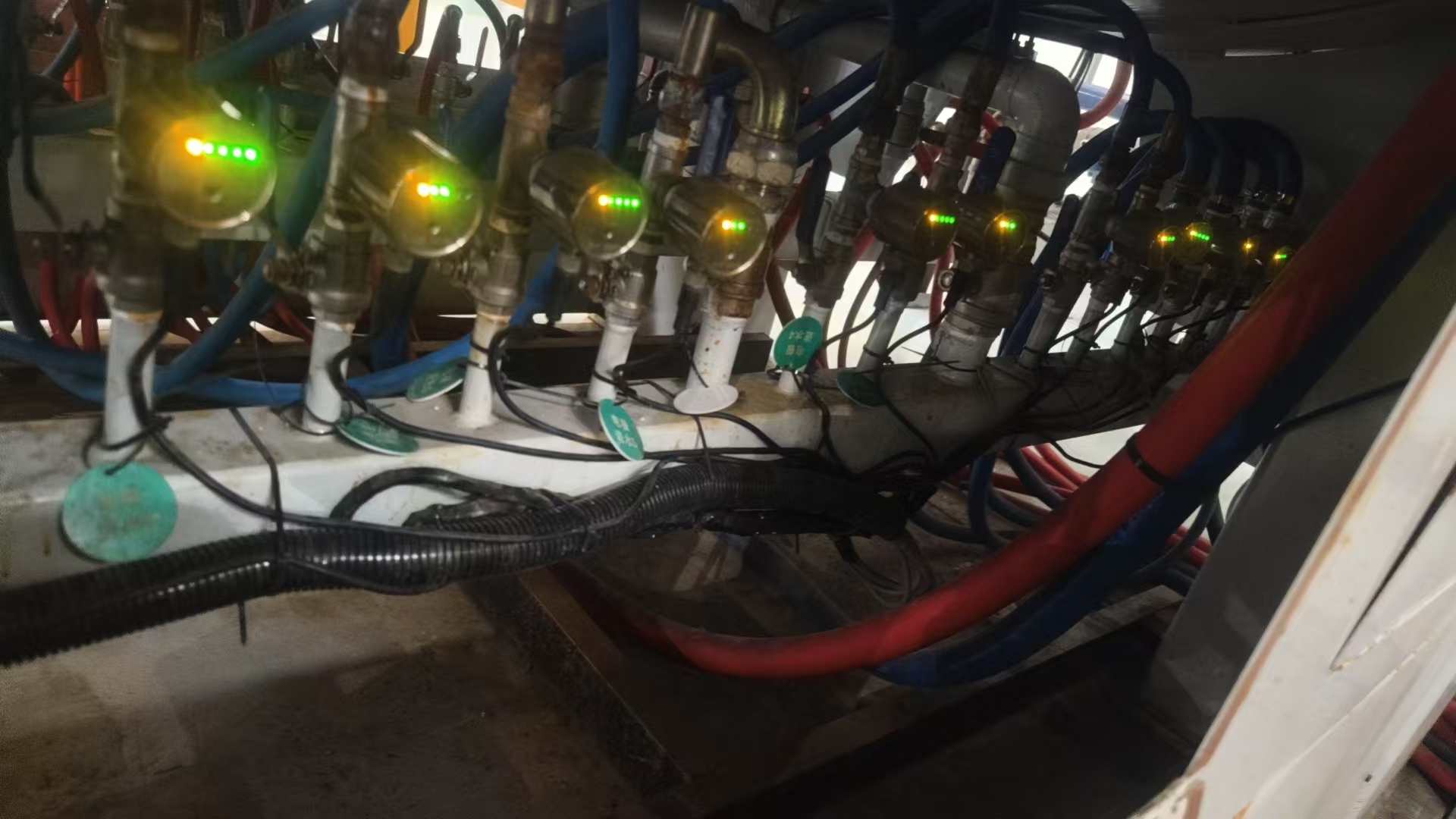
The Thermal Flow Switch operates on the reliable principle of thermal dispersion, eliminating the need for complex mechanical moving parts found in traditional switches. The probe contains two temperature sensors: one measures the medium's temperature, and the other is slightly heated. When fluid flows past the probe, it carries heat away from the heated sensor. The rate at which heat is removed is directly proportional to the flow rate. Our ZINACA Instruments Thermal Flow Switch utilizes this physical law to provide a dependable "flow/no-flow" monitoring solution. In the context of industrial furnaces, our product is primarily applied in two key areas: Cooling Water Monitoring and Gas Shielding Control.
For cooling systems, the switch is installed in the return water pipelines of the furnace jacket, power supply cabinets, or heat exchangers. Since industrial cooling water often contains scale, rust, or suspended particles, mechanical switches are prone to getting stuck. Our thermal switch, having a probe with no moving parts, is immune to jamming. It continuously monitors the flow velocity. If the water flow drops below a critical safety threshold (indicating a blockage or pump failure), the switch triggers a relay output to the PLC or alarm system. This signal allows the control system to shut down the heating elements before overheating occurs, protecting valuable assets like vacuum chambers or electrical components.
For gas protection lines (e.g., Nitrogen or Argon flow), our switch is susceptible to low gas flow velocities. It ensures that the protective atmosphere is present before the heating cycle begins, preventing batch oxidation of workpieces. The compact design and low pressure drop make it an ideal, cost-effective upgrade from rotameters or mechanical switches, providing an automated digital signal rather than relying on visual inspection.
III. Selection Guide: Choosing the Right Product for General Furnace Applications
Selecting the right flow switch for industrial furnaces requires balancing reliability, physical durability, and cost. Since many industrial furnaces operate in environments with varying water quality, the selection process should focus on longevity and mechanical stability.
First, prioritize "No Moving Parts" technology for reliability. The most common failure mode in furnace cooling systems is the jamming of paddle switches due to water impurities. A thermal flow switch solves this fundamental problem. When selecting a product, ensure the probe design is streamlined to prevent sediment buildup.
Second, consider Material Compatibility and Water Quality. Cooling water pipes often rust over time. A reliable thermal flow switch should feature a probe made of high-quality 316L stainless steel to resist corrosion and ensure long-term heat transfer efficiency. For general industrial water, this material provides excellent durability against rust and minor chemical additives.
Third, look for Stability and Temperature Compensation. Cooling water temperatures can fluctuate significantly between startup and steady-state operation. A quality thermal flow switch includes internal temperature compensation to ensure that the alarm point remains stable regardless of whether the water is 20°C or 50°C. This prevents false alarms caused solely by temperature changes rather than actual flow loss.
Finally, consider the Ease of Installation and Economy. For auxiliary cooling circuits where high-end, expensive metering is not required, an economic thermal switch is the best choice. Look for models with indicators on the housing, which allow maintenance personnel to visually verify flow status (Green for Go, Red for Stop) directly at the pipe, simplifying troubleshooting.
IV. About ZINACA Instruments: Focused on Reliable and Economic Fluid Sensing
ZINACA Instruments is a high-tech enterprise dedicated to the research, development, and manufacturing of industrial process instrumentation. We understand that for the vast majority of industrial furnace applications—ranging from heat treatment to sintering—the primary need is a reliable, "install-and-forget" safety device that fits within a reasonable budget. We have moved beyond the limitations of mechanical switches to provide a modern, solid-state solution.
Our Economic Thermal Flow Switch series is designed to be the workhorse of the industry. We utilize high-stability sensing elements and robust 316L stainless steel probes to ensure physical durability in harsh industrial water. Unlike mechanical switches that wear out, our electronic solution offers a long service life with minimal maintenance.
Quality is central to our manufacturing process. Although designed as an economic solution, we do not cut corners on essential verification. Every ZINACA flow switch undergoes rigorous Pressure Testing to ensure seal integrity and Long-Term Aging Tests to guarantee electronic stability before shipment. We also perform wet-flow calibration to ensure the setpoint accuracy meets industrial standards. Our products have been successfully deployed in cooling systems for vacuum furnaces, mesh belt furnaces, and gas-fired kilns, helping customers upgrade from mechanical paddles to digital monitoring. Choose ZINACA Instruments for a pragmatic, durable, and cost-effective solution to secure your industrial cooling and gas lines.
 WhatsApp
 Email
Email
 +8617320288925