What Is an RTD Temperature Sensor?
An RTD (Resistance Temperature Detector) is a temperature sensor that measures temperature through the predictable change in electrical resistance of a sensing element. Platinum RTDs, including Pt100 and Pt1000 sensors, are widely used for industrial temperature measurement because of their accuracy, repeatability and long-term stability.
ZINACA offers industrial assembly RTDs, armored RTDs and sanitary RTD temperature sensors for different process conditions. These sensors are used in chemical processing, power generation, industrial machinery, food and beverage production, pharmaceutical equipment and automated temperature monitoring systems.
Explore the products below to compare available designs. Important selection factors include RTD element type, accuracy class, temperature range, 2-wire, 3-wire or 4-wire configuration, sheath material, probe diameter, insertion length and process connection.
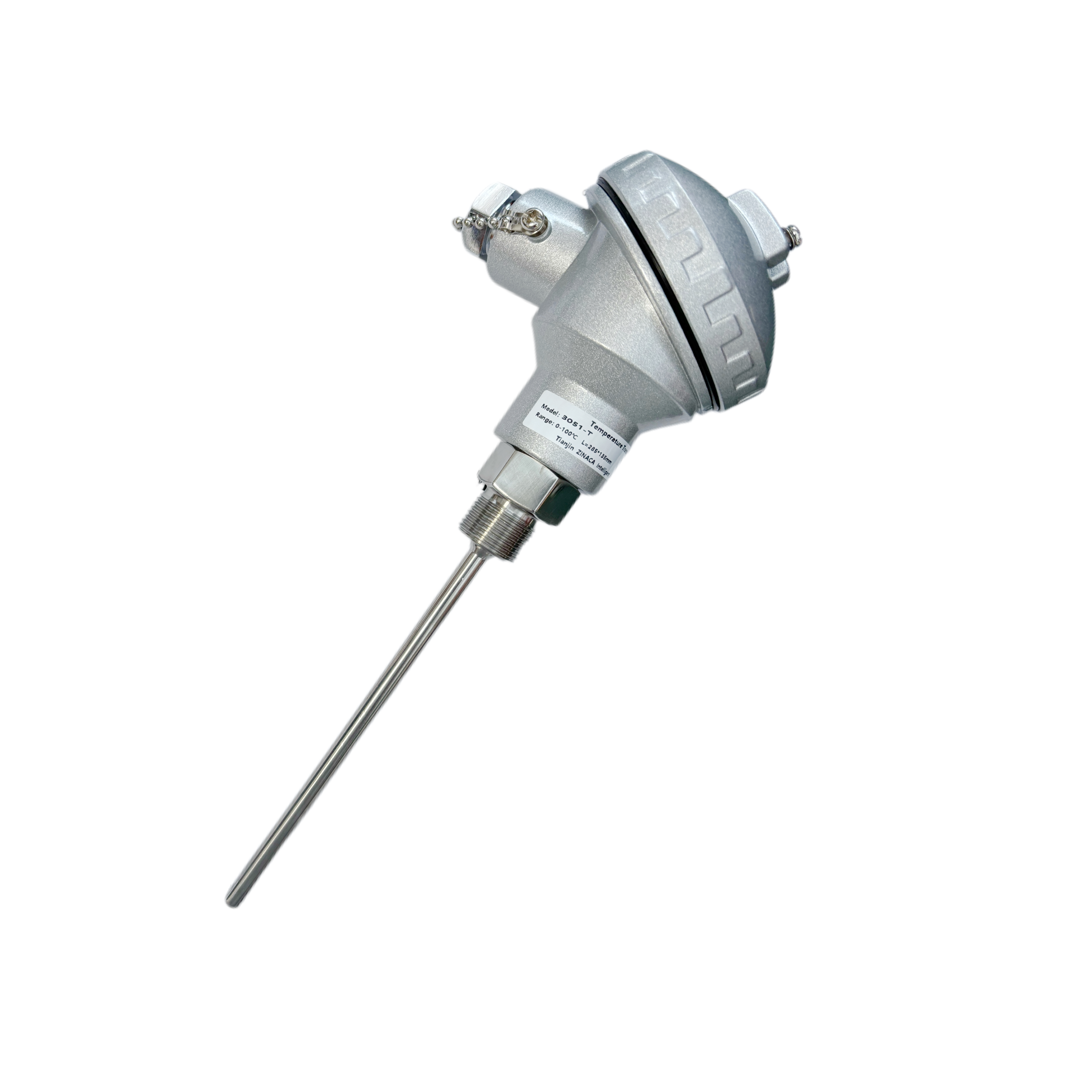
Industrial Assembly RTD
The Industrial Assembly RTDs are precision sensors used with display instruments and computer systems to measure temperatures of liquids, steam, gases, and solids.
Read More Get A Quote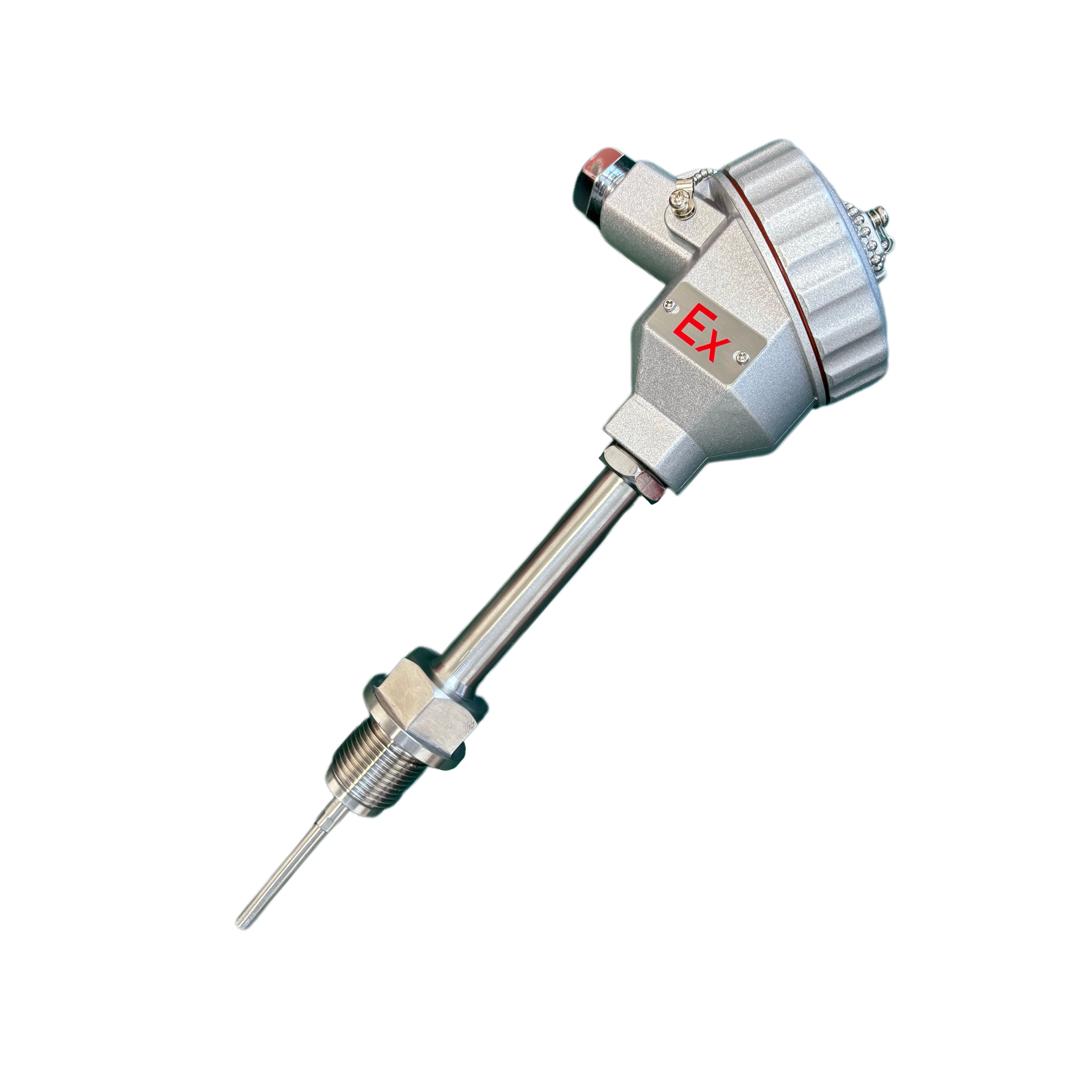
Armored RTD
The Armored RTD is a compact, durable, and precise temperature sensor for harsh industrial environments.
Read More Get A Quote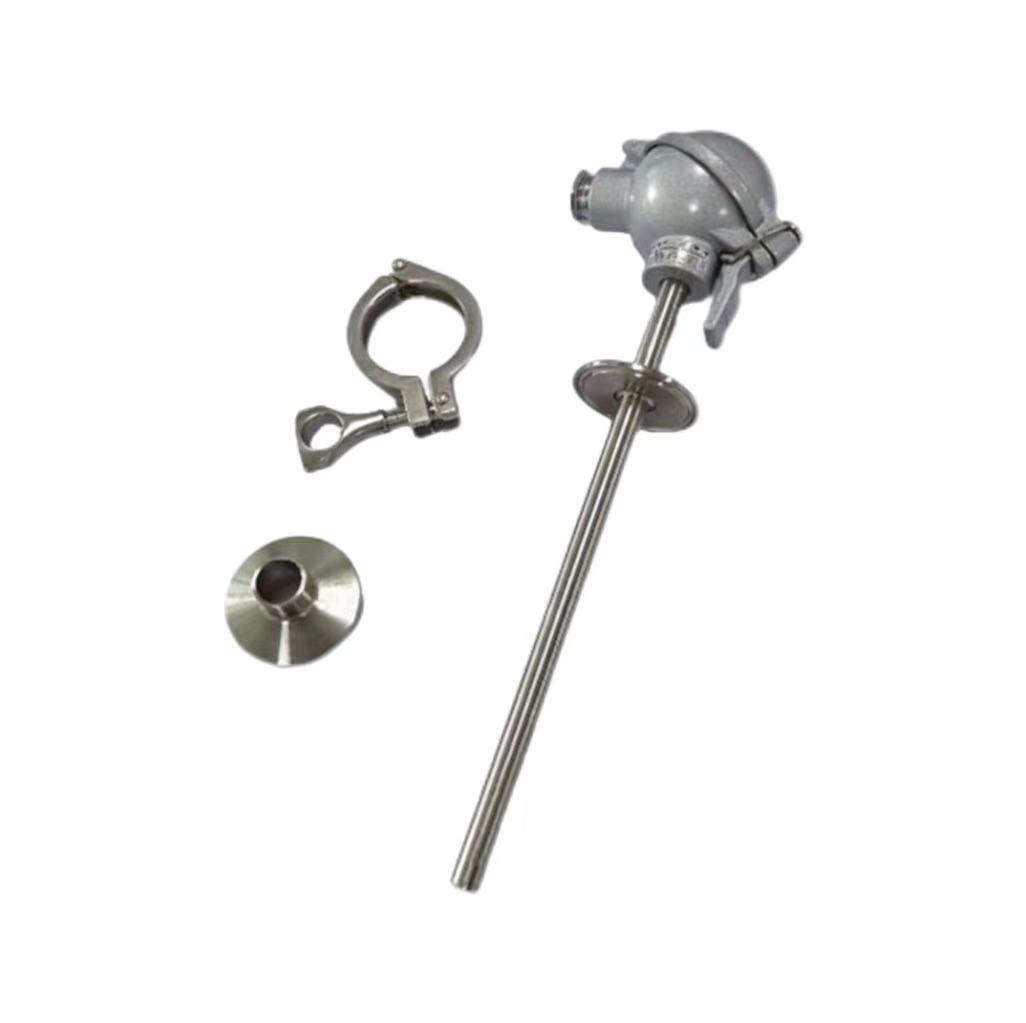
Sanitary RTD
The Sanitary RTD Temperature Sensor is a temperature measuring instrument specifically designed for environments with high cleanliness and strict hygiene requirements.
Read More Get A Quote
How to Choose an Industrial RTD Temperature Sensor
Selecting the right industrial RTD temperature sensor requires matching the sensing element, temperature range, wiring configuration and mechanical construction to the application. RTDs are commonly selected for processes requiring accurate and stable temperature measurement.
Before choosing a Pt100 or Pt1000 RTD, engineers and purchasing teams should consider the following technical requirements:
RTD element type: Select Pt100, Pt1000 or another supported resistance element according to the measuring instrument and application.
Temperature range: Confirm normal and maximum operating temperatures. The allowable range depends on the sensing element, insulation, sheath material and complete assembly.
Accuracy class: Specify Class AA, A, B or another supported tolerance class according to the measurement requirements and applicable temperature range.
Wiring configuration: Choose a 2-wire, 3-wire or 4-wire RTD compatible with the temperature indicator, transmitter or PLC input module.
Probe dimensions: Confirm the sheath diameter, insertion length, overall length and installation clearance.
Sheath material: Select stainless steel or another suitable protective material according to process temperature, corrosion and mechanical conditions.
Process connection: Confirm the required thread, flange, compression fitting or sanitary Tri-Clamp connection.
Electrical connection: Specify a terminal head, connector, extension cable or integrated temperature transmitter where applicable.
Compare ZINACA Industrial RTD Temperature Sensors
ZINACA provides industrial RTD temperature sensors for general process measurement, compact machinery and hygienic processing applications. The following three product designs offer different installation and protection options.
1. Industrial Assembly RTD
The Industrial Assembly RTD is designed for temperature measurement in industrial pipelines, vessels, machinery and process equipment.
The series offers platinum resistance elements and selected copper resistance elements. Available platinum sensor types include Pt100, Pt500 and Pt1000, depending on the required configuration.
The assembly generally consists of a temperature sensing element, protective tube, insulation, electrical terminals and a suitable connection head.
Different protective tube materials, sensor lengths and process connections can be selected according to the operating conditions.
Typical applications: Chemical plants, petrochemical facilities, power generation, heat exchangers, industrial machinery and process pipelines.
2. Armored RTD Temperature Sensor
The Armored RTD is a compact resistance temperature sensor designed for applications requiring mechanical protection, smaller probe diameters or flexible installation arrangements.
The sensing element is protected by a metal sheath with insulating material. Available sheath materials include selected stainless steel grades, depending on the product configuration.
Compared with conventional assembled RTDs, an armored design can be suitable for restricted installation spaces, equipment vibration and applications requiring compact sensing probes.
Probe diameter, bending radius, temperature rating and sheath compatibility must be confirmed for the selected sensor.
Typical applications: Industrial machinery, compact equipment, heat exchangers, process control systems and temperature monitoring in restricted spaces.
3. Sanitary RTD Temperature Sensor
The Sanitary RTD Temperature Sensor is designed for temperature measurement in food, beverage, pharmaceutical and other hygienic processing applications.
The product series supports Pt100 and Pt1000 elements, stainless steel protective components and sanitary Tri-Clamp process connections.
Available wetted materials include 304 and 316L stainless steel, with different sensor diameters and sanitary connection sizes according to the selected configuration.
A suitable temperature transmitter can be integrated where a 4-20 mA signal is required for remote monitoring.
The required surface finish, cleaning conditions, sealing materials and applicable hygienic compliance must be confirmed for the specific installation.
Typical applications: Dairy production, beverage processing, fermentation systems, pharmaceutical equipment and sanitary process pipelines.
Pt100 vs. Pt1000 RTD: What Is the Difference?
Pt100 and Pt1000 are two commonly used platinum resistance temperature detector types. Both measure temperature through changes in electrical resistance.
Pt100 Temperature Sensor
A Pt100 sensor has a nominal resistance of 100 ohms at 0 degrees Celsius. It is widely used in industrial temperature measurement and is compatible with many temperature transmitters, indicators and process control systems.
Pt100 elements are available in different tolerance classes and wiring arrangements for industrial measurement.
Pt1000 Temperature Sensor
A Pt1000 sensor has a nominal resistance of 1000 ohms at 0 degrees Celsius.
Because of its higher nominal resistance, lead-wire resistance generally represents a smaller proportion of the measured resistance compared with a Pt100 sensor.
Pt1000 sensors are used in compatible industrial electronics, HVAC systems, machinery and temperature measurement applications.
Selection note: Neither sensor type is universally more accurate. The actual performance depends on tolerance class, wiring, signal conditioning, calibration and installation conditions.
2-Wire vs. 3-Wire vs. 4-Wire RTD Sensors
RTD sensors can be connected using different wiring configurations. The number of wires affects how the measuring instrument compensates for lead-wire resistance.
2-Wire RTD
A 2-wire RTD uses two conductors to connect the sensing element to the measuring instrument.
This configuration is simple and economical, but the resistance of the connecting wires contributes to the measured resistance and can introduce temperature measurement error.
It may be suitable for short cable distances or applications with less demanding accuracy requirements.
3-Wire RTD
A 3-wire RTD uses an additional conductor to allow a compatible measuring instrument to compensate for lead-wire resistance.
This arrangement is widely used in industrial temperature measurement because it offers a practical balance between wiring cost and measurement accuracy.
Compensation accuracy depends on the wiring arrangement and the similarity of the lead resistances.
4-Wire RTD
A 4-wire RTD uses separate current-carrying and voltage-sensing connections, allowing a compatible instrument to minimize errors caused by lead resistance.
This arrangement is often selected for laboratory measurement, calibration and industrial applications requiring higher measurement accuracy.
Important: The RTD wiring configuration must match the temperature transmitter, indicator or PLC input module.
RTD Accuracy Classes and Temperature Measurement
Industrial platinum RTDs are available in different tolerance classes, including Class AA, Class A and Class B, according to applicable sensor specifications.
The tolerance class defines permitted deviation between the actual sensor characteristics and the specified reference relationship over a defined temperature range.
Class AA: A tighter tolerance class for supported measurement ranges and compatible sensing elements.
Class A: Commonly selected where tighter temperature measurement tolerance is required.
Class B: Frequently used for general industrial process temperature measurement.
The specified sensor tolerance does not represent the total accuracy of an installed temperature measurement system. Transmitter accuracy, wiring, thermowell design and process installation may introduce additional measurement errors.
The available tolerance class and corresponding operating temperature range should be confirmed for the selected ZINACA RTD model.
RTD vs. Thermocouple: Which Temperature Sensor Should You Choose?
RTDs and thermocouples are both widely used for industrial temperature measurement, but they operate according to different physical principles.
RTD: Measures temperature through changes in electrical resistance. Platinum RTDs are commonly selected for good repeatability and stability within their specified operating range.
Thermocouple: Produces a small thermoelectric voltage related to a temperature difference. Thermocouples are frequently selected for high-temperature industrial processes.
Signal requirements: RTDs require resistance measurement and suitable lead compensation, while thermocouples require thermoelectric voltage measurement and reference junction compensation.
Application: Select the sensor according to process temperature, required accuracy, response time, mechanical construction and operating environment.
For high-temperature or specialized furnace measurement, explore our Industrial Thermocouples.
Typical Industrial Applications of RTD Temperature Sensors
Chemical and Petrochemical Processing
RTD sensors are used to monitor temperatures in pipelines, reactors, storage vessels and heat exchangers. Appropriate sheath materials and process connections must be selected for the measured medium.
Food and Beverage Production
Sanitary RTDs provide temperature measurement for compatible food and beverage equipment, including mixing, heating, cooling and fermentation processes.
For hygienic applications, the complete installation must meet the required material, surface finish, sealing and cleaning conditions.
Power Generation and Energy Equipment
Industrial RTDs can monitor cooling water, lubricating oil, heat exchangers and suitable auxiliary equipment. Sensor protection and mounting requirements depend on operating pressure, temperature and mechanical conditions.
HVAC and Environmental Systems
Pt100 and Pt1000 sensors are used in compatible HVAC systems, environmental chambers and temperature-controlled equipment where stable temperature monitoring is required.
Industrial Machinery and OEM Equipment
Armored and compact RTD assemblies can be integrated into automated machinery, industrial processing equipment and OEM temperature measurement systems.
Probe dimensions, vibration resistance, electrical connection and maintenance access should be considered during installation.
Can an RTD Sensor Provide a 4-20 mA Output?
A conventional RTD sensing element does not generate a 4-20 mA signal directly. Its electrical resistance changes with temperature.
When a PLC, DCS or monitoring system requires a 4-20 mA input, the RTD can be connected to a compatible temperature transmitter.
The transmitter measures the resistance signal and converts it into a standardized analog output corresponding to the configured temperature range.
For applications requiring integrated or separately mounted signal conversion, explore our Industrial Temperature Transmitters.
Industrial RTD OEM and Customization
ZINACA provides OEM and ODM options for applicable industrial RTD temperature sensor products.
Depending on the selected model and technical feasibility, customization options may include:
Pt100, Pt1000 or other supported RTD elements
Temperature measurement and accuracy requirements
2-wire, 3-wire and 4-wire configurations
Custom probe diameter and insertion length
Stainless steel sheath and protective tube materials
Threaded, flanged or sanitary process connections
Terminal heads, connectors and extension cables
Integrated transmitter options for compatible models
Private labeling and OEM packaging
Please provide your technical requirements and estimated order quantity so our team can evaluate suitable configurations.
What Information Is Needed for an RTD Sensor RFQ?
For accurate selection and quotation, please provide the following information:
RTD element type: Pt100, Pt1000 or other specification
Required measuring temperature range
Accuracy or tolerance class
2-wire, 3-wire or 4-wire configuration
Measured medium and operating conditions
Probe diameter, length and sheath material
Process connection and installation method
Cable length, connector or terminal head
Required output, including transmitter integration if needed
Quantity and destination country
Industrial RTD Temperature Sensor FAQs
What does RTD stand for?
RTD stands for Resistance Temperature Detector. It measures temperature through the change in electrical resistance of a sensing element, commonly platinum.
What is the difference between Pt100 and Pt1000?
A Pt100 has a nominal resistance of 100 ohms at 0 degrees Celsius, while a Pt1000 has a nominal resistance of 1000 ohms at the same temperature. The choice depends on instrument compatibility, wiring conditions and measurement requirements.
Is a 3-wire RTD better than a 2-wire RTD?
A 3-wire RTD can reduce measurement error caused by lead-wire resistance when connected to a compatible instrument. A 2-wire RTD is simpler but includes lead resistance in the measurement.
Can a Pt100 RTD connect directly to a PLC?
Yes, if the PLC has a compatible RTD input module. Otherwise, a temperature transmitter can convert the resistance signal into an appropriate analog or digital signal.
Which RTD is suitable for food processing?
Sanitary RTDs with suitable stainless steel construction and hygienic process connections may be selected for food and beverage systems. Material compatibility, sealing, surface finish and cleaning requirements must be confirmed.
Can ZINACA manufacture customized RTD sensors?
ZINACA supports OEM and ODM requirements for applicable RTD products. Customization may include sensing element, accuracy class, wiring, probe dimensions, sheath material, connection type and product branding.
Request an Industrial RTD Temperature Sensor Quotation
Looking for Pt100 or Pt1000 temperature sensors for industrial machinery, chemical processes, HVAC systems or sanitary equipment?
ZINACA Instruments offers industrial assembly, armored and sanitary RTD temperature sensors with configurable installation and electrical options.
Send us your temperature range, RTD element, accuracy class, wiring configuration, probe dimensions, process connection and required quantity. Our team will review suitable product configurations and prepare a quotation.
Contact ZINACA Instrumentsor emailsales@zinacainstruments.com.
 WhatsApp
 Email
 +8617320288925