Sealed Oil Tank
I. Industry Background: The Rise of Sealed Storage and the Safety Redline of Petrochemical Operations
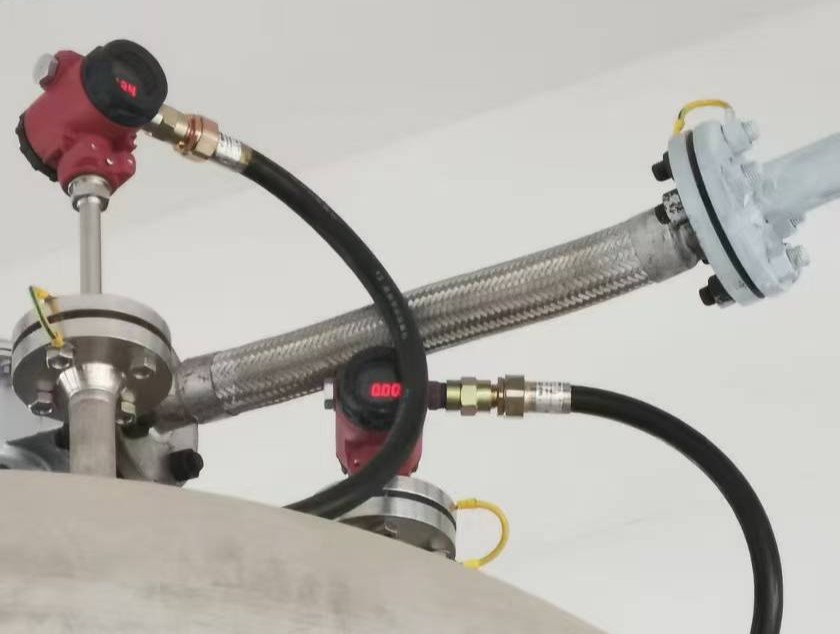
In the vast landscape of the global energy sector—spanning oil and gas extraction, refinery storage, refined product transfer stations, and liquefied gas logistics—the oil tank is the core vessel for both transit and long-term storage. In recent years, driven by increasingly stringent global safety standards and environmental regulations, the traditional open-top or semi-sealed storage methods have rapidly transitioned toward high-efficiency, environmentally friendly "Sealed Oil Tank Systems." The core logic of this sealed transformation is twofold: first, to significantly reduce the emission of Volatile Organic Compounds (VOCs), thereby preventing the loss of expensive oil and gas resources; and second, to isolate the internal environment from external oxygen, effectively minimizing the risk of internal combustion or explosion. However, while sealed systems solve environmental and resource-loss problems, they simultaneously impose extremely high technical demands on the monitoring of internal conditions. Within a closed vessel, even minute fluctuations in pressure and temperature are directly linked to the structural integrity of the tank and the safety of the entire facility and surrounding communities.
Petroleum and its derivatives are characterized by high volatility and extreme flammability. In a sealed oil tank, the "vapor space" above the liquid level undergoes constant pressure oscillations caused by ambient temperature changes (the "breathing" effect), liquid level fluctuations during loading or unloading, and the regulatory actions of Nitrogen Blanketing systems. If the internal pressure rises too high, it may cause irreversible deformation or even a catastrophic physical rupture of the tank shell. Conversely, if the pressure drops too low, creating a vacuum, it could lead to the collapse (implosion) of the tank or allow external air to seep in, forming a highly explosive mixture. Simultaneously, temperature monitoring is not only the baseline for operational safety but also the core metric for precision in trade custody transfer. Because oil has a significant thermal expansion coefficient, a temperature variation of just 1°C can lead to a volume discrepancy equivalent to several tons of crude oil. Therefore, in the high-risk zones of the petrochemical industry, the application of temperature and pressure transmitters with rigorous Flameproof (Ex d) certification has become the primary requirement for digital transformation and safety upgrades. These instruments must not only possess high-precision sensing capabilities but also ensure that their own enclosures act as a definitive barrier, preventing any internal electrical fault from becoming an ignition source for the surrounding explosive atmosphere.
II. Technical Implementation: The Multidimensional Application of Flameproof Pressure and Temperature Transmitters
In the automation and monitoring schemes for sealed oil tanks, ZINACA Instruments’ Flameproof Pressure Transmitters and Flameproof Temperature Transmitters typically operate as a "collaborative pair," working in tandem to create a precise digital model of the tank's physical state. The pressure transmitter in a sealed tank environment carries a dual mission. The first is the real-time monitoring of tank top pressure. These transmitters are generally installed on the oil-gas recovery lines or near the breather valve interfaces. By sensing micro-changes in pressure, they control the logic of the Nitrogen Blanketing system. When the internal pressure rises due to solar heating, the transmitter’s signal triggers the control system to open the recovery or vent valves. When the liquid level drops, creating a vacuum trend, the transmitter triggers the injection of nitrogen. Because our transmitters utilize a heavy-duty Ex d Flameproof enclosure, even if a short circuit or spark occurs within the internal circuitry, the thick cast aluminum or stainless steel housing is designed to contain the explosion internally. The precision-engineered flame paths at the housing joints cool the escaping gases, ensuring that the external vapor-rich environment remains absolutely safe.
The second critical application for the pressure transmitter is level measurement based on the hydrostatic principle. By installing a flameproof pressure transmitter at the bottom of the tank, the device senses the pressure generated by the liquid column. Based on the known density of the oil, the system calculates the liquid height with extreme precision. This is vital for preventing overfill accidents and achieving automated inventory management. Meanwhile, the flameproof temperature transmitter acts as the "quality and safety inspector." In large sealed tanks, oil often exhibits thermal stratification, where temperature differences between the bottom cold layer and the top heated layer are significant. Our flameproof temperature transmitters typically employ a multi-point insertion structure or work within heavy-duty thermowells. These units encapsulate high-precision sensing elements, such as Platinum Resistance Detectors (Pt100), within a pressure-resistant probe connected to a flameproof junction box that outputs a standard 4-20mA signal. From a safety perspective, it provides real-time warnings of abnormal temperature rises caused by internal chemical reactions or external heat sources. From a business perspective, it allows for "Standard Volume" compensation, eliminating financial discrepancies in trade caused by thermal expansion.
The advantage of this Ex d Flameproof protection lies not only in its safety rating but also in its mechanical robustness. Unlike other forms of explosion protection, flameproof instruments do not require complex intrinsically safe barriers (Zener barriers) in the control room for certain configurations. They can be connected directly via flameproof conduits or armored cables, making installation more straightforward while providing a physical "armor" against external impacts. In the high-concentration oil-gas environments found around sealed tanks, this combination of physical isolation and high-precision electronic sensing provides a 24/7, high-intensity safety net. Whether in the sub-zero temperatures of arctic storage or the intense UV radiation and heat of tropical tank farms, ZINACA’s flameproof instruments ensure that data transmission is always performed under the premise of physical security.
III. The Art of Selection: Choosing Reliable Flameproof Instruments for Sealed Tank Environments
The complexity of sealed oil tank conditions dictates that the selection of transmitters cannot rely solely on a comparison of basic pressure ranges. It requires a deep evaluation of performance across chemical corrosion, extreme climates, and long-term operational stability. A "reliable" flameproof instrument must be impeccable in its explosion-proof structural integrity, material compatibility, and environmental adaptability. For petrochemical users, every detail in the selection process directly impacts future maintenance frequency and the overall safety coefficient of the facility.
First and foremost, the Certification Level and Housing Craftsmanship are the lifelines of selection. In sealed tank areas, users must strictly verify that the transmitters hold valid Flameproof (Ex d) certifications. For environments containing highly penetrative gases like hydrogen or ethylene, selecting an Ex d IIC T6 rating is the industry standard. The T6 rating signifies that the transmitter's maximum surface temperature is strictly limited to below 85°C, which is significantly lower than the auto-ignition temperature of almost all volatile petroleum gases. Furthermore, the material and anti-corrosion treatment of the flameproof housing should be scrutinized. In coastal tank farms or environments with high concentrations of hydrogen sulfide (H2S), 316L stainless steel flameproof housings should be prioritized to prevent sea mist or acidic gases from eroding the sealed flame-path surfaces, which could compromise the explosion-proof integrity.
Secondly, the Chemical Stability of the Sensor Diaphragm determines the accuracy and lifespan of the measurement. In pressure transmitter selection, the corrosivity of the oil must be accounted for. Crude oil often contains salt water, acidic components, and silt. If the diaphragm material is poorly chosen, it can suffer from pitting corrosion or fatigue rupture. We recommend using isolation diaphragms made of 316L stainless steel or Hastelloy C-276, with silicone oil filling as the transmission medium. For temperature transmitters, the choice of the thermowell is equally critical. The wall thickness and material must be selected based on the flow velocity and corrosivity within the tank, ensuring the sensing element remains protected while maintaining a fast thermal response time.
Finally, Long-term Stability and Environmental Resilience are key to reducing the total cost of ownership. Tank instruments are typically exposed to the elements, enduring heavy snow in winter and scorching sun in summer. Therefore, the ingress protection rating must reach IP66 or IP67, and the internal circuitry must feature excellent temperature compensation. A reliable product should maintain zero-point stability across an ambient temperature range of -40°C to +85°C. Additionally, signal anti-interference capability is vital. In large oil depots, signals must travel hundreds of meters through cables to the control room. Selecting flameproof transmitters that support the 4-20mA + HART protocol not only enhances data immunity to electromagnetic interference but also enables remote diagnostics from a non-hazardous area, greatly reducing the need for maintenance personnel to enter the dangerous tank zone. Finally, selection should consider ease of installation, such as the inclusion of back-lit LCDs for on-site inspections and standardized cable entries that match the site’s wiring requirements.
IV. About ZINACA Instruments: Source Experts in Flameproof Sensing and Industrial Safety
ZINACA Instruments is a high-tech enterprise deeply rooted in industrial sensing technology and automation control. We are dedicated to providing the global oil, gas, chemical storage, and fine chemical industries with pressure and temperature monitoring solutions characterized by extreme reliability and superior performance. Since our inception, we have treated "Rugged Reliability" and "Precision Sensing" as the twin pillars of our brand. Through continuous technological iteration, we help our customers achieve long-cycle, zero-accident operations in the complex world of sealed oil tank systems.
As a manufacturer focused specifically on Flameproof (Ex d) Instrumentation, every ZINACA pressure and temperature transmitter is a product of rigorous engineering and intelligent algorithms. Our core R&D team has extensively studied the laws of flame propagation and the pressure-resistant characteristics of enclosures in explosive environments, leading to the development of our proprietary high-strength flameproof junction boxes. Our manufacturing facility is equipped with advanced automated calibration systems and pressure laboratories that simulate extreme conditions. From the micron-level inspection of every sensor diaphragm to the 72-hour load-bearing aging tests of finished instruments, and the rigorous hydraulic pressure tests of our flameproof housings, ZINACA ensures that every unit leaving the factory demonstrates "unshakable" stability in the most extreme tank environments.
We understand that in the petrochemical sector, product performance is only half the story; professional technical support and deep industry experience are the other half. The ZINACA Instruments engineering team can engage from the early project planning stages, assisting customers in selecting the right models based on tank pressure ratings, chemical characteristics of the media, and site installation constraints. Our flameproof product series has been in stable service across numerous large-scale oil depots, chemical docks, and refineries worldwide, successfully enduring challenges ranging from desert heat to deep-sea humidity. Choosing ZINACA Instruments is not just choosing a series of high-standard flameproof meters; it is choosing a professional partner who understands the logic of industrial safety and is dedicated to guarding your energy assets. We look forward to building a safer, greener, and more efficient modern storage and transport system through our precise and rugged measurement technologies.
Next Step: If you are seeking Ex d flameproof pressure and temperature monitoring instruments for a new sealed oil tank project, or looking to upgrade existing sensors to enhance safety levels, please contact the technical experts at ZINACA Instruments today. We will provide you with customized product solutions and professional selection advice.
 WhatsApp
 Email
Email
 +8617320288925