What Is an Industrial Temperature Controller?
An industrial temperature controller is an electronic instrument designed to monitor and regulate process temperature. It receives a measurement signal from a temperature sensor, compares the measured value with a preset setpoint, and generates an appropriate control output for heating or cooling equipment.
ZINACA offers digital PID temperature controllers with auto-tuning functions, multiple sensor input options and configurable electrical outputs. These controllers are suitable for industrial ovens, furnaces, plastic processing machinery, chemical production, food processing and automated thermal systems.
Explore our PID temperature controller below to review available functions and specifications. Selection should consider the temperature range, thermocouple or RTD type, control method, output configuration, power supply, panel dimensions and communication requirements.
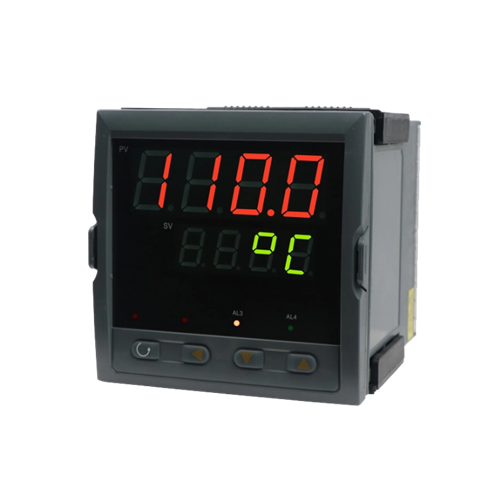
PID Temperature Controller
The PID Temperature Controller provides precise, stable, and fast temperature control with auto-tuning and multi-sensor compatibility.
Read More Get A Quote
How to Choose an Industrial PID Temperature Controller
Selecting the right industrial temperature controller is essential for maintaining stable process temperatures, improving production consistency and supporting reliable automated operation.
PID temperature controllers are widely used in systems where temperature must be regulated according to a specified setpoint. Before selecting a controller, engineers should evaluate the following technical requirements:
Temperature range: Determine the minimum and maximum operating temperatures and the required measurement accuracy.
Sensor input: Confirm whether the application uses a thermocouple, RTD or standardized analog signal. The input type must be compatible with the controller.
Control method: Choose a suitable PID or ON/OFF control mode according to the process requirements and available controller functions.
Control output: Specify relay, SSR drive or analog control output according to the heating or cooling equipment and the selected controller configuration.
Power supply: Verify the controller supply voltage and electrical installation requirements.
Mounting dimensions: Check the panel cutout, instrument dimensions and available installation space.
Alarm functions: Determine whether high-temperature, low-temperature or sensor fault alarms are required.
Communication: Confirm whether RS485 Modbus RTU or another supported communication interface is required for PLC, HMI or monitoring system integration.
ZINACA PID Temperature Controller
The ZINACA PID Temperature Controller is an intelligent temperature and process control instrument designed for industrial automation applications.
It uses digital signal processing and PID control algorithms to monitor process values and regulate the connected equipment according to the configured control parameters.
The controller supports multiple input types, local display and configurable output functions, making it suitable for a wide variety of temperature control systems.
Main Features
PID control: Provides proportional, integral and derivative control functions for regulating process temperature.
Auto-tuning: Supports automatic adjustment of PID control parameters for compatible process applications.
Multiple sensor inputs: Supports selected thermocouple types, RTD elements and industrial analog signals.
Local indication: Digital display for monitoring process values and adjusting controller parameters.
Configurable outputs: Available control, alarm and analog output functions depend on the selected configuration.
Communication options: Selected versions support RS485 or RS232 interfaces with Modbus RTU communication.
The available electrical configuration, control functions, power supply and instrument dimensions must be confirmed from the selected model before ordering.
How Does a PID Temperature Controller Work?
A PID temperature controller continuously compares the measured process temperature with the desired temperature setpoint.
The difference between these values is called the control error. The controller uses proportional, integral and derivative actions to calculate the appropriate output for the connected heating or cooling system.
Proportional Control (P)
Proportional control adjusts the controller output according to the current difference between the measured temperature and the setpoint. A larger error generally produces a stronger corrective response.
Integral Control (I)
Integral control responds to accumulated errors over time. It helps reduce steady-state deviations that may remain when proportional control is used alone.
Derivative Control (D)
Derivative control responds to the rate of change of the error. When correctly tuned, it can help reduce overshoot and improve the dynamic response of certain temperature control systems.
Actual temperature control performance depends on sensor placement, heater capacity, process thermal inertia, controller tuning and installation conditions.
PID vs. ON/OFF Temperature Control
PID and ON/OFF control are commonly used methods for regulating industrial process temperatures. The preferred method depends on the required temperature stability, process response and equipment configuration.
ON/OFF Temperature Control
ON/OFF control switches the heating or cooling equipment between defined output states when the measured temperature crosses configured thresholds.
It is commonly used for applications where simple temperature regulation is sufficient and a certain temperature fluctuation around the setpoint is acceptable.
PID Temperature Control
PID control continuously evaluates temperature error and adjusts the output according to the configured control algorithm.
When properly configured, it can provide improved temperature stability and reduce unwanted temperature fluctuations in applications with compatible control hardware.
PID controllers are commonly selected for industrial ovens, electric heating equipment, temperature-controlled production machinery and other processes requiring stable regulation.
Temperature Sensor Inputs and Output Configurations
An industrial PID temperature controller must be compatible with both the temperature sensing element and the connected control equipment.
Thermocouple Inputs
Thermocouples generate a small voltage related to the temperature difference between the measuring junction and the reference junction.
The ZINACA controller product data lists several supported thermocouple input types, including K, J, T, E, N, R, S and B.
For information about industrial temperature sensing elements, explore our Industrial Thermocouples.
RTD Temperature Inputs
Resistance Temperature Detectors (RTDs) measure temperature through the change in electrical resistance of a sensing element.
The ZINACA controller product data includes Pt100 and selected copper resistance sensor inputs.
Visit our RTD Temperature Sensors category for related temperature measurement products.
Relay, SSR and Analog Outputs
Different temperature control systems require different output configurations.
Relay output: Provides electrical contact switching for a compatible control circuit or external switching device.
SSR drive output: Controls an external solid-state relay where a compatible SSR drive configuration is available.
Analog output: Provides a configured current or voltage signal for compatible control equipment.
Communication output: Enables data exchange with compatible automation systems where the selected version supports digital communication.
Not all output functions are necessarily available simultaneously. Confirm the required combination of control output, alarm contacts and communication interfaces before ordering.
Typical Industrial Applications of PID Temperature Controllers
Industrial Furnaces and Ovens
PID temperature controllers are used to regulate heating processes in industrial ovens, furnaces, kilns and heat treatment equipment.
Properly configured control systems help maintain target temperatures and improve process consistency.
Plastic Injection Molding and Extrusion
Temperature controllers regulate barrel heating zones, molds and other heated components in plastic processing machinery.
Stable thermal conditions are important for material processing, product consistency and equipment operation.
Food and Beverage Processing
Temperature regulation is important in industrial cooking, drying, heating, fermentation and other food processing operations.
A suitable PID controller can support stable thermal regulation when integrated with compatible sensors and heating or cooling equipment.
Chemical Processing
Industrial temperature controllers can be integrated into reactor heating, thermal circulation and process equipment temperature control systems.
Applications requiring independent safety shutdowns should use appropriately designed and validated protective systems rather than relying solely on a standard process controller.
HVAC and Environmental Chambers
PID temperature regulation can be used in selected heating, ventilation, environmental testing and temperature-controlled equipment.
The appropriate controller should be selected according to sensor compatibility, system response, heating and cooling outputs and operating conditions.
Temperature Controller vs. Temperature Transmitter
Temperature controllers and temperature transmitters are both used in industrial temperature systems, but their primary functions are different.
Temperature controller: Measures or receives the process value, compares it with a setpoint and generates control outputs to regulate temperature.
Temperature transmitter: Converts a temperature sensor signal into a standardized electrical signal for remote monitoring or process automation.
Temperature switch: Changes its switching state when the measured temperature reaches a preset threshold.
For continuous temperature signal conversion, explore our Temperature Transmitters.
For temperature alarm and threshold switching applications, visit our Industrial Temperature Switches.
OEM and Custom Industrial Temperature Controllers
ZINACA supports OEM and ODM requirements for applicable industrial temperature controller configurations.
Depending on the selected product and technical feasibility, customization requirements may include:
Thermocouple or RTD input configuration
Control and alarm output requirements
Communication interface configuration
Display and user interface requirements
Mounting and instrument dimension requirements
Customer logo, product labeling and packaging
Please provide your technical specifications and estimated order quantity so that our team can evaluate suitable options.
What Information Is Needed for a Temperature Controller RFQ?
To help ZINACA select a suitable temperature controller and prepare an accurate quotation, please provide:
Required temperature range and control setpoint
Sensor type: thermocouple, Pt100 or other input signal
Required control method and auto-tuning function
Relay, SSR drive or analog control output requirement
Heating or cooling equipment type and control interface
Power supply voltage and electrical installation requirements
Panel dimensions and mounting arrangement
Alarm functions and communication requirements
Required quantity and delivery destination
PID Temperature Controller Frequently Asked Questions
What does PID mean in temperature control?
PID stands for Proportional, Integral and Derivative. These three control actions are combined to regulate the process variable according to the selected temperature setpoint.
What is the difference between PID and ON/OFF control?
ON/OFF control switches between defined output states, while PID control adjusts the output according to the control error and configured PID parameters. PID control is commonly preferred when tighter temperature stability is required.
Can a PID temperature controller use a Pt100 sensor?
Yes. The ZINACA PID temperature controller product data lists Pt100 as a supported input type. Sensor wiring and input configuration must match the selected controller.
What is the purpose of PID auto-tuning?
Auto-tuning helps determine suitable PID control parameters based on the process response. It can reduce the need for manual tuning, although the final performance depends on the equipment and operating conditions.
Can a PID temperature controller communicate with a PLC?
Selected ZINACA controller configurations support RS485 or RS232 communication with Modbus RTU. The interface, register mapping and communication settings should be confirmed for the chosen version.
Can ZINACA provide customized temperature controllers?
ZINACA provides OEM and ODM options for applicable temperature controller products. Input configuration, output functions, communication requirements and private-label options can be evaluated according to technical feasibility.
Request an Industrial Temperature Controller Quotation
Looking for an industrial PID temperature controller for heating systems, ovens, plastic processing machinery or automated production equipment?
ZINACA Instruments supplies industrial temperature control instruments and supports suitable OEM and ODM requirements.
Send us your temperature range, sensor input, control output, power supply, mounting dimensions and required quantity. Our team will review the available configuration and provide a quotation.
Contact ZINACA Instrumentsor emailsales@zinacainstruments.com.
 WhatsApp
 Email
 +8617320288925