What Is an Industrial Thermocouple?
An industrial thermocouple is a temperature sensor that generates a small electrical voltage based on the temperature difference between two junctions of dissimilar metals. Using the Seebeck effect, thermocouples provide temperature measurements for industrial furnaces, heat treatment equipment, boilers, chemical processing and automated production systems.
ZINACA offers industrial assembly thermocouples, armored thermocouples and vacuum furnace thermocouples for different operating conditions. Depending on the selected configuration, available thermocouple types include K, J, N, E, T, S, R and B, with suitable protection tubes, sheath materials and mounting arrangements.
Explore the products below to compare available designs. Important selection factors include thermocouple type, measuring temperature, accuracy class, sheath material, probe diameter, insertion length, junction configuration, process connection and installation environment.
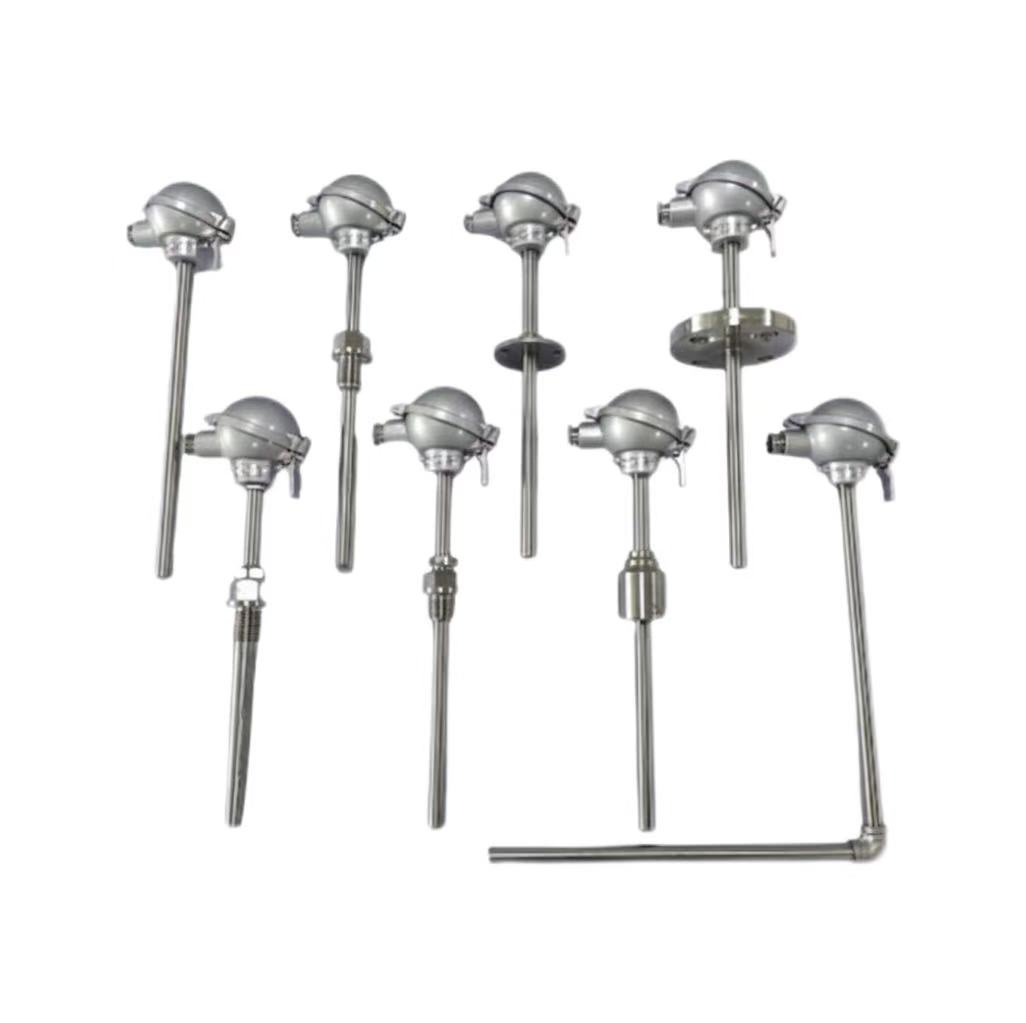
Industrial Assembly Thermocouple
The Industrial Assembly Thermocouple is designed for precise temperature measurement in liquids, gases, steam.
Read More Get A Quote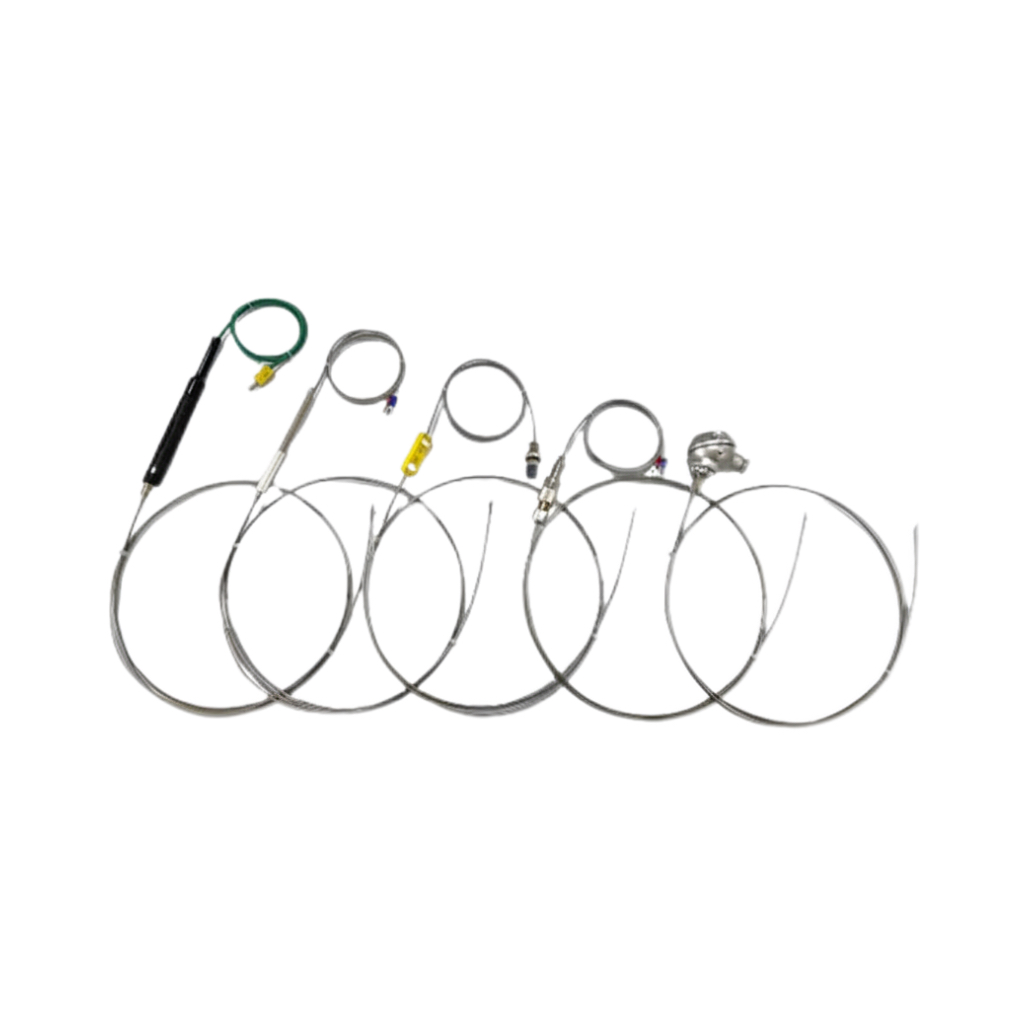
Armored Thermocouple
The Armored Thermocouple offers numerous advantages, including flexibility, high-pressure resistance, fast thermal response, and robust durability.
Read More Get A Quote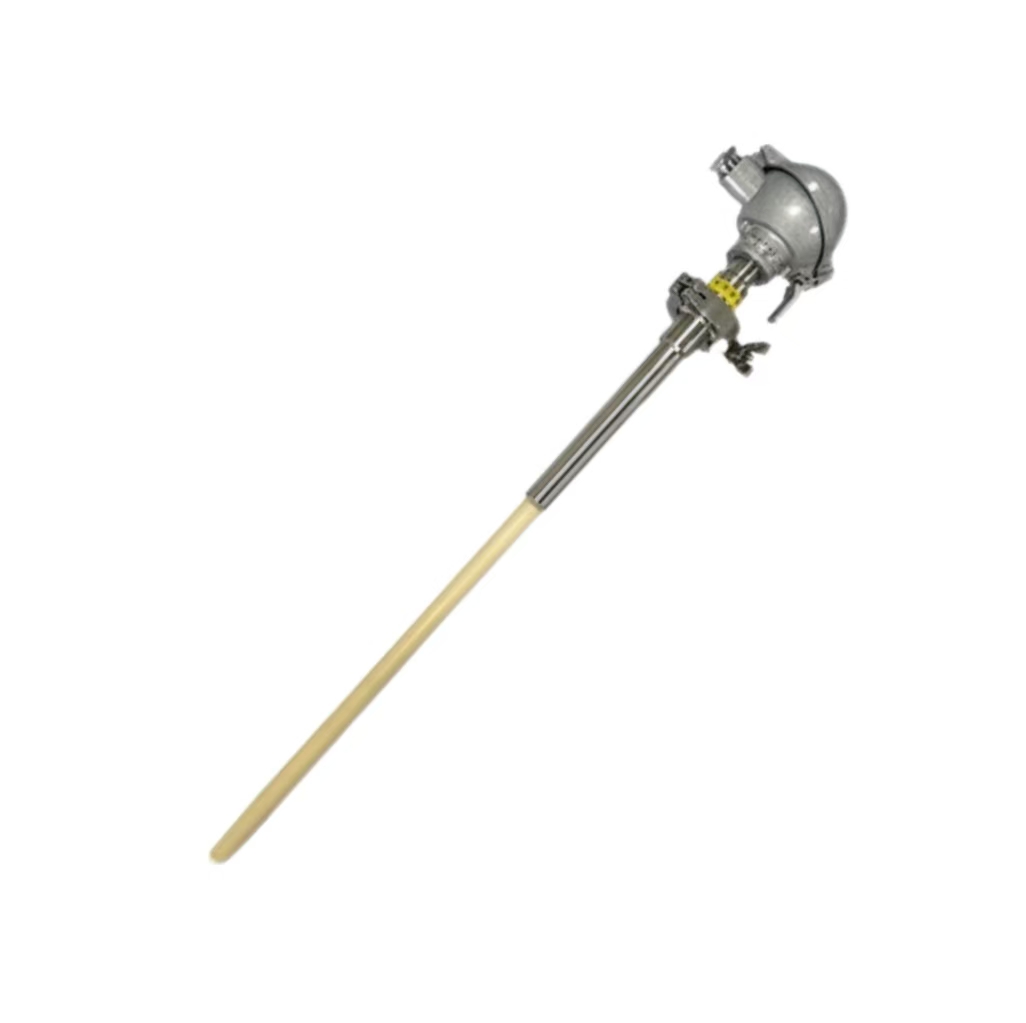
Vacuum Furnace Thermocouple
This series of Vacuum Furnace Thermocouples is engineered with a unique double-chamber isolation sealing technology and high-temperature resistant protection tubes.
Read More Get A Quote
How to Choose an Industrial Thermocouple
Selecting the right industrial thermocouple requires careful consideration of the operating temperature, sensor type, protective sheath, installation environment and measurement accuracy. Different thermocouple materials and structures are suitable for different temperature ranges and industrial applications.
Before selecting a thermocouple temperature sensor, engineers and purchasing teams should consider the following technical requirements:
Thermocouple type: Select Type K, J, N, E, T, S, R or B according to the required temperature range, accuracy and process environment.
Operating temperature: Confirm the normal and maximum process temperatures. The allowable temperature depends on thermocouple type, wire diameter, sheath material and exposure conditions.
Protective sheath: Choose a compatible stainless steel, heat-resistant alloy, ceramic or other suitable protection material according to the application.
Probe dimensions: Specify sheath diameter, total length, insertion length and any installation space restrictions.
Measuring junction: Determine whether a grounded, ungrounded or exposed junction is suitable for the required response time and electrical isolation.
Accuracy class: Confirm the required tolerance class and the applicable temperature range for the selected thermocouple type.
Process connection: Select a suitable threaded connection, flange, compression fitting or other mounting arrangement.
Electrical connection: Specify the terminal head, thermocouple connector, extension cable or compensation cable arrangement.
Operating environment: Consider vibration, pressure, corrosion, oxidation, vacuum conditions and mechanical protection requirements.
Compare ZINACA Industrial Thermocouple Models
ZINACA provides industrial thermocouple solutions for general process measurement, compact installation and specialized high-temperature furnace applications.
1. Industrial Assembly Thermocouple
The Industrial Assembly Thermocouple is designed for industrial temperature measurement in liquids, gases, steam and solid surfaces.
The product series includes multiple thermocouple types, such as K, J, N, E, T, S, R and B, to accommodate different measurement ranges and process conditions.
Depending on the selected configuration, industrial assembly thermocouples can incorporate protective tubes, terminal heads, suitable process connections and replaceable sensing elements.
They are commonly integrated with temperature indicators, recorders, controllers and temperature transmitters for industrial process monitoring.
Typical applications: Chemical processing, oil and gas facilities, power generation, industrial boilers, pipelines, heat exchangers and manufacturing equipment.
2. Armored Thermocouple
The Armored Thermocouple is a compact temperature sensing assembly with a protective metal sheath.
Its armored construction offers mechanical protection and allows selected designs to be bent or routed through restricted installation spaces while observing the manufacturer's minimum bending radius.
The product series includes different thermocouple types, sheath materials and diameters. The maximum operating temperature must be selected according to the specific combination of thermocouple element, sheath diameter and material.
Armored thermocouples may be used directly with compatible instrumentation or incorporated into larger temperature sensing assemblies.
Typical applications: Industrial machinery, chemical processing, power plants, furnaces, equipment testing and temperature measurement in confined spaces.
3. Vacuum Furnace Thermocouple
The Vacuum Furnace Thermocouple is a specialized temperature sensing assembly designed for high-temperature measurement in vacuum furnace applications.
The product features a double-chamber isolation structure, a specialized sealing arrangement and high-temperature-resistant protection tube options.
Available thermocouple types include K, N, S and R. According to the product configuration, high-purity alumina ceramic and heat-resistant alloy protection tubes can be selected for suitable operating conditions.
The selection of protection tube material, sealing design, insertion length and thermocouple type depends on the furnace temperature, vacuum requirements and installation arrangement.
Typical applications: Vacuum heat treatment, vacuum brazing, industrial sintering, metallurgy, aerospace material processing and specialized furnace equipment.
For vacuum furnace installations, the required vacuum level and sealing performance must be confirmed for the complete assembly before selection.
Thermocouple Types: K, J, N, E, T, S, R and B
Different thermocouple types use different metal combinations and are designed for different measurement conditions. Choosing the correct thermocouple type is important for temperature compatibility, measurement stability and service life.
Type K Thermocouple
Type K thermocouples use nickel-based alloys and are widely selected for general industrial temperature measurement. They are commonly used in industrial ovens, furnaces, heaters and manufacturing equipment.
Type J Thermocouple
Type J thermocouples use iron and copper-nickel alloys. They are commonly applied to industrial heating equipment and machinery where the operating atmosphere and temperature are suitable for the sensor materials.
Type N Thermocouple
Type N thermocouples use nickel-based alloys developed for improved high-temperature stability in suitable industrial environments. They can be considered for furnaces and thermal processing equipment where long-term sensor performance is important.
Types E and T Thermocouples
Type E thermocouples provide relatively high thermoelectric sensitivity and are used in suitable industrial temperature measurement applications.
Type T thermocouples use copper and copper-nickel alloys and are commonly selected for lower-temperature measurement, laboratory equipment and compatible processing applications.
Types S, R and B Thermocouples
Types S, R and B are platinum-rhodium thermocouples commonly used in high-temperature industrial measurement applications.
They are often selected for heat-treatment furnaces, glass production, metallurgy and other processes requiring suitable noble-metal temperature sensing elements.
These thermocouple types require appropriate ceramic protection, compatible installation conditions and careful handling. Type B has particular limitations at low temperatures, so the usable temperature range should be verified.
Important: Thermocouple temperature limits are not determined by type alone. The sensor wire diameter, protective sheath, process atmosphere and service conditions must also be considered.
Armored vs. Industrial Assembly Thermocouples
Armored and conventional industrial assembly thermocouples can both measure process temperature, but their mechanical construction and installation characteristics differ.
Industrial Assembly Thermocouple
An industrial assembly thermocouple commonly uses a protective tube, internal sensing element, process connection and terminal head. It is suitable for conventional industrial temperature measurement points where mechanical protection and standardized installation arrangements are important.
Armored Thermocouple
An armored thermocouple uses a compact metal-sheathed structure. Selected configurations are flexible and suitable for restricted installation spaces, vibration-prone equipment and applications requiring smaller probe diameters.
The preferred design depends on mechanical installation, process pressure, temperature, response time, sheath material and maintenance requirements.
How Does a Thermocouple Work?
A thermocouple operates according to the Seebeck effect. When conductors made from two different metals form a measuring circuit with junctions at different temperatures, a small thermoelectric voltage is produced.
The measured voltage is related to the temperature difference between the measuring junction and the reference junction. A compatible temperature indicator, controller or transmitter uses this voltage together with reference junction compensation to determine the process temperature.
Thermocouples do not normally generate a standardized 4-20 mA signal directly. When a PLC or DCS requires a 4-20 mA input, an appropriate temperature transmitter can be used to convert and linearize the thermocouple signal.
Explore our Industrial Temperature Transmitters for compatible signal conversion solutions.
Thermocouple vs. RTD: Which Temperature Sensor Should You Choose?
Thermocouples and resistance temperature detectors (RTDs) are widely used in industrial temperature measurement. Their measurement principles and application characteristics differ.
Thermocouple: Produces a thermoelectric voltage related to the temperature difference between junctions. It is commonly selected for high-temperature applications, rugged industrial measurement and suitable fast-response sensor designs.
RTD: Measures temperature through a change in electrical resistance, typically using a platinum sensing element such as Pt100 or Pt1000.
Temperature range: Thermocouples are often preferred for very high temperatures, while RTDs are commonly used for applications requiring high measurement stability within their specified temperature range.
Measurement system: Thermocouples require suitable reference junction compensation, while RTDs require resistance measurement with appropriate lead-wire compensation.
For compatible platinum resistance temperature sensing applications, explore our Industrial RTD Temperature Sensors.
Typical Industrial Applications of Thermocouples
Industrial Furnaces and Heat Treatment
Thermocouples are used to monitor temperature in industrial furnaces, kilns, ovens and heat-treatment equipment.
The correct sensor type and protective material depend on furnace temperature, process atmosphere, exposure duration and installation conditions.
Oil and Gas Processing
Industrial thermocouples can monitor temperatures in pipelines, heaters, process vessels and suitable petrochemical equipment.
The selected protection tube, process connection and sensor construction must be compatible with the application.
Power Generation and Boilers
Thermocouples provide temperature measurement in boiler equipment, heat exchangers, combustion systems and suitable power generation processes.
Installation conditions should be evaluated for temperature, pressure, mechanical stress and vibration.
Metallurgy and Steel Production
High-temperature thermocouples are used in metallurgical processing, industrial heating and thermal treatment applications.
Suitable ceramic or heat-resistant alloy protection tubes may be required depending on the operating atmosphere and temperature.
Vacuum Furnaces
Specialized vacuum furnace thermocouples can be used for temperature monitoring in vacuum brazing, vacuum heat treatment and high-temperature vacuum processing equipment.
Vacuum seal integrity, flange or connection design, material compatibility and sensor replacement requirements are important selection factors.
Industrial Machinery and OEM Equipment
Compact and armored thermocouples can be integrated into industrial machinery, heating assemblies, process equipment and OEM measurement systems.
Probe diameter, insertion length, cable routing and response time should be considered during equipment design.
Thermocouple Installation and Wiring Considerations
Correct installation helps reduce measurement errors and improves the reliability of the complete temperature measurement system.
Insertion depth: Ensure sufficient insertion into the process to reduce measurement errors caused by heat conduction along the probe.
Cable selection: Use suitable thermocouple extension or compensating cable for the selected sensor type and temperature conditions.
Polarity: Confirm positive and negative thermocouple connections according to the applicable wiring standard and instrument terminals.
Electrical interference: Route low-level sensor wiring appropriately to reduce interference from high-power cables, motors and switching equipment.
Mechanical protection: Confirm whether a thermowell or suitable protection tube is required for the process pressure, flow velocity and maintenance arrangement.
Calibration: Establish appropriate inspection or calibration intervals according to the application and operating conditions.
Industrial Thermocouple OEM and Customization
ZINACA supports OEM and ODM requirements for applicable industrial thermocouple products.
Depending on the selected thermocouple type and technical feasibility, customization options may include:
Thermocouple types K, J, N, E, T, S, R and B
Probe length, insertion length and sheath diameter
Compatible metal or ceramic protection tubes
Grounded, ungrounded or exposed junction configurations
Process threads, flanges and compression fittings
Terminal heads, connectors and extension cables
Customer branding and private-label packaging
Available options depend on the selected sensing element, protective materials and installation requirements.
What Information Is Needed for a Thermocouple RFQ?
To help ZINACA recommend a suitable thermocouple configuration and prepare an accurate quotation, please provide:
Thermocouple type: K, J, N, E, T, S, R or B
Normal and maximum operating temperature
Measured medium and operating environment
Required accuracy or tolerance class
Sheath material and probe diameter
Total length and required insertion length
Process connection and mounting arrangement
Junction type and number of sensing elements
Terminal head, connector or cable requirements
Process pressure or vacuum conditions, if applicable
Required quantity and destination country
Industrial Thermocouple Frequently Asked Questions
What is the difference between Type K and Type J thermocouples?
Type K uses nickel-based alloy conductors, while Type J uses iron and copper-nickel conductors. They differ in temperature characteristics and suitability for different process atmospheres. The selection should consider the actual operating conditions.
Can a thermocouple measure temperatures above 1000 degrees Celsius?
Yes. Suitable thermocouple types and protection arrangements can be used for temperatures above 1000 degrees Celsius. The maximum permitted temperature depends on the thermocouple type, sensor diameter, protection tube and process atmosphere.
Does a thermocouple output 4-20 mA?
A conventional thermocouple produces a small thermoelectric voltage rather than a standardized 4-20 mA signal. A compatible temperature transmitter can convert the thermocouple signal into 4-20 mA for industrial control systems.
What is the difference between grounded and ungrounded thermocouples?
In a grounded thermocouple, the measuring junction is electrically connected to the protective metal sheath. An ungrounded junction is electrically isolated from the sheath. The appropriate design depends on response requirements, electrical isolation and installation conditions.
Which thermocouple is suitable for a vacuum furnace?
A vacuum furnace thermocouple must be selected according to the furnace temperature, vacuum level, atmosphere, protection tube material and sealing requirements. ZINACA offers a specialized vacuum furnace thermocouple series for compatible installations.
Can ZINACA supply customized thermocouples?
ZINACA offers OEM and ODM options for applicable thermocouple products. Customization may include thermocouple type, probe dimensions, sheath material, installation connection, junction design and electrical termination, subject to technical confirmation.
Request an Industrial Thermocouple Quotation
Looking for industrial thermocouples for furnaces, boilers, chemical processing, machinery or high-temperature measurement?
ZINACA Instruments supplies industrial assembly, armored and vacuum furnace thermocouple solutions for different measurement requirements.
Send us your thermocouple type, temperature range, probe diameter, insertion length, protection material, process connection and required quantity. Our team will review suitable configurations and prepare a quotation.
Contact ZINACA Instrumentsor emailsales@zinacainstruments.com.
 WhatsApp
 Email
 +8617320288925