What Is an Industrial Pressure Gauge?
An industrial pressure gauge is a mechanical instrument used to measure and display the pressure of liquids or gases. Unlike an electronic pressure transmitter, a conventional pressure gauge provides direct local indication through a pointer and calibrated dial without requiring an external power supply.
ZINACA offers Bourdon tube pressure gauges, liquid-filled stainless steel gauges, diaphragm pressure gauges, electrical contact gauges, sanitary clamp pressure gauges and differential pressure gauges. These instruments are used in hydraulic equipment, water treatment, compressors, chemical processing, food and beverage production, and industrial process monitoring.
Explore the pressure gauge models below to compare suitable designs for your application. Important selection factors include pressure range, dial diameter, accuracy class, process connection, wetted materials, operating temperature, vibration conditions and installation requirements.
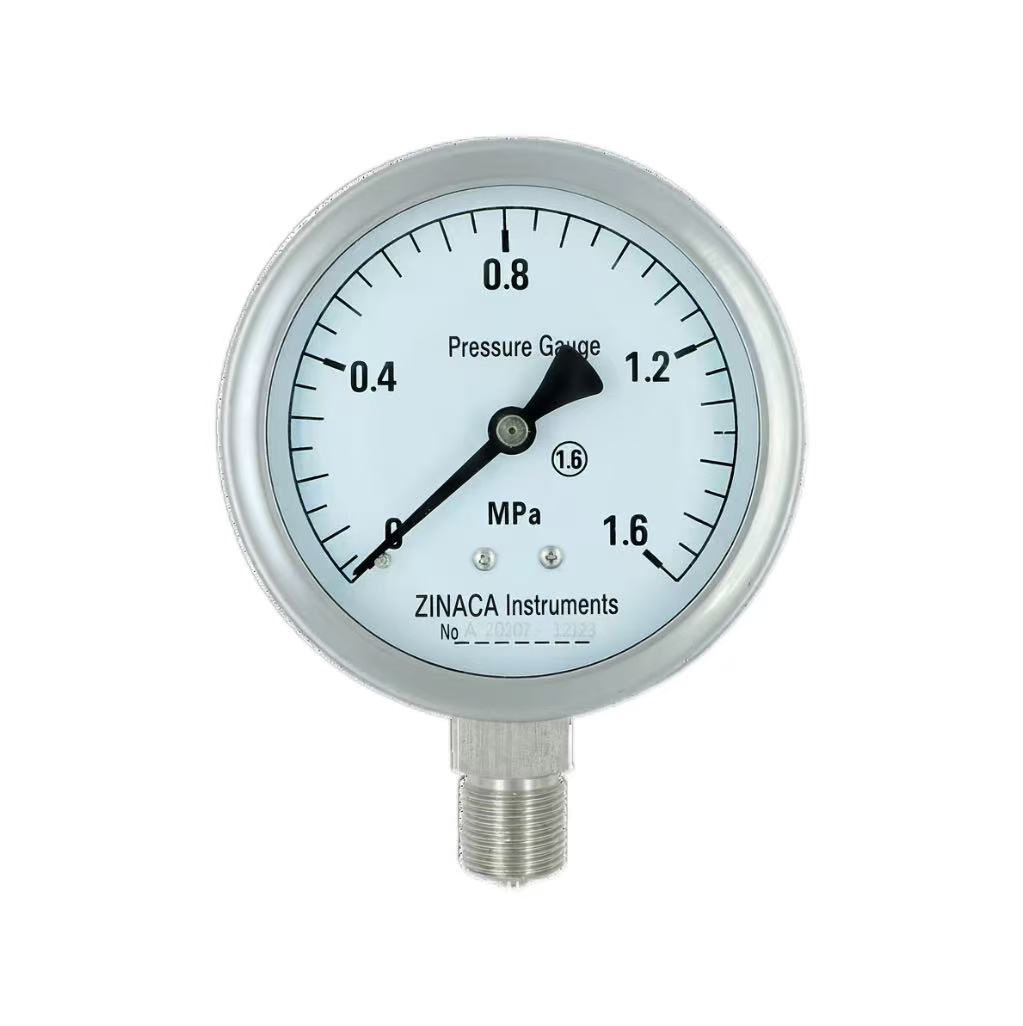
Bourdon Tube Pressure Gauge
The Bourdon Tube Pressure Gauge is the most common and widely used type of mechanical pressure measuring instrument.
Read More Get A Quote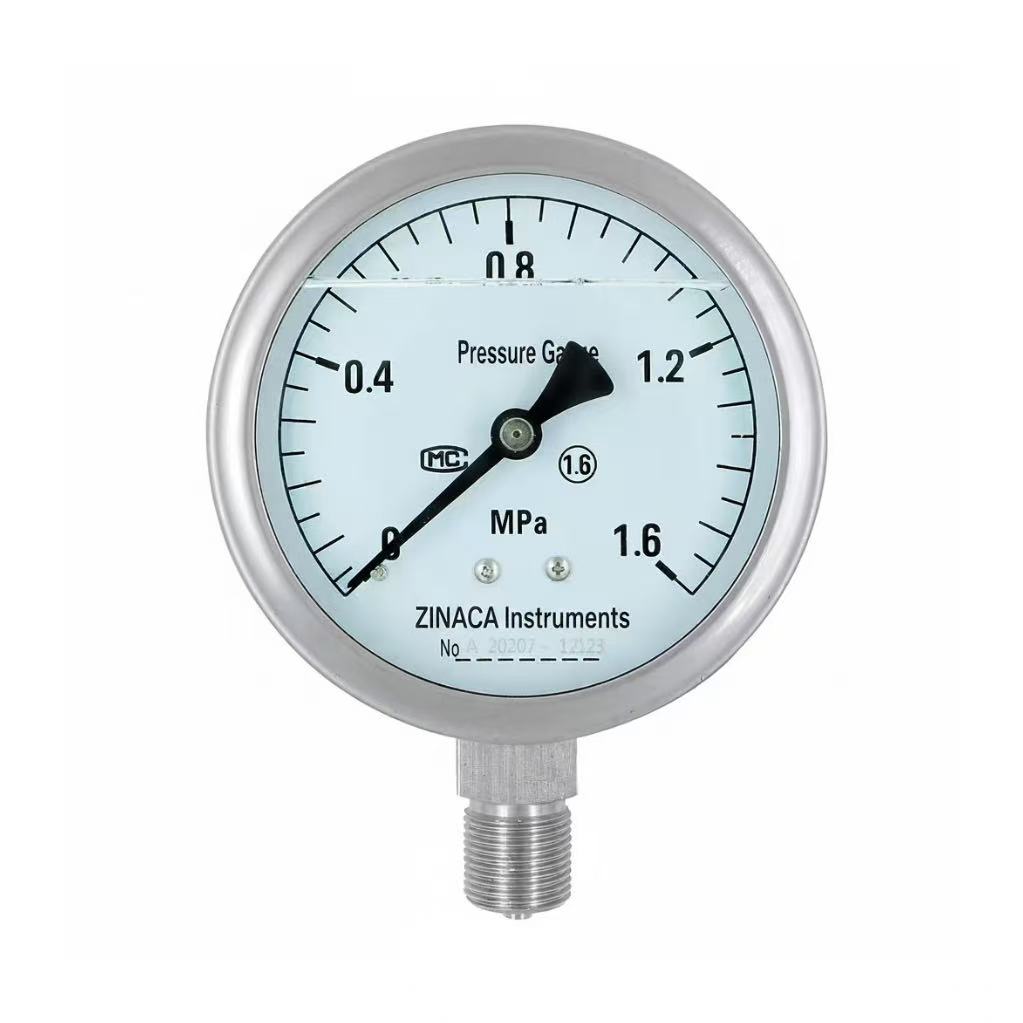
Liquid Filled Stainless Steel Pressure Gauge
The Liquid Filled Stainless Steel Pressure Gauge is a premium industrial pressure measuring instrument combining excellent corrosion resistance with strong shock resistance.
Read More Get A Quote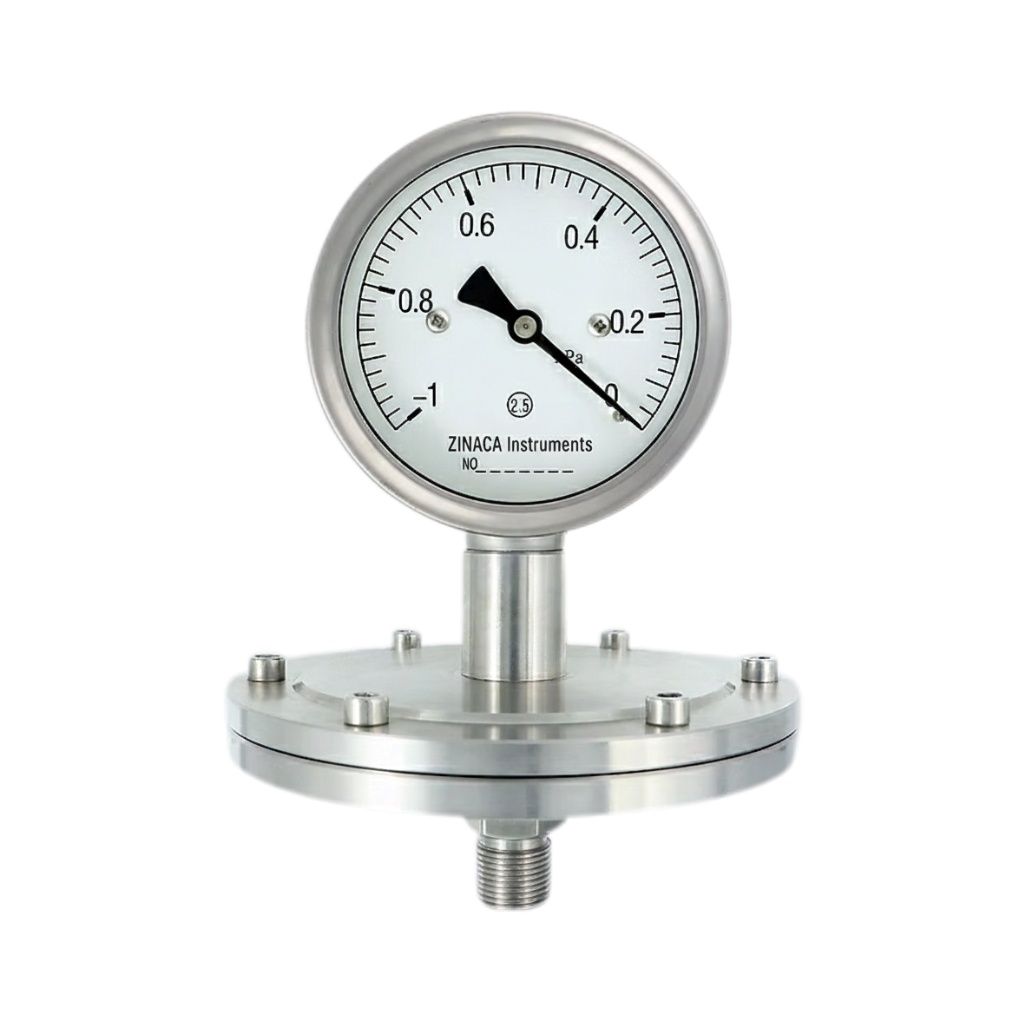
Diaphragm Pressure Gauge
The Diaphragm Pressure Gauge is a mechanical pressure measuring instrument that uses an elastic diaphragm instead of a Bourdon tube as the sensitive element.
Read More Get A Quote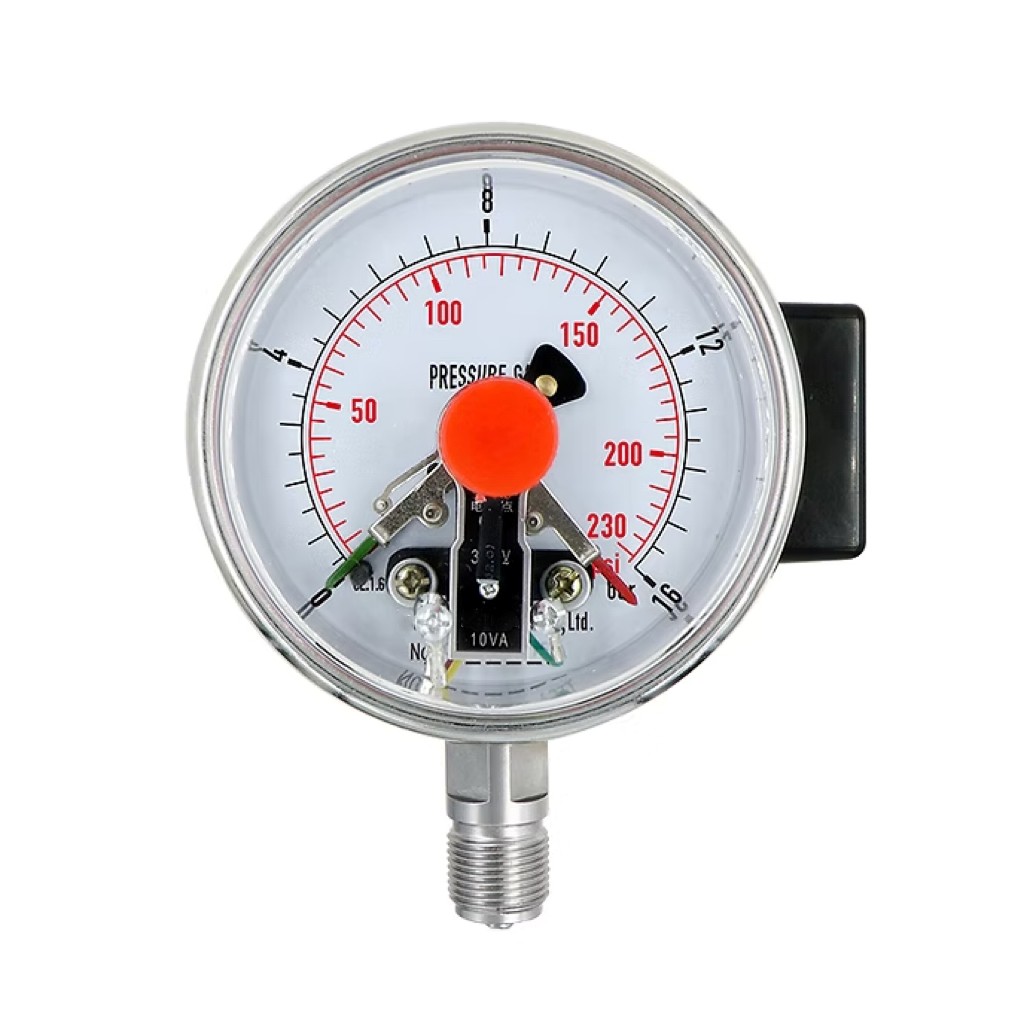
Contact Pressure Gauge
The Contact Pressure Gauge is a composite instrument used for both pressure measurement and control, combining traditional mechanical pressure indication with modern electrical control functionality.
Read More Get A Quote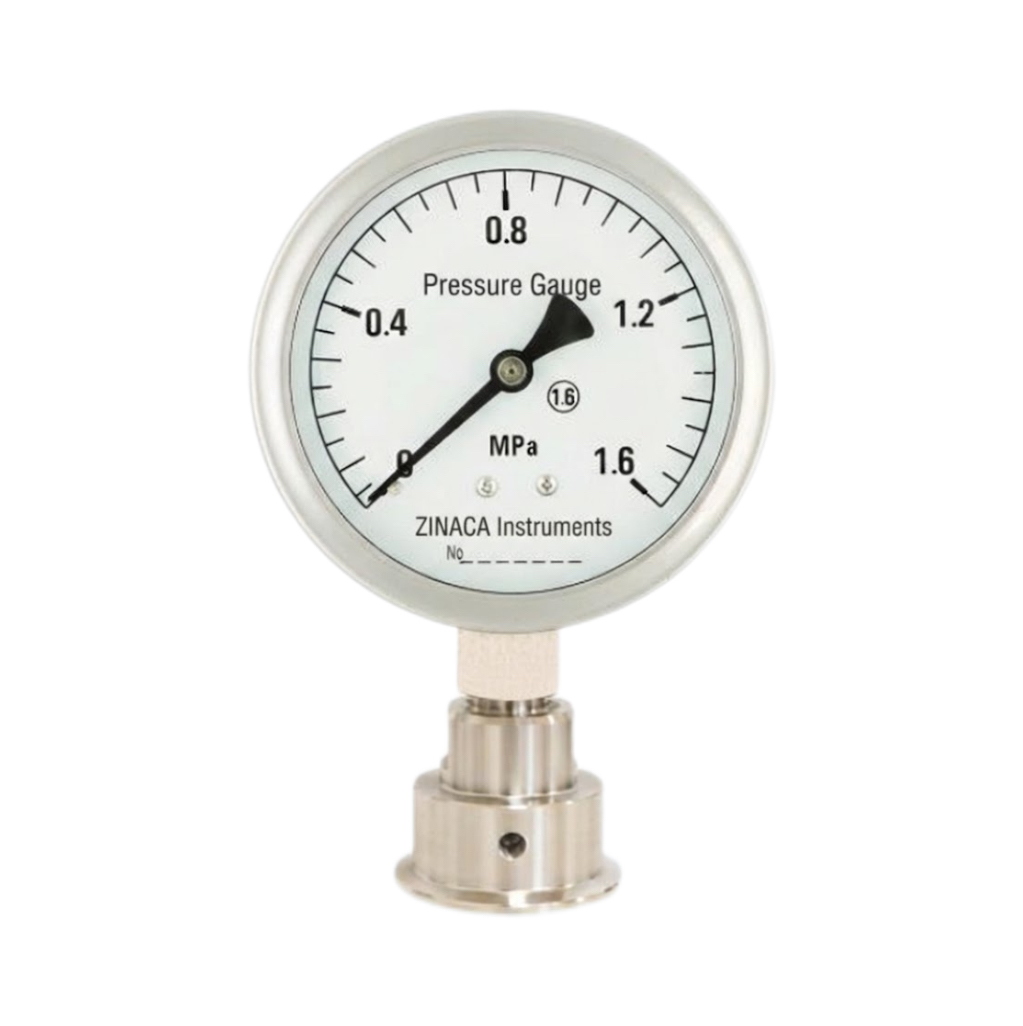
Sanitary Clamp Pressure Gauge
The Sanitary Clamp Pressure Gauge is a specialized measuring instrument designed for industries with the most stringent hygiene and cleanliness requirements.
Read More Get A Quote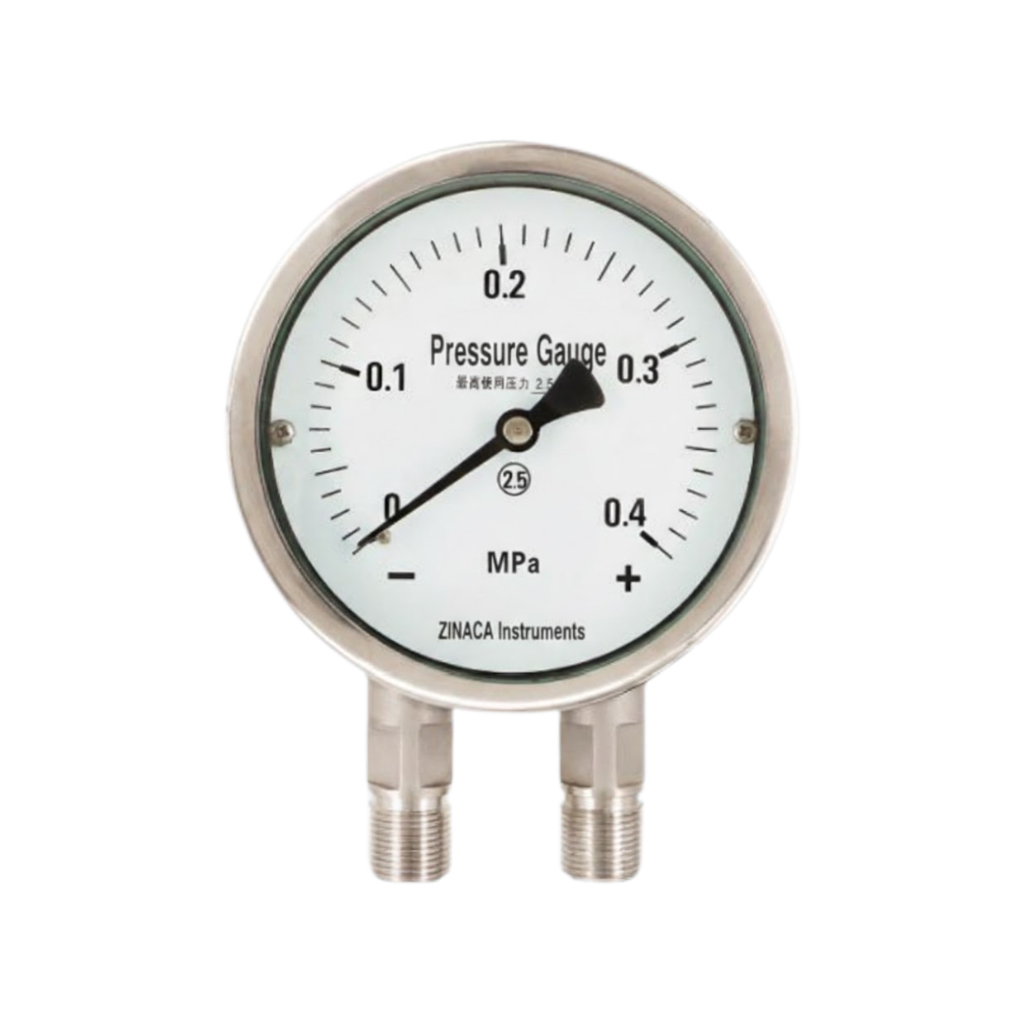
Differential Pressure Gauge
The Differential Pressure Gauge is a precision mechanical instrument designed to measure the difference between two pressure points in a system.
Read More Get A Quote
How to Choose an Industrial Pressure Gauge
Choosing the right industrial pressure gauge requires consideration of the operating pressure, process medium, environmental conditions and installation requirements. Different pressure gauge designs are suitable for different industrial applications, from general pipeline monitoring to high-vibration hydraulic systems and sanitary processing equipment.
Before selecting a mechanical pressure gauge, consider the following technical factors:
Pressure range: Select a gauge with a suitable measuring range for normal operating pressure, pressure fluctuations and possible overpressure conditions. Avoid selecting a range that is too close to the maximum operating pressure.
Accuracy class: Determine the required measurement accuracy according to the process. Accuracy requirements may differ between general equipment monitoring and precision test applications.
Dial diameter: Choose a suitable dial size based on installation space and reading distance. Common industrial configurations include 63 mm, 100 mm and 150 mm dials.
Process connection: Confirm the thread type and size, such as G1/4, G1/2, 1/4 inch NPT or 1/2 inch NPT, where supported by the selected model.
Wetted materials: Select compatible pressure elements, process connections and seals according to the chemical properties of the measured medium.
Vibration and pulsation: For pumps, compressors and hydraulic equipment, consider a liquid-filled gauge and appropriate pressure pulsation protection.
Operating temperature: Verify the process temperature and ambient temperature. High-temperature applications may require a siphon, cooling element or other suitable installation arrangement.
Installation orientation: Confirm bottom connection, back connection, panel mounting or other mechanical installation requirements.
Compare ZINACA Industrial Pressure Gauge Models
ZINACA provides several pressure gauge designs for industrial pressure monitoring. The following product categories help engineers, maintenance teams and purchasing professionals identify a suitable pressure measuring instrument.
1. Bourdon Tube Pressure Gauge
The Bourdon Tube Pressure Gauge is a widely used mechanical pressure measuring instrument for liquids and gases. It uses an elastic curved tube that deforms under pressure and transfers the movement to a pointer.
ZINACA offers stainless steel Bourdon tube pressure gauges with different measuring ranges, dial sizes and process connection arrangements.
Typical applications: Industrial pipelines, water treatment systems, chemical processing, power generation equipment and general machinery.
2. Liquid Filled Stainless Steel Pressure Gauge
The Liquid Filled Stainless Steel Pressure Gauge is designed for industrial environments where vibration and pressure pulsation can cause pointer oscillation.
The gauge case is filled with a damping liquid, commonly glycerin or silicone oil, to reduce pointer vibration and improve reading stability. Liquid filling does not replace appropriate protection against excessive pressure spikes.
Typical applications: Hydraulic systems, pumps, compressors, heavy machinery, marine equipment and industrial process pipelines.
3. Diaphragm Pressure Gauge
The Diaphragm Pressure Gauge uses a flexible diaphragm as the pressure sensing element instead of a conventional Bourdon tube.
Diaphragm gauges are often selected for low-pressure measurement and certain challenging process media. Depending on the construction, they can provide improved suitability for viscous, crystallizing or chemically aggressive fluids.
Typical applications: Chemical processing, low-pressure monitoring, industrial tanks, process equipment and selected corrosive-fluid applications.
4. Electrical Contact Pressure Gauge
The Electrical Contact Pressure Gauge combines mechanical pressure indication with electrical switching contacts.
When the measured pressure reaches a configured contact setting, the electrical contact changes state and can provide a signal for alarms or control circuits.
Electrical contact pressure gauges may be used in combination with control relays or PLC systems. Contact ratings and switching functions must be confirmed before integration.
Typical applications: Pump control, compressor pressure monitoring, hydraulic machinery, industrial alarms and pressure interlock systems.
5. Sanitary Clamp Pressure Gauge
The Sanitary Clamp Pressure Gauge is designed for applications where hygienic process connections and convenient cleaning are important.
It uses a sanitary Tri-Clamp connection and diaphragm isolation arrangement to measure process pressure while limiting direct contact between the medium and the internal gauge mechanism.
The required clamp size, diaphragm material, surface finish and cleaning conditions should be specified for the application.
Typical applications: Food processing, beverage production, dairy systems, pharmaceutical processing and viscous liquid measurement.
6. Differential Pressure Gauge
The Differential Pressure Gauge measures the pressure difference between two points in a system.
Unlike a conventional gauge pressure instrument, a differential pressure gauge has high-pressure and low-pressure connections and displays the resulting pressure difference directly.
Typical applications: Filter pressure-drop monitoring, heat exchangers, industrial ventilation and compatible liquid or gas process systems.
For applications requiring a continuous electrical differential pressure signal, explore our Differential Pressure Transmitters.
Dry vs. Liquid Filled Pressure Gauges
Dry and liquid-filled pressure gauges use similar mechanical pressure measuring principles, but their internal construction and suitability for operating conditions differ.
Dry Pressure Gauges
A dry pressure gauge contains no damping liquid inside the gauge case. It is commonly used for general pressure monitoring where mechanical vibration is limited and a standard mechanical indication is sufficient.
Liquid Filled Pressure Gauges
A liquid-filled gauge uses damping fluid inside the case to reduce pointer vibration and help protect the internal movement from mechanical wear. It is often preferred near pumps, compressors and equipment with continuous vibration.
The choice of filling liquid should consider ambient temperature, process conditions and media compatibility. Special services, including oxygen applications, may require a specifically approved gauge design and cleaning procedure.
Typical Industrial Applications of Pressure Gauges
Hydraulic Systems and Machinery
Pressure gauges provide local pressure indication in hydraulic circuits, power units, cylinders and industrial machinery. For equipment with vibration or pulsating pressure, liquid-filled models may improve readability.
Water Treatment and Pumping Stations
Mechanical pressure gauges are used to monitor water pressure at pump outlets, pipelines, filtration equipment and water distribution systems.
Oil, Gas and Chemical Processing
Industrial pressure gauges can support local pressure monitoring in compatible process pipelines and equipment. Material selection, temperature limits and safety requirements should be evaluated carefully for the specific medium.
Food and Beverage Processing
Sanitary pressure gauges are used to monitor pressure in processing lines, mixing equipment and production systems where suitable hygienic connections and cleanable wetted surfaces are required.
Industrial Filtration Systems
Differential pressure gauges provide local indication of pressure loss across filters and process equipment. Changes in differential pressure under comparable operating conditions can help operators identify increasing resistance or filter blockage.
Pressure Gauge vs. Pressure Transmitter
Both pressure gauges and pressure transmitters measure pressure, but they serve different monitoring requirements.
Pressure gauge: Provides local mechanical pressure indication through a pointer and dial. Conventional mechanical pressure gauges do not require an electrical supply.
Pressure transmitter: Converts measured pressure into an electrical output signal for a PLC, DCS or remote monitoring system.
Electrical contact pressure gauge: Combines local mechanical indication with electrical contacts for pressure alarms or control signals.
If your application requires continuous pressure feedback to a control system, visit our Industrial Pressure Transmitters category.
What Information Is Needed for a Pressure Gauge RFQ?
To help ZINACA recommend a suitable industrial pressure gauge and prepare an accurate quotation, please provide the following information:
Pressure range and measuring units (bar, MPa, psi or kPa)
Gauge type: Bourdon tube, liquid filled, diaphragm, contact, sanitary or differential
Required dial diameter and accuracy class
Process medium and operating temperature
Case and wetted-part materials
Process connection type and thread size
Bottom connection, back connection or panel mounting
Vibration or pressure pulsation conditions
Contact configuration and electrical rating, if required
Required quantity and delivery destination
Industrial Pressure Gauge FAQs
What is the difference between a dry and liquid-filled pressure gauge?
A dry pressure gauge contains no internal damping liquid, while a liquid-filled gauge uses fluid to reduce pointer vibration and improve reading stability. Liquid-filled gauges are commonly selected for machinery with continuous vibration or pressure pulsation.
Which pressure gauge is suitable for corrosive media?
Material compatibility is the primary consideration. Stainless steel pressure gauges and suitable diaphragm-sealed designs may be used depending on the chemical composition, temperature, concentration and process conditions.
Can a mechanical pressure gauge provide an electrical signal?
Conventional mechanical pressure gauges provide local indication only. Electrical contact pressure gauges can provide switching signals at selected pressure settings. For continuous analog or digital measurement signals, a pressure transmitter is generally required.
What is the difference between a diaphragm pressure gauge and a Bourdon tube gauge?
A Bourdon tube gauge uses the deformation of a curved pressure tube, while a diaphragm gauge uses the deflection of a flexible membrane. Diaphragm designs are often considered for low-pressure measurement and media that may not be suitable for a conventional pressure tube.
Can ZINACA customize industrial pressure gauges?
ZINACA offers OEM and ODM options for applicable pressure gauge products. Available customization may include pressure range, dial diameter, scale units, process threads, case materials, liquid filling, dial branding and packaging, subject to technical confirmation.
Request an Industrial Pressure Gauge Quotation
Looking for reliable industrial pressure gauges for hydraulic systems, pumps, chemical processing or general pressure monitoring?
ZINACA Instruments supplies pressure gauge solutions for industrial applications and supports OEM and ODM requirements for suitable products.
Send us your pressure range, dial size, process connection, measuring medium, accuracy requirements and quantity. Our team will review suitable configurations and prepare a quotation.
Contact ZINACA Instruments or emailsales@zinacainstruments.com.
 WhatsApp
 Email
 +8617320288925