Wastewater Treatment Plant
I. Industry Background: Wastewater Treatment, Challenges, and Automation NeedsThe acceleration of global industrialization and urbanization has made water scarcity and water environment pollution significant constraints on sustainable development. Wastewater Treatment Plants (WWTPs) are vital urban infrastructure, responsible for purifying domestic and industrial wastewater to meet discharge standards or for reuse. Wastewater treatment is crucial not only for environmental protection but also for safeguarding public health and ecological balance.
A modern wastewater treatment process typically encompasses several complex physical, chemical, and biological stages, including pretreatment (screening, grit removal), primary treatment (sedimentation), secondary treatment (biological reactors, secondary sedimentation), and advanced treatment (filtration, disinfection). Throughout this entire treatment chain, the liquid level is the most fundamental and critical monitoring parameter, influencing process stability and treatment efficiency. From the influent lift station sump and equalization basins to the biological reaction tanks, clarifiers, and ultimately the clear water tanks and discharge points, the level variation in every basin or weir directly governs pump activation/deactivation, chemical dosing rates, retention time, and overflow risk.
However, the environmental conditions within WWTPs pose extreme challenges for sensors. Wastewater media are complex, corrosive, and fouling: they contain large amounts of suspended solids, sludge, and grease, as well as potentially corrosive acids or bases, and gases like hydrogen sulfide produced under anaerobic conditions. These harsh conditions severely challenge the accuracy, stability, and maintenance costs of conventional level measurement instruments. For example, float switches are prone to entanglement and jamming by suspended solids; some ultrasonic level transmitters may suffer interference from foam, water vapor, or agitators, leading to false readings; and external radar level transmitters may be limited by installation constraints or high cost.
In this context, the Submersible Level Transmitter (also known as the hydrostatic level transmitter) has become an indispensable core tool in the wastewater level monitoring field due to its unique measurement principle, robust structure, and high cost-effectiveness. It is capable of overcoming the challenges posed by wastewater media, providing stable, accurate, and real-time level data that forms the foundation for automation control, energy optimization, and safe operation of WWTPs. The industry's demand for reliable, durable, and easy-to-maintain submersible level sensing equipment is rapidly growing, with a strong emphasis on long-term stability in corrosive media and high protection ratings.
II. ZINACA Instruments Submersible Level Transmitter: Principle and Application Advantages
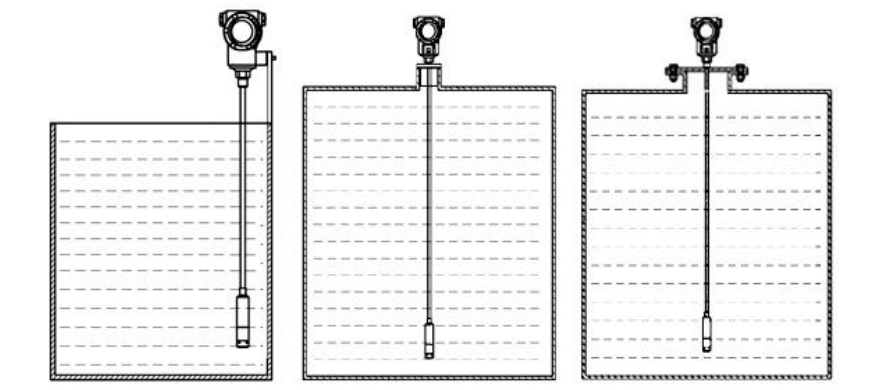
The ZINACA Instruments Submersible Level Transmitter is specifically engineered to handle the complex environments found in wastewater treatment plants, offering core advantages in high reliability and excellent media adaptability.
Core Operating Principle:
The submersible level transmitter operates based on the hydrostatic pressure principle. Its basic structure consists of a high-precision pressure sensor, specialized signal processing circuitry, and a waterproof cable containing a vent tube. When the sensor probe is fully immersed in the liquid, the pressure it experiences consists of two components: atmospheric pressure (introduced through the vent tube in the cable as the reference pressure) and the liquid's own hydrostatic pressure. According to fluid mechanics, the hydrostatic pressure is directly proportional to the liquid density, gravitational acceleration, and the liquid depth. The microprocessor within the transmitter accurately calculates the pure liquid column pressure by measuring the pressure difference between the probe and the atmospheric reference. Since the liquid density is essentially constant at a given temperature, the hydrostatic pressure signal is linearly converted into the liquid depth. Finally, the signal processing circuit converts this depth value into a standard 4-20mA or digital signal output to the control system.
Application Advantages in Wastewater Treatment Plants:
ZINACA Instruments' product line leverages these inherent advantages of hydrostatic sensing, while incorporating specific optimizations for WWTP challenges.
1. High Media Compatibility and Corrosion Resistance: To counter the common weak acids, weak bases, and corrosive gases found in wastewater, our probe housing utilizes high-quality 316L stainless steel or Polytetrafluoroethylene (PTFE/Teflon) materials. Particularly, PTFE offers superior resistance to almost all chemical substances, making the transmitter safe and reliable for use in chemical dosing tanks, denitrification, and dephosphorization basins—environments notorious for high corrosivity.
2. Excellent Anti-Clogging Design: Sludge, sand, and grease are major factors affecting the stability of submersible transmitters. Our probe front-end employs either an open-flush diaphragm design or a conical anti-fouling protective cap. This structure significantly reduces the possibility of suspended solids accumulating, ensuring continuous and sufficient contact between the pressure measurement port and the liquid, effectively preventing zero drift or sluggish measurement caused by fouling buildup.
3. Long-Term Stability and Accuracy: The product includes built-in temperature compensation circuitry, which effectively offsets the influence of ambient temperature changes on sensor accuracy. This ensures long-term stable level data even in basins with significant diurnal temperature variations or intense aeration, guaranteeing that the control system avoids false interpretations due to measurement errors.
4. Ease of Maintenance and High Protection Rating: Submersible transmitters are relatively simple to maintain, requiring only periodic cleaning of the probe. Our products feature an IP68 protection rating. Special sealing techniques are used at the cable and housing connection to ensure the sensor is absolutely waterproof for long-term submersion and damp environments, greatly extending its service life.
III. Product Application Cases: Critical Monitoring Points and Selection Guide
The application scope of submersible level transmitters in wastewater treatment plants is extremely broad, covering almost every stage that requires precise level control. Simultaneously, due to the environmental differences across various monitoring points, the selection process must be tailored to the specific needs.
Critical Monitoring Point Application Cases:
1. Influent Lift Stations and Equalization Basins: This is the first stop for wastewater entering the plant. Level control directly determines the safe operation of the pumps and the uniformity of subsequent treatment. Submersible transmitters are installed in the pump station sumps to monitor the level and control the automatic start/stop of multiple pumps (start at high level, stop at low level), thereby regulating the influent flow. The anti-clogging design is particularly important here to prevent entanglement by large debris and suspended solids.
2. Biological Reaction Tanks (e.g., A/O, SBR Basins): In the biological treatment stage, level control is vital for aeration volume and mud-water interface stability. The transmitter monitors the tank level and works with timing programs or control algorithms to accurately manage the switching between inflow, aeration, and outflow. Its high stability ensures the precision of SBR cyclical operations, preventing overflow or dry running.
3. Clarifiers (Primary and Secondary): The core function of clarifiers is solid-liquid separation. Minor level changes might indicate abnormal sludge levels or weir clogging. The transmitter monitors the clarifier level, aiding in judging sedimentation effectiveness and providing an accurate level reference for subsequent sludge return. For sludge tanks, the transmitter requires even stronger anti-adhesion and corrosion resistance.
4. Clear Water Tanks and Discharge Points: The clear water tank level reflects the surplus of treated water. The transmitter provides the highest precision level monitoring here, ensuring that compliant water is safely discharged or supplied to the reuse system as needed. Although the medium is clean (less corrosive), the requirement for measurement accuracy is very high.
Reliable Product Selection Guide:
To choose a reliable submersible level transmitter, the following core factors must be considered comprehensively:
A. Measurement Range and Accuracy: Determine the transmitter's span based on the maximum depth of the basin or well. For example, for an equalization basin with a depth of 6 meters, a product with a range slightly greater than 6 meters (e.g., 0–7 mH2O) should be selected. Accuracy for critical points (like clear water tanks, dosing tanks) should use products with ±0.1% FS accuracy, while for rougher equalization basins, ±0.5% FS is generally sufficient.
B. Material and Media Compatibility: This is the key factor determining the transmitter's lifespan. For general wastewater or neutral media, the cost-effective 316L stainless steel housing is adequate. But if used in acidic, alkaline, or chemical dosing tanks (e.g., containing PAC, PAM), materials with excellent corrosion resistance like PTFE (Polytetrafluoroethylene) or Titanium alloy must be selected.
C. Protection Rating and Cable Quality: IP68 is the minimum requirement for submersible level transmitters; it must guarantee no water ingress during long-term underwater operation. The cable is another easily overlooked component; it should be made of Polyurethane (PUR) or FEP material with properties like oil resistance, UV resistance, and abrasion resistance to prevent the cable sheath from aging or cracking, which would allow water into the vent tube.
D. Signal Output and Lightning Protection: The standard 4-20mA output offers high immunity to interference and is suitable for long-distance transmission. For pump stations installed outdoors or at high elevations, built-in lightning protection modules must be considered to effectively prevent damage from lightning strikes and transient high voltages, ensuring continuous system operation.
IV. About ZINACA Instruments: Your Professional Partner in Industrial Level Measurement
ZINACA Instruments is a high-tech enterprise specializing in industrial automation sensor technology, with years of technical accumulation and market experience in pressure and level measurement. The company is committed to providing high-performance, high-reliability, and cost-effective sensing solutions globally, having established deep professional expertise, particularly in sectors with stringent environmental adaptability requirements like wastewater treatment, water conservancy, and petrochemicals.
We recognize the demanding requirements imposed by the complex operating conditions of wastewater treatment plants. Therefore, ZINACA Instruments' submersible level transmitter product line, from the core pressure chip's selection, circuit board protection, to the choice of housing materials and the cable sealing process, all adhere to the most stringent industrial standards. Our products not only feature the mentioned IP68 protection rating and choice of corrosion-resistant materials (316L, PTFE, Titanium alloy) but also hold multiple industry certifications, ensuring their long-term stability and data reliability.
As a technology-driven enterprise, ZINACA Instruments possesses a comprehensive R&D system and quality control process. Before leaving the factory, every transmitter must undergo high-precision constant temperature calibration, pressure cycle impact testing, and long-term immersion aging tests to ensure the product works reliably immediately upon deployment into harsh wastewater media. We do not merely supply hardware; we provide comprehensive technical support and application consulting services, helping customers customize the most suitable level monitoring solution based on different tank depths, media corrosivity, and control accuracy requirements. Choosing ZINACA Instruments means selecting high quality, high reliability, and professional service, jointly advancing the efficiency of industrial automation and environmental governance.
 WhatsApp
 Email
Email
 +8617320288925