In the world of industrial automation and process control, pressure measurement is one of the most fundamental requirements. However, engineers and procurement managers often face a critical question: Should I use a standard Pressure Transmitter or a Differential Pressure Transmitter? While they may look similar and share core components, their internal logic, installation methods, and applications are distinct. Choosing the wrong type can lead to inaccurate data, system inefficiency, or even safety hazards. This article breaks down the key differences between these two essential instruments to help you make an informed decision for your project.
What is a Pressure Transmitter?
A standard Pressure Transmitter (often referred to as a Gauge Pressure Transmitter) is designed to measure the pressure of a fluid (liquid or gas) relative to atmospheric pressure. It typically features a single process connection point. The internal sensor measures the force exerted by the medium against a reference, converting it into an electrical signal, such as a 4-20mA output. It is the go-to choice for monitoring pressure inside a tank, boiler, or hydraulic line.
What is a Differential Pressure Transmitter?
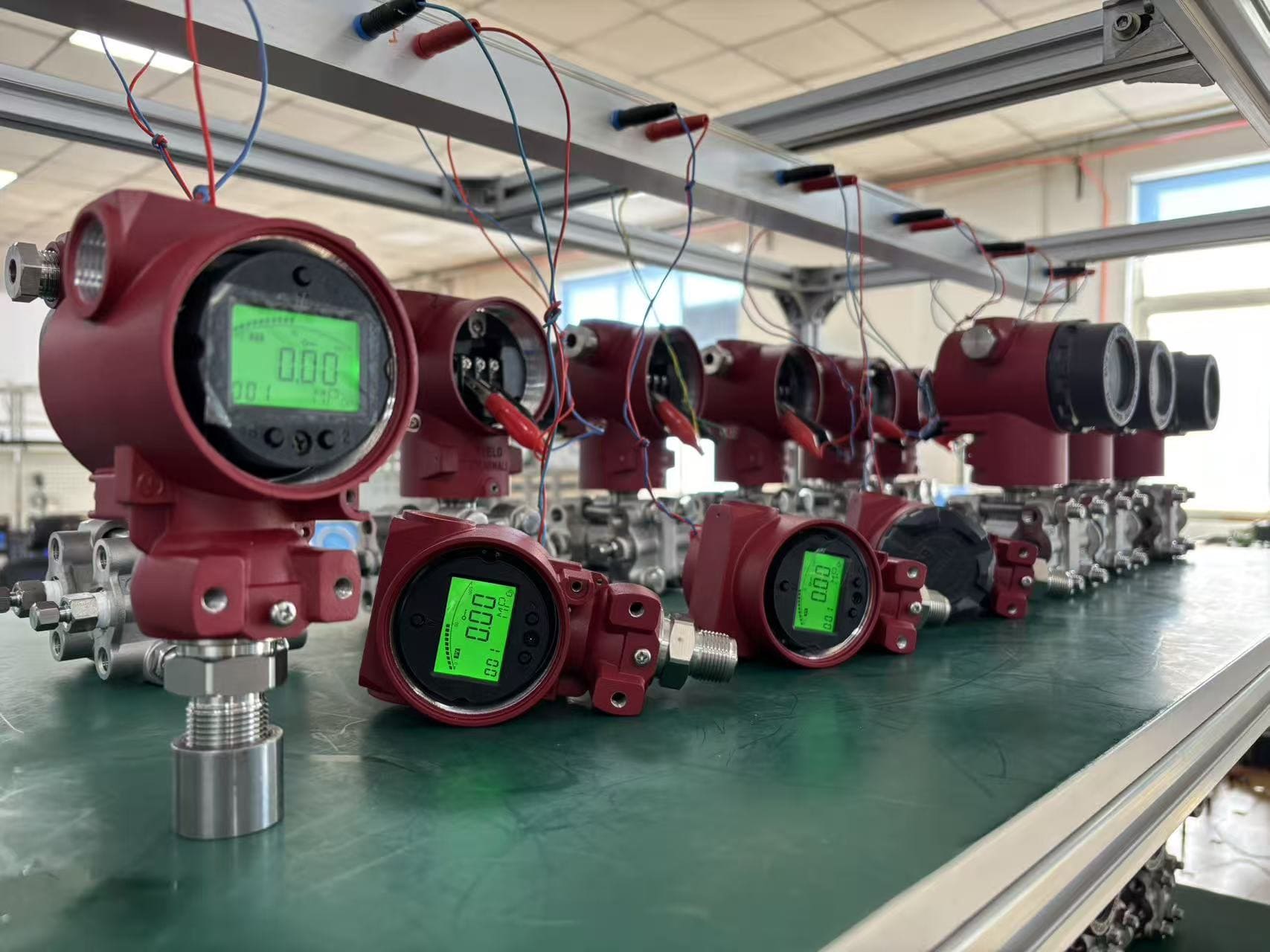
A Differential Pressure Transmitter (DP Transmitter) is a multifunctional digital instrument designed for high-precision and stable measurement of the difference between two pressure points.Unlike a standard transmitter, it features two process connections: a High-pressure side and a Low-pressure side.
The DP transmitter calculates the mathematical difference between these two inputs.This makes it a far more versatile tool, as it can be used not only to measure pressure drops but also to indirectly calculate flow rates, liquid levels in pressurized tanks, and filter clogging status.
Core Features of ZINACA Differential Pressure Transmitters
ZINACA Instruments utilizes advanced technology to ensure our DP transmitters perform in the most challenging environments. Key features include:
One. High-Precision Sensors: Equipped with monocrystalline silicon sensors for exceptional accuracy and long-term stability.Two. Advanced Digital Processing: Microprocessor-based design with digital isolation provides excellent anti-interference capabilities.Three. Automatic Compensation: Features automatic zero tracking (ZSC) and temperature compensation (TSC) to maintain accuracy despite environmental changes.Four. User-Friendly Interface: Backlit digital LCD with simple button operation and a one-click reset function for fast, safe operation.
Five. Industrial Durability: Explosion-proof design (Ex d II C T6 Gb) and IP65 protection for harsh industrial sites.
Key Differences: DP Transmitter vs. Pressure Transmitter
Measurement Logic: The primary difference is the reference point. A pressure transmitter measures "Pressure A" against the ambient atmosphere. A differential pressure transmitter measures "Pressure A" minus "Pressure B."
Connection Point:s
A standard pressure transmitter has one port. A DP transmitter has two ports (High and Low). If you only connect one port on a DP transmitter and leave the other open to the atmosphere, it functions effectively as a gauge pressure transmitter, but a standard pressure transmitter cannot be used to measure differential pressure.
Application Versatility
While a standard transmitter is limited to pressure monitoring, the DP transmitter is a "Swiss Army Knife" for engineers. For example,
Flow Measurement: By measuring the pressure drop across an orifice plate, a DP transmitter can calculate flow rate.Level Measurement: It can measure the liquid level in a sealed or pressurized tank by comparing the pressure at the bottom to the gas pressure at the top.Filter Monitoring: It detects when a filter is clogged by measuring the pressure difference before and after the filter element.
Applications of Differential Pressure Transmitters
Because of their versatility, DP transmitters are widely used in several sectors: Oil and gas field automation and remote transmission systems.
Power and energy systems for boiler and turbine monitoring.Industrial process control for chemical and petrochemical plants.Water supply systems and large-scale liquid level measurement.
Hydraulic and pneumatic control systems.
Technical Parameters of ZINACA DP Transmitters
Accuracy: Plus or minus 0.05 percent, 0.075 percent, or 0.1 percent (optional).
Range: -0.1 to 60MPa (optional).
Output Signal: Two-wire 4-20mA plus HART communication for easy calibration.
Stability: 0.1 percent over 3 years.
Power Supply: 12-36V DC.
Environmental Temperature: -30 °C to 70 °C.
Price of Differential Pressure Transmitters
The price of a Differential Pressure Transmitter is typically higher than that of a standard pressure transmitter due to its dual-sensor logic and complex internal microprocessor. The final cost varies depending on actual parameters, materials (such as stainless steel or specialized alloys), and configuration (explosion-proof or standard).
Factors like the required accuracy level and the inclusion of HART communication also influence the quotation. If you would like to know the latest price of ZINACA’s transmitters, please contact us for a detailed and personalized quotation.
Differential Pressure Transmitter OEM Service
ZINACA Instruments is a professional manufacturer of industrial instrumentation. We understand that unique working conditions require tailored solutions. We can customize reliable differential pressure transmitters according to your specific requirements, including specialized ranges, electrical connections, and mounting brackets. If you are looking for a Differential Pressure Transmitter OEM Service to integrate into your equipment or systems, please contact us for cooperation.
Differential Pressure Transmitter Manufacturer
As a trusted Differential Pressure Transmitter manufacturer, ZINACA Instruments provides high-quality, accurate, and durable devices for global industrial applications. Our products are designed to meet the highest standards of the petroleum, petrochemical, and energy industries, offering reliable performance even in the most challenging environments.
Conclusion: Which One Should You Choose?
If your goal is simply to know the pressure inside a pipe or tank relative to the outside world, a standard Pressure Transmitter is the most cost-effective solution. However, if you need to measure flow, level in a closed vessel, or the health of a filter, the Differential Pressure Transmitter is the essential choice.
Get a Quote
Tianjin ZINACA Intelligent Equipment Co., LTD
Location
No. 12, Within Waihuan Industrial Company Compound, Fujin Road, Zhongbei Town, Xiqing District, Tianjin, China
 WhatsApp
 Email
Email
 +8617320288925