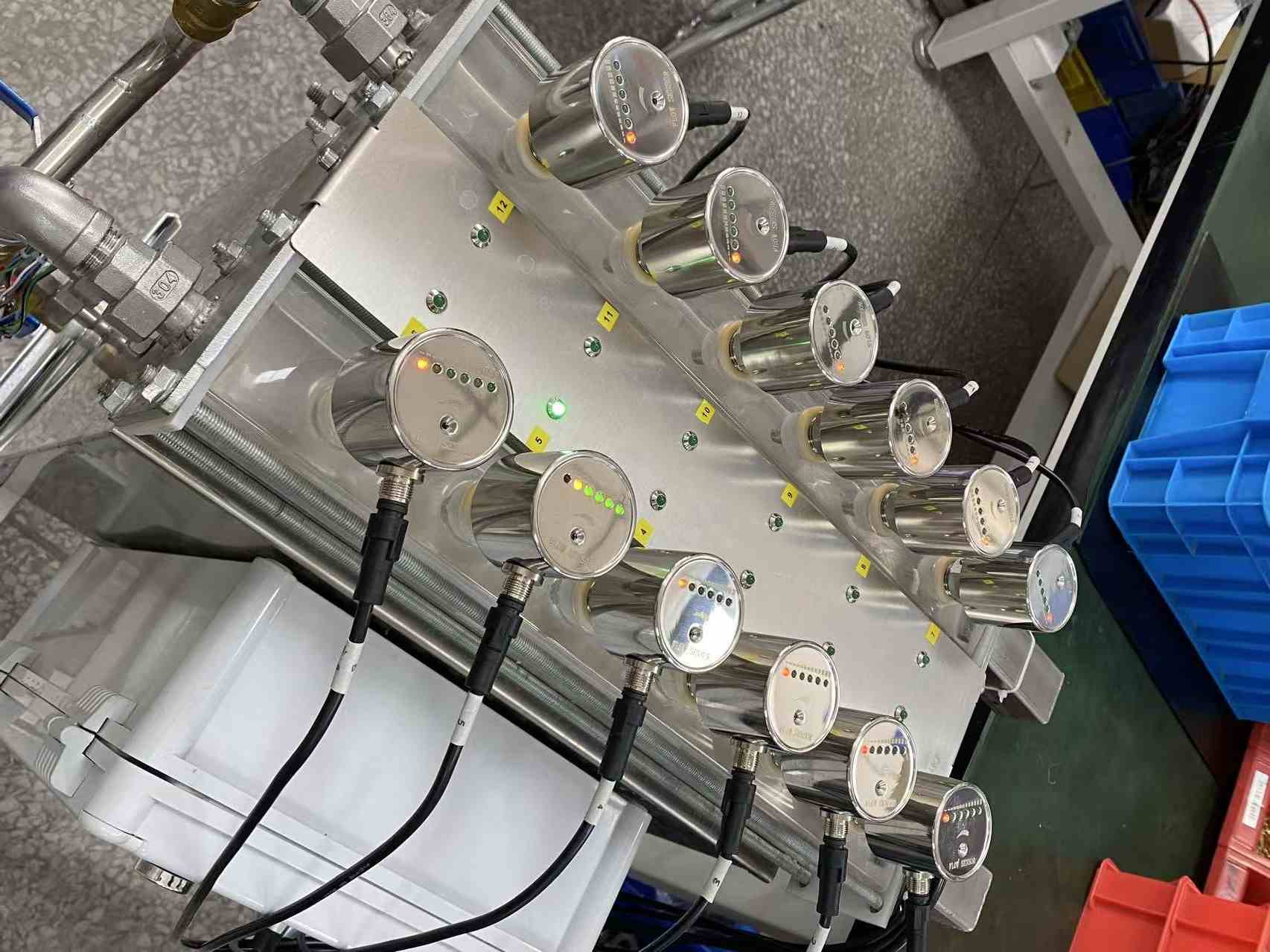
What is the Advantage of a Thermal Flow Switch Over Other Types of Flow Switches?
Introduction: The Evolution of Flow Monitoring
In the landscape of industrial fluid control, the flow switch is an indispensable safety component. Its primary job is simple: detect whether a liquid or gas is moving through a pipe and trigger an action if the flow stops or starts. For decades, mechanical designs like paddle or baffle switches and piston switches were the only options. However, as industrial processes have become more complex and maintenance costs have risen, the Thermal Flow Switch has emerged as a superior alternative. By understanding the technological leap from mechanical movement to thermal dispersion, engineers can significantly improve system reliability and reduce long-term operational costs.
What is a Thermal Flow Switch?
A Thermal Flow Switch operates on the principle of thermal dispersion. It contains two precision sensors within a single probe. One sensor is heated, and the other measures the ambient temperature of the fluid. As the fluid flows, it carries heat away from the heated sensor. The rate of heat loss is proportional to the flow velocity. This solid-state method of detection allows the switch to monitor flow without any moving parts, a characteristic that defines its primary advantages over traditional types.
Comparing Thermal Flow Switches with Baffle and Paddle Flow Switches
The Baffle or Paddle Flow Switch is one of the oldest designs in the industry. It uses a physical plate or paddle suspended in the fluid stream. When the fluid moves, it pushes the paddle, which mechanically triggers a switch.
The Mechanical Wear Advantage: The biggest drawback of the baffle switch is mechanical fatigue. Constant bending of the paddle and the tension on the return spring lead to eventual failure. Furthermore, paddles are prone to snapping off due to water hammer or high-velocity surges. The thermal flow switch has no moving parts, meaning there is zero mechanical wear, resulting in a much longer service life.
The Clogging and Debris Advantage: In systems where the fluid contains debris, fibers, or solids, a baffle switch acts as a trap. Material can wrap around the paddle, causing it to get stuck in either the on or off position. This can lead to catastrophic pump failure if the switch fails to report a no-flow condition. Thermal flow switches feature a smooth, cylindrical probe that is naturally resistant to fouling and cannot be jammed by solids.
The Pressure Drop Advantage: A baffle switch requires a significant physical force to move the paddle, which creates a noticeable pressure drop in the system. The thermal flow switch probe only minimally protrudes into the pipe, offering almost zero resistance and preserving the energy efficiency of the pumping system.
Comparing Thermal Flow Switches with Piston Flow Switches
Piston Flow Switches utilize a magnetic piston that is lifted by fluid flow within a restricted chamber. While more robust than paddles, they still face significant limitations.
The Sensitivity Advantage: Piston switches generally require a high threshold of flow to lift the internal piston. They struggle to detect very low flow velocities. Thermal flow switches are incredibly sensitive and can detect flows as low as 0.01 meters per second. This makes them ideal for cooling loops and leak detection, where even the slightest movement must be monitored.
The Maintenance Advantage: Piston switches rely on tight tolerances between the piston and the housing. If the fluid is even slightly dirty, grit can enter the chamber and lock the piston in place. This requires frequent disassembly and cleaning. Because the thermal switch has no internal chambers or sliding parts, it is virtually maintenance-free, even in less-than-perfect fluid conditions.
The Installation Advantage: Piston switches are often bulky and must be installed in a specific orientation, usually vertically, for gravity to return the piston. Thermal flow switches can be installed in any orientation, whether horizontal, vertical, or at an angle, providing much greater flexibility in tight piping layouts.
Key Advantages of the Thermal Flow Switch at a Glance
One. No Moving Parts: This is the foundation of its reliability. No parts to jam, break, or wear out.
Two. Low Pressure Drop: Saves energy and allows for smaller pump sizes in some applications.
Three. Exceptional Sensitivity: Capable of monitoring very low flow rates that mechanical switches miss.
Four. Versatile Media Support: Suitable for water, oils, and even gases. With specialized materials like PTFE or 316L Stainless Steel, they can handle aggressive chemicals.
Five. High Pressure Resistance: Solid-state probes can withstand much higher system pressures than thin metal paddles or plastic pistons.
Typical Applications Where Thermal Switches Excel
The advantages of thermal technology make these switches the first choice for several critical industries. In laser and medical equipment cooling, they ensure that expensive components never overheat due to a subtle drop in coolant flow. In the oil and gas industry, they protect high-pressure pumps from dry running. In the chemical industry, the lack of moving parts allows for the use of corrosion-resistant coatings like PTFE, ensuring long-term stability in acid lines.
Product Price of Thermal Flow Switches
The price of a thermal flow switch varies depending on actual parameters and configuration. While the initial purchase price might be higher than a simple plastic paddle switch, the total cost of ownership is much lower. When you factor in the cost of a single hour of factory downtime or the cost of replacing a burned-out pump, the thermal flow switch pays for itself very quickly. Factors that influence the price include the material of the probe, the pressure rating, and the type of output signal required. If you would like to know the latest price of ZINACA Instruments thermal flow switch products, please contact us for a detailed quotation.
Custom Thermal Flow Switch OEM Service
ZINACA Instruments is a professional industrial instrument manufacturer. We specialize in providing tailored solutions for equipment manufacturers. We offer comprehensive OEM services, including custom probe lengths to fit specific pipe diameters, specialized materials for corrosive media, and custom electronic outputs to match your existing control systems. If you are looking for a reliable partner for your flow monitoring needs, ZINACA Instruments is ready to provide expert technical support and custom manufacturing.
Supplier of Thermal Flow Switches
As a leading thermal flow switch manufacturer and supplier, ZINACA Instruments serves a global clientele across various industrial sectors. Our products are built to the highest quality standards, ensuring safety and precision in every application. We provide technical assistance from the selection stage through to installation and maintenance. Contact us today to learn more about how our thermal flow switches can improve your process reliability and protect your infrastructure.
 WhatsApp
 Email
Email
 +8617320288925