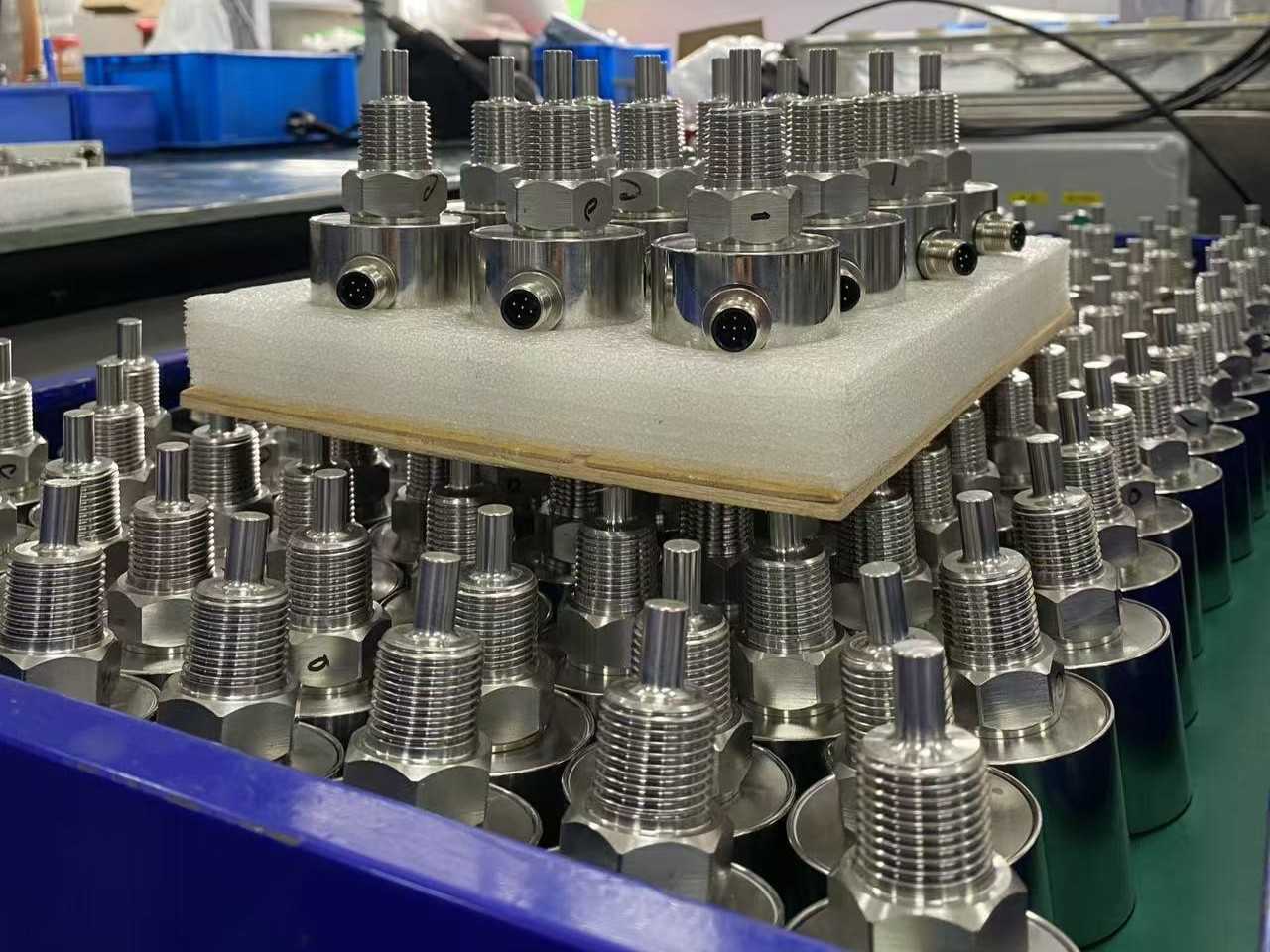
Thermal Flow Switch Comprehensive Guide From Working Principle to Advanced Troubleshooting and Maintenance
Introduction: The Safety Sentinel of Modern Fluid Systems
In modern industrial automation fluid control systems, the Thermal Flow Switch has become the mainstream choice to replace traditional mechanical paddle switches. This is due to its lack of moving parts, extremely high sensitivity, and very low pressure drop. Whether in laser cooling, lubrication system protection, or chemical pipeline monitoring, it acts as a critical safety sentinel. However, as a precision electronic instrument, correct selection, installation, and rapid repair of common faults are the keys to ensuring long term system operation. This article provides a deep analysis of how these switches work and offers detailed failure analysis and maintenance advice based on industrial practice.
What is a Thermal Flow Switch?
A Thermal Flow Switch is a solid-state electronic device that monitors the flow rate of liquids or gases and triggers a signal when the flow crosses a preset threshold. Unlike mechanical switches that rely on physical force, the thermal switch uses heat transfer to sense velocity.
How Does a Thermal Flow Switch Work?
The operation is based on the principle of Thermal Dispersion. The probe contains two resistance temperature detectors or RTDs. One is the sensing resistor, which measures the real-time temperature of the medium. The other is the heating resistor, which maintains a constant temperature difference above the medium.
In a stationary state, when the medium in the pipe is not flowing, the heat generated by the heating resistor accumulates around the probe, keeping the temperature difference at its maximum. In a flowing state, when the medium starts to move, the fluid carries away the heat from the heating resistor. The faster the flow, the more heat is removed, and the temperature difference between the two resistors decreases. The internal circuit detects this change and compares it with a preset value to trigger a relay or transistor output signal.
Core Advantages of Thermal Technology
One. No mechanical wear. Because there are no paddles or springs, there is no risk of mechanical fatigue or jamming caused by foreign objects.
Two. Low pressure loss. The probe only extends a small distance into the pipe, offering almost zero resistance to the fluid.
Three. Low flow monitoring. It can capture tiny flows as low as 0 dot 01 meters per second that mechanical switches cannot sense.
Four. Wide media compatibility. By using materials like 316L stainless steel, Hastelloy, or PTFE, it can handle various corrosive liquids.
Common Failure Analysis and Troubleshooting
During actual use, environmental factors or improper operation may cause equipment anomalies.
One. Power System Failures If the power indicator light is not on, it may be due to a wiring error or a damaged power module. Check if the power wiring matches the diagram and use a multimeter to measure the input voltage. Expert tip: Always confirm the voltage level, such as DC 24V or AC 220V, before wiring. Reverse connection or overvoltage is the main cause of permanent damage to the power module.
Two. Flow Sensing and Status Anomalies: If the flow indicator light does not turn on, the flow rate may not have reached the set value. You should increase the system flow or adjust the potentiometer to lower the threshold. If the probe is scaled or contaminated, you must clean the probe. This is a critical step. Use alcohol or acetone to wipe the surface. If there is hard scale, use fine sandpaper to lightly buff it. If the probe is mechanically damaged with cracks or deformation, it must be replaced. Expert tip: Thermal flow switches are very sensitive to probe cleanliness. Oil or chemical residues form an insulation layer that blocks heat exchange, leading the switch to misjudge the flow as low or zero.
Three. Output Signal Failures: If the indicator light shows normal status but there is no output signal, check for wiring errors between the normally open and normally closed contacts. Also check for circuit breaks or short circuits in the cable. If the relay is damaged, it must be replaced by the factory. Expert tip: If your load current is too large, it can cause relay contacts to stick or burn out. In high-power scenarios, use the flow switch to drive an intermediate relay.
Four. Adjustment Function Failures: If the adjustment potentiometer does not react, you may be using the wrong tool. Use a matching precision screwdriver and avoid using force that could break the internal structure of the potentiometer.
Best Practices for Installation and Selection
To avoid the failures mentioned above, correct installation and selection are vital.
One. Installation Position Avoid turbulence by installing the switch away from elbows, valves, and pump outlets. Ensure a straight pipe section of at least 5 times the pipe diameter before the switch and 3 times after. Ensure the pipe is full of liquid. If the probe touches air, it will cause jumpy readings or constant alarms. In vertical pipes, the flow should be from bottom to top. The probe should be inserted to a depth where the flow is most stable, usually between one quarter and one half of the pipe diameter.
Two. Media Specific Strategies. For high viscosity liquids like oil, the set point must be calibrated on site because oil has lower thermal conductivity than water. For corrosive media, ensure the probe material can resist erosion to avoid internal circuit damage.
Daily Maintenance Suggestions
Perform a periodic self-check every quarter to see if the alarm output is sensitive by manually reducing the flow. Ensure the junction box is locked and the cable glands are sealed to prevent moisture from entering and corroding the circuit board. For high-end models with digital displays, keep a record of the zero point and full scale parameters.
Thermal Flow Switch Price
The price of a thermal flow switch varies depending on actual parameters and configuration. Factors such as wetted materials, connection types, and explosion-proof requirements will influence the cost. If you would like to know the latest price of ZINACA products, please contact us at any time for a detailed quotation.
Custom Thermal Flow Switch OEM Service
ZINACA Instruments is a professional industrial instrument manufacturer. We provide OEM and customization services based on your specific process requirements and working conditions. If you are looking for a reliable partner for custom flow switch products, please contact ZINACA Instruments.
Thermal Flow Switch Manufacturer and Supplier
As a trusted manufacturer, ZINACA Instruments has extensive experience in industrial automation. Our products are designed for high quality and reliability in harsh environments. We offer technical support to help you optimize your equipment selection and installation.
Conclusion
The thermal flow switch is a smart choice for industrial safety. While its initial cost may be slightly higher than that of mechanical switches, its maintenance-free nature and high precision provide a high return on investment. By mastering troubleshooting techniques, especially probe cleaning and wiring checks, you can minimize downtime and ensure stable production. Contact our technical support team for assistance with complex conditions or specific wiring definitions.
 WhatsApp
 Email
Email
 +8617320288925