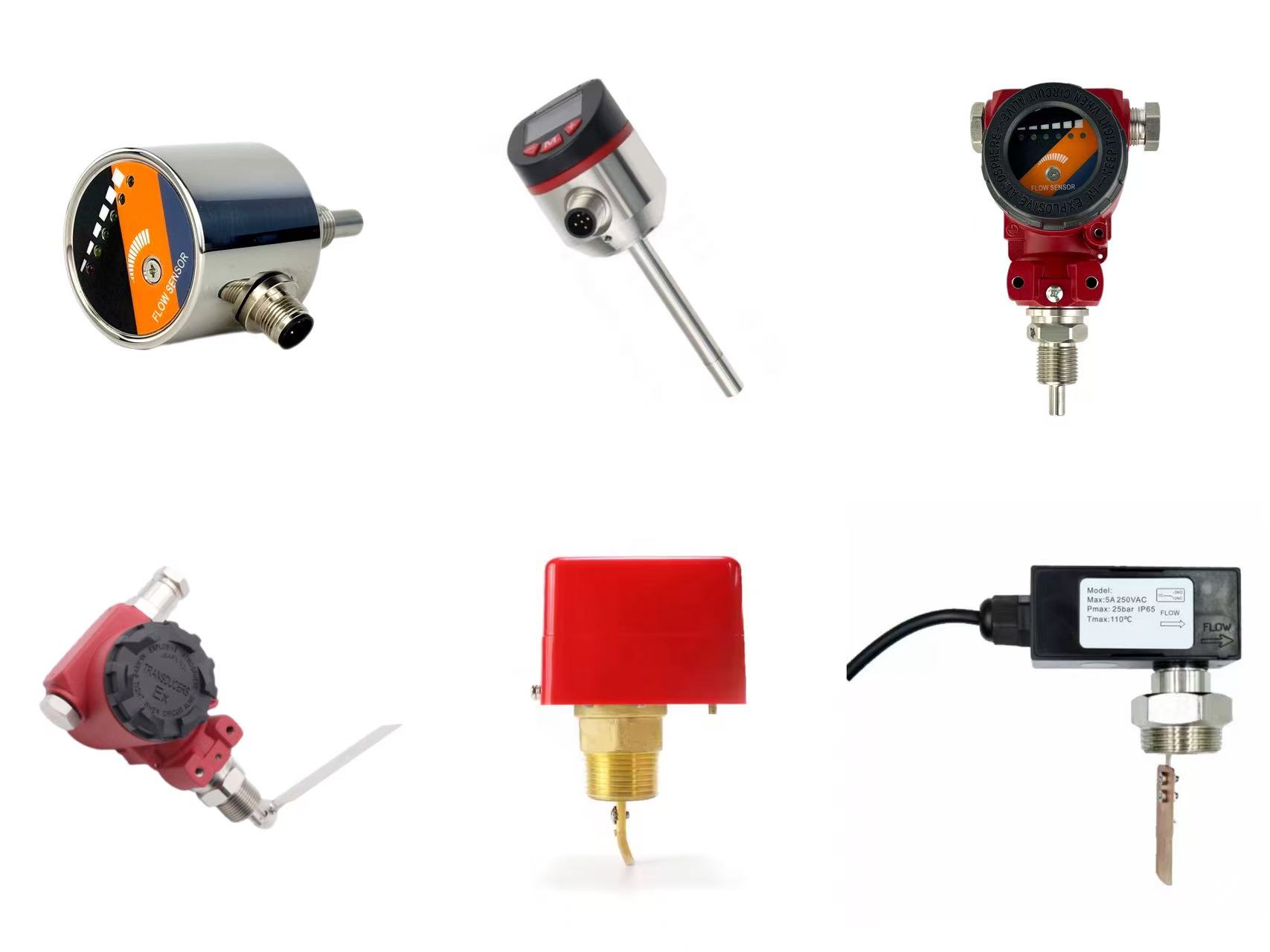
How to Choose the Right Flow Switch for Your Pipeline: A Comprehensive Guide to Paddle, Baffle, and Thermal Technologies
In the complex world of industrial fluid management, the safety and efficiency of your operations often hinge on a single critical component, the flow switch. Whether you are protecting a multi-million dollar pump from running dry, monitoring a cooling loop for a data center, or ensuring the correct chemical dosage in a processing plant, selecting the right flow switch is not just a technical detail; it is a foundational safety requirement. At ZINACA Instruments, we understand that precision and reliability are the twin pillars of industrial automation.
However, with various technologies available, specifically Paddle Baffle Target and Thermal Dispersion, many engineers and procurement managers often face a paradox of choice. Each technology has its strengths, but choosing the wrong one can lead to frequent maintenance system downtime or even catastrophic equipment failure. In this guide, we will dive deep into the mechanics, advantages, and ideal applications of these three primary flow switch types to help you make an informed decision for your pipeline.
The Critical Role of Flow Switches in Modern Industry
A flow switch is a device that monitors the flow of liquids, gases, or slurries through a pipe and triggers an electrical signal when the flow rate reaches a specific threshold known as the set point. This signal can start or stop a motor, open or close a valve, or trigger an alarm. Without an accurate flow switch, systems are vulnerable to several high-risk scenarios.
Pump Cavitation is perhaps the most common danger. This occurs when a pump continues to operate without enough fluid, leading to the formation of vapor bubbles that implode and erode the internal components. System Overheating is another major concern, especially in HVAC systems or industrial lasers,s where a loss of coolant flow can lead to total system failure within seconds. Finally, Process Inconsistency can occur in chemical and food production, where incorrect mixing or dispensing leads to wasted batches. ZINACA Instruments provides the sensory eyes for these systems, ensuring that flow is always within safe parameters.
Paddle Flow Switches: The Time-Tested Mechanical Standard
The Paddle Flow Switch is the most traditional mechanical design and remains a staple in the industry due to its simplicity. It operates on a basic principle of kinetic energy. A thin metal or plastic paddle or vane hangs down into the path of the fluid. As the fluid moves, it pushes the paddle. This mechanical movement is transmitted through a bellows or a pivot to a microswitch or a reed switch.
The key advantages of paddle switches include cost-effectiveness and simplicity. They are generally the most affordable options for large diameter pipes. Because there are no complex electronics involved, they are easy for field technicians to understand and test. They also offer a low pressure drop because the paddle is typically thin and offers minimal resistance to the flow. Most ZINACA paddle switches are field adjustable, meaning the paddles can be trimmed to size to fit different pipe diameters from one inch to eight inches or more.
However, there are limitations. Since it relies on moving parts, the pivot point and bellows can wear out over time. They are also prone to fouling. If the fluid contains debris fibers or high viscosity, the paddle can become stuck in the on or off position. Furthermore,e they usually must be installed in a horizontal pipe run to ensure gravity or spring tension works correctly. This makes them best for clean water systems, HVAC chillers, and general-purpose pump protection in large pipelines.
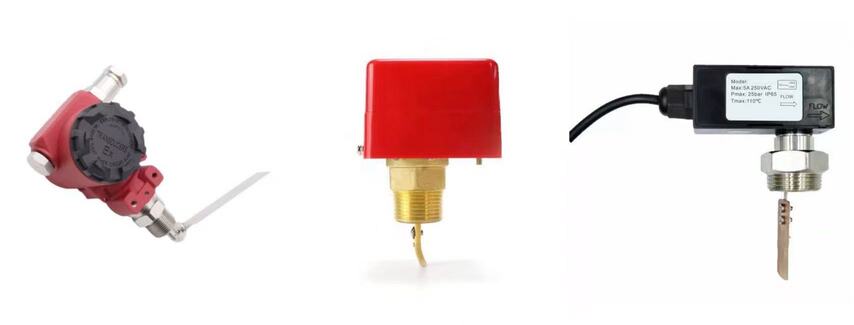
Baffle Target Flow Switches Rugged Reliability
Often confused with paddle switches, the Baffle or Target Flow Switch is built for tougher environments. Instead of a flexible paddle, it uses a rigid target plate. When the fluid hits this target, the force overcomes a calibrated spring. This movement triggers the internal switch.
The advantages of baffle switches include high-pressure resistance and robustness. They are typically more rugged than paddle switches and can handle higher surge pressures. Some baffles can even monitor flow in both directions. They also offer higher set point stability because they use heavy-duty springs, which are less likely to flutter or give false readings in turbulent flow.
The trade-off is a higher pressure drop. The rigid target creates more resistance than a thin paddle. Like the paddle switch, the internal spring and seals are subject to mechanical fatigue after millions of cycles. These are best used in industrial process lines, heavy machinery lubrication monitoring, and systems with higher flow velocities where a more delicate paddle might snap.
Thermal Dispersion Flow Switches: The Electronic Evolution
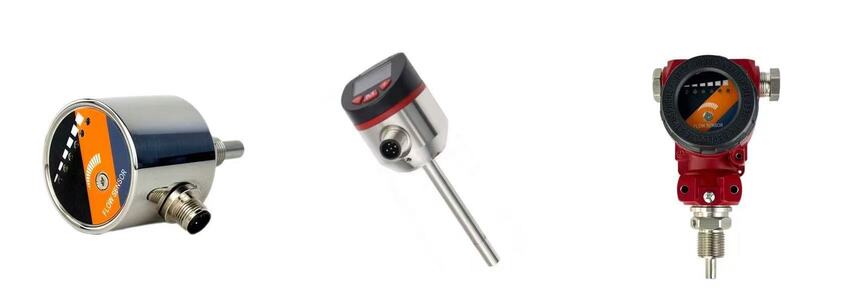
The Thermal Dispersion Flow Switch represents the modern solid-state approach to flow monitoring. This technology is a specialty at ZINACA Instruments because it offers a no-moving-parts solution to flow detection. It uses two temperature sensors known as RTDs that sit in the fluid. One sensor is heated, and the other measures the ambient temperature of the fluid.
When the fluid is stationary, the temperature difference between the two sensors is at its maximum. As the fluid begins to flow, it carries heat away from the heated sensor, which is known as the dispersion effect. The electronics measure this cooling rate and translate it into a flow signal.
The advantages of thermal switches are significant. With no moving parts, there is nothing to jam, break, wear out, or leak. They offer extremely high sensitivity and can detect microflows that mechanical switches would ignore. They are also highly versatile and can be used for both liquids and gases. For aggressive chemicals, the probes can be made of high-grade stainless steel or coated with PTFE for maximum corrosion resistance. Furthermore, they are compact and can be installed in any orientation.
The primary limitations are a higher initial cost due to the advanced electronics and a slight thermal lag. Because they rely on heat transfer, they may have a response time of one to three seconds compared to the instant mechanical click of a paddle. They can also be affected by drastic, sudden changes in fluid temperature. These are best for low flow detection, chemical processing, oil and gas sterile environments, and any application where fit-and-forget reliability is required.
Technical Comparison and Decision Factors
When evaluating these technologies for your facility, ZINACA Instruments recommends focusing on four key performance metrics.
First, consider the Moving Parts factor. Mechanical switches, paddles, and Baffles will eventually fail due to friction. If your switch is located in a hard-to-reach area, a Thermal switch is much more cost-effective over its lifetime due to zero maintenance needs.
Second, evaluate Sensitivity. Mechanical switches are blunt instruments. They need a significant force to move. If you are monitoring a drip or a very slow circulation loop, only a Thermal Dispersion switch can provide the accuracy needed.
Third, consider Media Cleanliness. In the world of wastewater or slurry,y mechanical switches are a liability. Solids and hair-like fibers can wrap around a paddle and lock it in place. Thermal switches are flus,h or rod-shaped, making them far more resistant to buildup.
Fourth, consider Pressure Drop. In high-efficiency systems, every bit of pressure lost to a sensor costs energy at the pump. Thermal switches and Paddle switches offer the lowest resistance, while Baffle switches represent the highest resistance.
AStep-by-Stepp Selection Checklist
To choose the perfect ZINACA Instruments product for your pipeline, use the following checklist.
Step On:e Analyze the Media Fluid Profile. Is it clean water? A paddle switch is likely sufficient. Is it a viscous oil or a chemical? A thermal switch is better because it won’t get gummed up. Does it contain debris? Avoid mechanical paddles.
Step Two: Determine the Flow Rate or Set Point. Mechanical switches require a certain amount of push to move the paddle. If you need to detect a very slow leak or a tiny drip, Thermal is your only viable option.
Step Three:e Consider the Environment. In high-vibration environments, mechanical switches may chatter or fail prematurely. Solid-state thermal switches are immune to vibration. If you are in a hazardous area, ensure the switch is ATEX or IECEx certified.
Step Four: Installation Constraints. Do you have a long, straight run of pipe? Mechanical switches need a laminar, smooth flow to work accurately. If you have a cramped space near a bend or a valve, a thermal switch is generally more forgiving regarding installation orientation.
Step Five: Total Cost of Ownership. Do not just look at the purchase price. A budget paddle switch that fails every six months and requires a system shutdown is far more expensive than a premium thermal switch that lasts for ten years without maintenance.
Installation and Maintenance Best Practices
To ensure the longevity of your ZINACA Instruments flow switch, regardless of the type, keep these tips in mind. Use the Five and Two Rule. For mechanical switches, try to have a straight pipe run of five times the pipe diameter upstream and two times the diameter downstream to avoid turbulence. Avoid Air Pockets. Never install a flow switch at the very top of a piping loop where air can get trapped, as this will lead to false no-flow readings.
Ensure the correct depth. The paddle or thermal probe must be submerged deep enough into the flow stream, typically one-third of the way into the pipe, to get an accurate reading. Finally, perform regular calibration. Even maintenance-free thermal switches should be checked annually to ensure the electronics are still triggering the correct alarm set points.
Conclusion
Choosing the right flow switch is a balance between technical requirements and budgetary realities. At ZINACA Instruments, we believe that the best sensor is the one you never have to worry about after installation.
Choose a Paddle Flow Switch for large-scale clean water projects where cost is a primary driver. Choose a Baffle or Target Switch for rugged industrial applications with higher pressures. Choose a Thermal Dispersion Flow Switch for critical processes, low flow detection, or environments where maintenance downtime is unacceptable.
At ZINACA Instruments, we specialize in providing high-precision flow monitoring solutions tailored to your unique industrial needs. Our engineers are ready to help you calculate flow rates and select the perfect switch for your pipeline. For more technical specifications and to view our full product line, visit our online catalog or contact our technical support team today for a personalized consultation. Together, we can ensure your system flows safely and efficiently for years to come.
 WhatsApp
 Email
Email
 +8617320288925