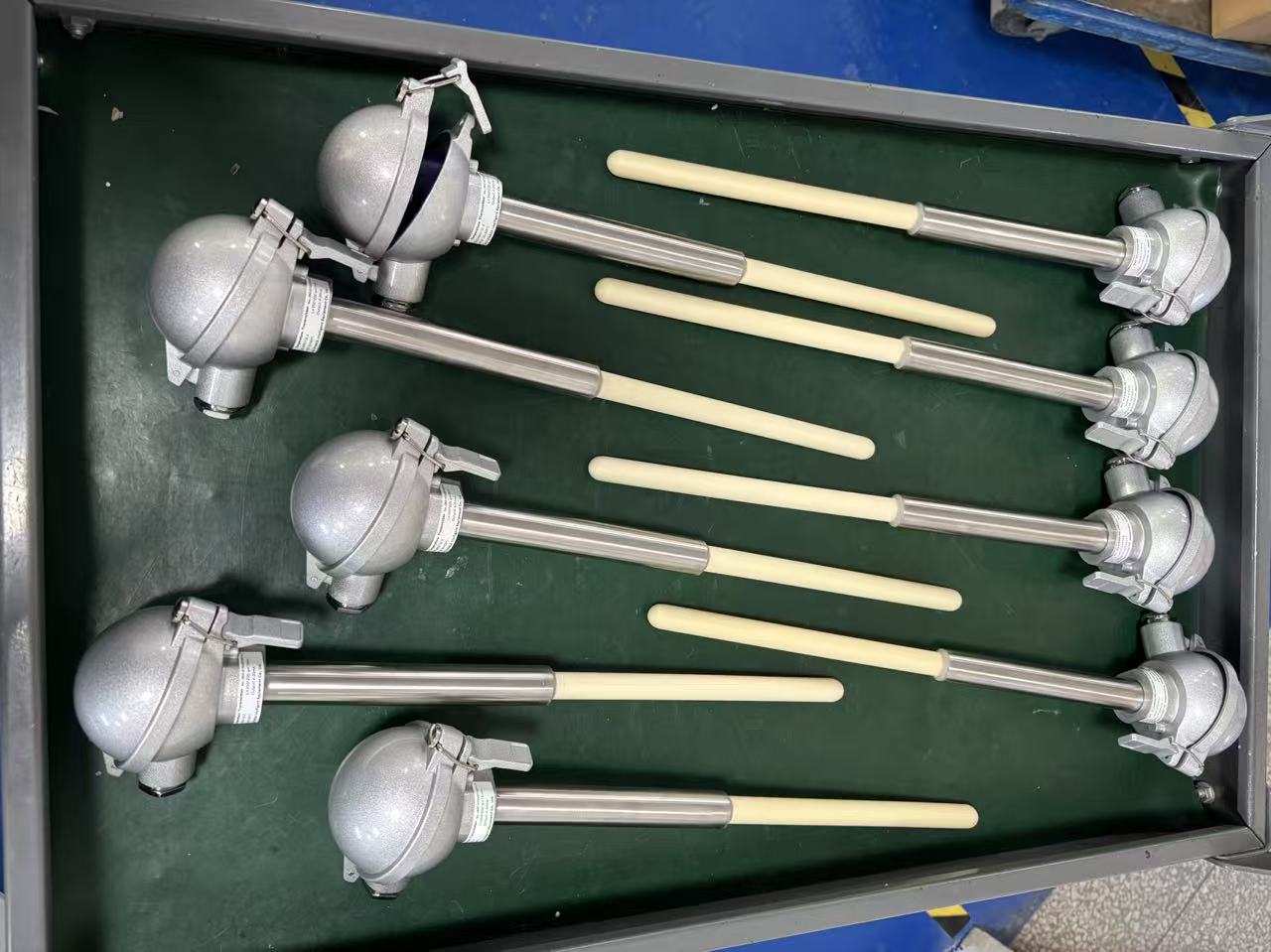
Why Corundum Protection Tubes are the Primary Choice for High-Temperature Thermocouples
Why Corundum Protection Tubes are the Primary Choice for High-Temperature Thermocouples
Introduction: The Hostile World of High-Temperature Measurement
In the heart of industrial furnaces, glass melting tanks, and ceramic kilns, temperatures often soar well above 1000 degrees C. For engineers and technicians, accurately measuring these temperatures is not just a matter of process control; it is a matter of safety, energy efficiency, and product integrity. The instrument of choice for these extremes is the thermocouple, specifically the noble metal varieties like Type S, Type R, and Type B. However, the delicate wires inside these thermocouples, often made of expensive Platinum and Rhodium, are extremely susceptible to contamination and mechanical failure when exposed to harsh industrial atmospheres. At such elevated temperatures, even trace amounts of metallic vapors or reducing gases can poison the thermocouple wires, causing a drift in accuracy or complete breakage. To survive these conditions, the thermocouple requires a robust shield. This is where the Corundum Protection Tube steps in. Known for its exceptional thermal, chemical, and electrical properties, corundum has become the industry standard for protecting sensors in environments reaching up to 1600 degrees C. This article explores the science behind corundum, why it outperforms other materials, and how to select the right configuration for your high-temperature needs.
What is a Corundum Protection Tube?
A corundum protection tube is a specialized ceramic cylinder made primarily of Aluminum Oxide (Al2O3). In the world of industrial ceramics, Corundum refers to the crystalline form of alumina. Based on the purity of the Aluminum Oxide, these tubes are generally categorized into two grades: 95 percent Alumina (High Alumina) and 99 percent Alumina or higher (Pure Corundum). Corundum is famous for its hardness; on the Mohs scale, it ranks at 9, just below diamond. This inherent hardness translates into a protection tube that is incredibly resistant to physical wear and deformation at temperatures where most metals would behave like wax.
Why Corundum is the Preferred Choice for High Temperatures
One. Exceptional Temperature Resistance. While stainless steel or high-nickel alloys provide excellent protection at lower ranges, they begin to oxidize or soften once they cross the 1100 degrees C threshold. Pure Aluminum Oxide has a melting point of approximately 1600 degrees C. High-purity corundum tubes can be used continuously at 1600 degrees C, and can withstand short-term peaks up to 1600 degrees C. This makes them the only viable choice for industries where temperatures consistently exceed the limits of metallic protection.
Two. Chemical Inertness and Contamination Prevention. The most common cause of thermocouple failure at high temperatures is poisoning from the atmosphere. In a furnace, carbon, sulfur, or metallic vapors may be present. If these elements reach the Platinum-Rhodium wires, they form brittle alloys, changing the thermocouple output and leading to massive measurement errors. Corundum is chemically inert and does not react with most acids or molten metals. High-density corundum tubes have very low porosity, acting as a gas-tight barrier that prevents harmful gases from reaching the sensor element.
Three. Superior Electrical Insulation. As the temperature increases, the electrical resistance of many materials drops. If a protection tube becomes slightly conductive at high heat, it can allow stray currents from furnace heating elements to leak into the thermocouple signal. Since thermocouples operate on a millivolt signal, even tiny interference can result in a reading error of 50 degrees C or more. Corundum maintains excellent electrical resistivity even at 1600 degrees C, ensuring the signal remains pure.
Four. Resistance to Thermal Creep. At extreme temperatures, materials tend to slowly deform under their own weight, a phenomenon known as creep. Many ceramic materials sag or bend when held horizontally at 1500 degrees C. Corundum has high structural rigidity and a low creep rate, allowing it to maintain its shape over long periods of operation.
How Does a Thermocouple with Corundum Work?
The assembly of a high-temperature thermocouple is a masterpiece of material science. It is usually a multi-layered system. The process begins with the thermocouple element, where two dissimilar wires, like Platinum and Platinum-Rhodium, are joined. These wires are threaded through a corundum twin-bore insulating rod to prevent them from touching. The entire assembly is then placed inside the corundum outer protection tube, which seals the environment out. Finally, the tube is fixed into a connection head where the wires connect to external cables. When the furnace heats up, the corundum tube transfers the heat to the internal wires, which generate a voltage relative to the temperature.
Applications of Corundum-Protected Thermocouples
The unique properties of these sensors make them indispensable in several sectors. In steel and metallurgy, they monitor molten steel temperatures and furnace atmospheres. In glass manufacturing, where temperatures reach 1500 degrees C, corundum is the only material that can withstand the chemical attack from glass batches. In the semiconductor industry, corundum ensures that no metallic contaminants leach into high-purity products. Laboratory research also relies on corundum protection to ensure that experimental data is not skewed by sensor drift.
How to Choose the Right Corundum Thermocouple?
When selecting your sensor, consider several technical factors. For the measurement range, if you are operating above 1400 degrees C, always specify 99 percent pure corundum. Consider the atmosphere; in reducing atmospheres where oxygen is scarce, corundum is vital to prevent silica-poisoning of the Platinum wires. For installation orientation, vertical installation is preferred as it prevents the tube from sagging under its own weight. If horizontal installation is required, use a larger diameter tube for extra rigidity.
Maintenance and Fault Prevention
The greatest weakness of corundum is its brittleness and sensitivity to thermal shock. Unlike metal, ceramic will not bend; it will shatter. The most common cause of failure is shattering when a cold tube is inserted into a hot furnace. To prevent this, always follow the rule of slow entry, inserting the tube into the furnace gradually, for example, 50 to 100 mm per minute. This allows the ceramic to expand slowly. Additionally, never allow water or coolants to touch a hot corundum tube, as the localized contraction will cause immediate failure. Periodically inspect the tube for fine cracks or signs of chemical erosion.
Corundum Thermocouple Product Price
The price of an assembly featuring a corundum protection tube varies significantly based on actual parameters. The corundum tube is often the most expensive housing component, and the internal Platinum-Rhodium wires are priced by the gram according to the global precious metal market. Key factors influencing the price include the purity of the tube, its dimensions, the thermocouple type, and whether a dual-protection tube configuration is used. The product price of an industrial thermocouple varies depending on actual specifications. If you would like to know the latest price of ZINACA high-temperature thermocouple products, please contact us for a detailed quotation.
Custom Corundum Thermocouple OEM Service
ZINACA Instruments is a professional industrial instrumentation manufacturer. We understand that every kiln and furnace has unique challenges. Our OEM services include custom tube dimensions, specialized material combinations, tailored mounting options like custom flanges or threads, and professional calibration. If you are looking for a custom thermocouple OEM service, please contact us. We are committed to providing durable sensors that meet your exact process requirements.
Supplier of High-Temperature Thermocouples
As a trusted thermocouple manufacturer and supplier, ZINACA Instruments provides high-precision devices designed for the most demanding industrial environments. Our corundum-protected sensors are used worldwide in metallurgy and glass production. We combine high-purity alumina ceramics with precision-graded wires to ensure stability and accuracy. Please contact ZINACA Instruments to receive more information, technical specifications, and the latest quotation for our corundum protection tube thermocouples.
 WhatsApp
 Email
Email
 +8617320288925