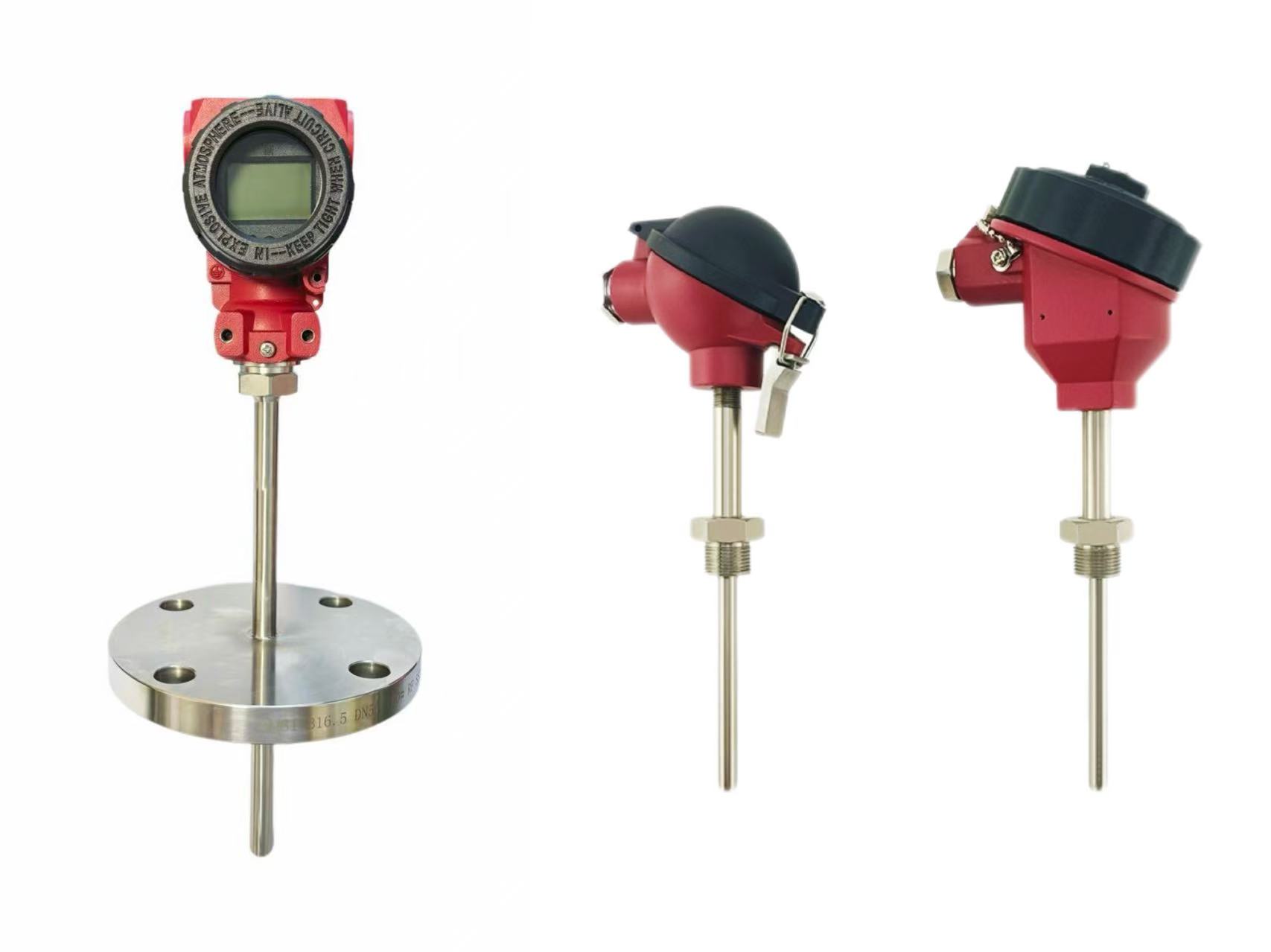
Temperature Sensor vs. Temperature Transmitter: What is the Difference?
In industrial automation and process control, temperature is one of the most frequently measured physical quantities. However, engineers and procurement managers often confuse the terms Temperature Sensor and Temperature Transmitter. While both are used to monitor heat, they differ significantly in signal processing, structure, and application.
As a professional instrumentation manufacturer, ZINACA Instruments provides this in-depth analysis to help you choose the right monitoring solution for your production line.
What is a Temperature Sensor?
A temperature sensor is a device that senses temperature and converts it into a usable output signal. It is the core part of all temperature measurement instruments and is mainly composed of sensing elements such as thermistors or thermocouple wires.
The working principle typically involves two different metals or semiconductors. Once a temperature change is detected, they generate a corresponding voltage change for thermocouples or a resistance change for thermal resistors (RTDs). The output of a sensor is usually a raw, non-standard physical signal, such as Ohms or millivolts. These signals are weak, unsuitable for long-distance transmission, and highly susceptible to electromagnetic interference.
What is a Temperature Transmitter?
Simply put, when the output of a sensor is processed and converted into a specified standard signal, it becomes a transmitter. A temperature transmitter uses a thermocouple or thermal resistor as the measuring element. It acts as a bridge between the sensor and secondary instruments like PLCs or recorders.
The transmitter module receives the raw signal from the sensing element and processes it through circuits such as voltage regulation, filtering, operational amplification, non-linear correction, V/I conversion, and constant current protection. It then converts this into an industrial standard signal that has a linear relationship with temperature, such as a 4-20mA current signal, 0-5V/0-10V voltage signal, or RS485 digital signal.
Four Key Differences Between Sensors and Transmitters
One. Output Signal. The biggest difference is the output. A temperature sensor outputs raw resistance or millivolt signals. A temperature transmitter outputs standardized signals like 4-20mA, 0-10V, or 485 signals after processing by the transmitter module.
Two. Structural Composition. A temperature sensor is usually a single encapsulated element. A temperature transmitter consists of two parts: the temperature sensor probe and the transmitter module.
Three. Transmission Distance. Sensor signals are weak and limited to short distances. Transmitter signals have strong anti-interference capabilities and are suitable for long-distance transmission across a factory floor.
Four. Identification. You cannot always distinguish between them by appearance alone. Sometimes a sensor is designed in a junction box style to meet specific needs. The only definitive way to tell them apart is by checking the output signal parameters in the technical datasheet.
Note on Accuracy and Range: There is no inherent difference in accuracy or measurement range between a high-quality sensor and a transmitter. Both offer various precision levels and can measure high, medium, or low temperatures.
The Core Role of a Temperature Transmitter
In modern industrial processes, the role of the temperature transmitter is vital for several reasons:
Standardization: It converts physical measurement signals into standardized electrical signals for easy integration into industrial control systems.
Signal Protection: By converting to a 4-20mA current loop, it not only allows for long-distance data transfer but also effectively suppresses electromagnetic interference from nearby equipment like variable frequency drives.
Process Control: Transmitters allow signals to be connected directly to secondary instruments or host computers for real-time display, recording, and automatic adjustment of process parameters.
ZINACA Instruments: Your Precision Temperature Partner
ZINACA Instruments focuses on the research and manufacturing of high-quality temperature measurement instruments. Our product line includes:
Integrated Temperature Transmitters: Compact structure and easy installation. High-Precision RTD and Thermocouple Probes: Utilizing high-quality sensing chips for rapid response. Customized OEM Services: Tailored insertion lengths, materials like 316L or PTFE anti-corrosion, and specific output protocols to match your working conditions.
If you are experiencing signal drift or selection difficulties in your equipment maintenance, please contact ZINACA Instruments. Our technical team will provide detailed product quotations and technical support to ensure your industrial system runs stably
 WhatsApp
 Email
Email
 +8617320288925