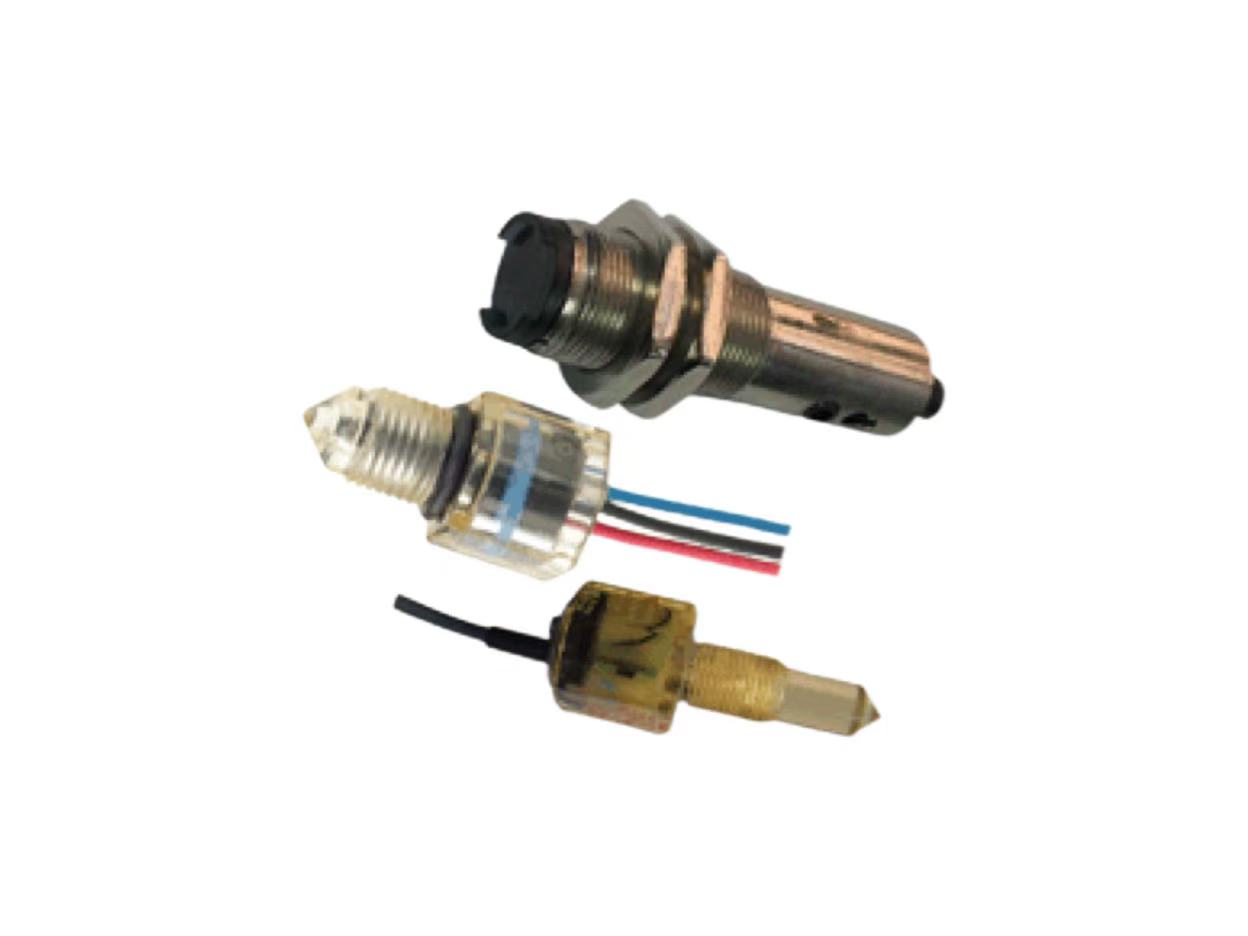
What is a Optical Level Switch?
In the field of high-precision liquid level monitoring, the Optical Level Switch (also known as an optical oil level controller) is a highly efficient sensing device. It utilizes infrared light and the principles of refraction and reflection at the interface of two different media to provide rapid, point-level detection.
As a specialist in industrial automation, ZINACA Instruments provides this guide to help you understand the advantages of optical technology for your liquid management systems.
Working Principle: Light Refraction and Reflection
The operation of an optical level switch is based on how light behaves when it hits a boundary between different substances (like glass and liquid or glass and air).
Two Switch States:
Low Level (Air Interface): When the sensor tip is in the air, the internal infrared light is reflected to the receiving crystal by the sensor's prism. This represents one switch state.
High Level (Liquid Interface): When the liquid rises and touches the sensor tip, the refraction of the light changes. Most of the light is emitted into the liquid, causing the internal receiver to detect a significantly different light intensity. This triggers the second switch state.
Because this detection is based purely on the presence of a medium at the probe tip, it provides an exceptionally reliable "on/off" signal for level control.
Key Features and Advantages
Optical level switches are favored for their compact size and lack of moving parts. Their benefits include:
High Precision and Fast Response: The output is determined solely by whether the probe is in contact with the liquid, making it independent of temperature, pressure, density, or electrical parameters. This ensures high repeatability and millisecond-level response times.
No Mechanical Parts: Since there are no floats or levers to wear out, the sensor offers high reliability, a long service life, and is virtually maintenance-free.
Plug-and-Play Installation: The device requires no commissioning or calibration. You can install it and use it immediately, saving significant setup time.
Multi-point Capability: Due to the ultra-small size of the photoelectric probes, multiple sensors can be integrated into a single measuring body to monitor several level points simultaneously.
Strong Environmental Adaptability: These switches function effectively in vacuum or high-pressure environments, and are unaffected by turbulence, bubbles, vibrations, or steam.
Technical Specifications and Usage
Standard optical switches are typically designed for environments ranging from -25 to 65 ℃. They are ideal for measuring clean, low-viscosity, non-crystalline, and non-freezing liquids.
Common Applications Include:
Small Tanks and Piping: Due to their micro-size, they can be installed in narrow spaces where traditional float switches cannot fit.
Machinery and Equipment: Used for oil level control in compressors and hydraulic systems.
Alarms and Point Control: Perfect for high/low limit detection and fixed-point alarms in clean water or chemical processing.
Specialized Designs for Harsh Conditions
While standard models are for clean liquids, specialized photoelectric level switches can be manufactured with anti-corrosion and high-temperature resistant materials to handle more aggressive industrial media.
Tianjin ZINACA Intelligent Equipment Co., Ltd. provides compact and high-performance optical level sensors designed for seamless integration into your existing machinery. Our sensors focus on energy efficiency, environmental protection, and long-term stability.
For more information on our optical sensing solutions or to request a technical quote, please visit our website at www.zinacainstruments.com or contact our engineering team.
 WhatsApp
 Email
Email
 +8617320288925