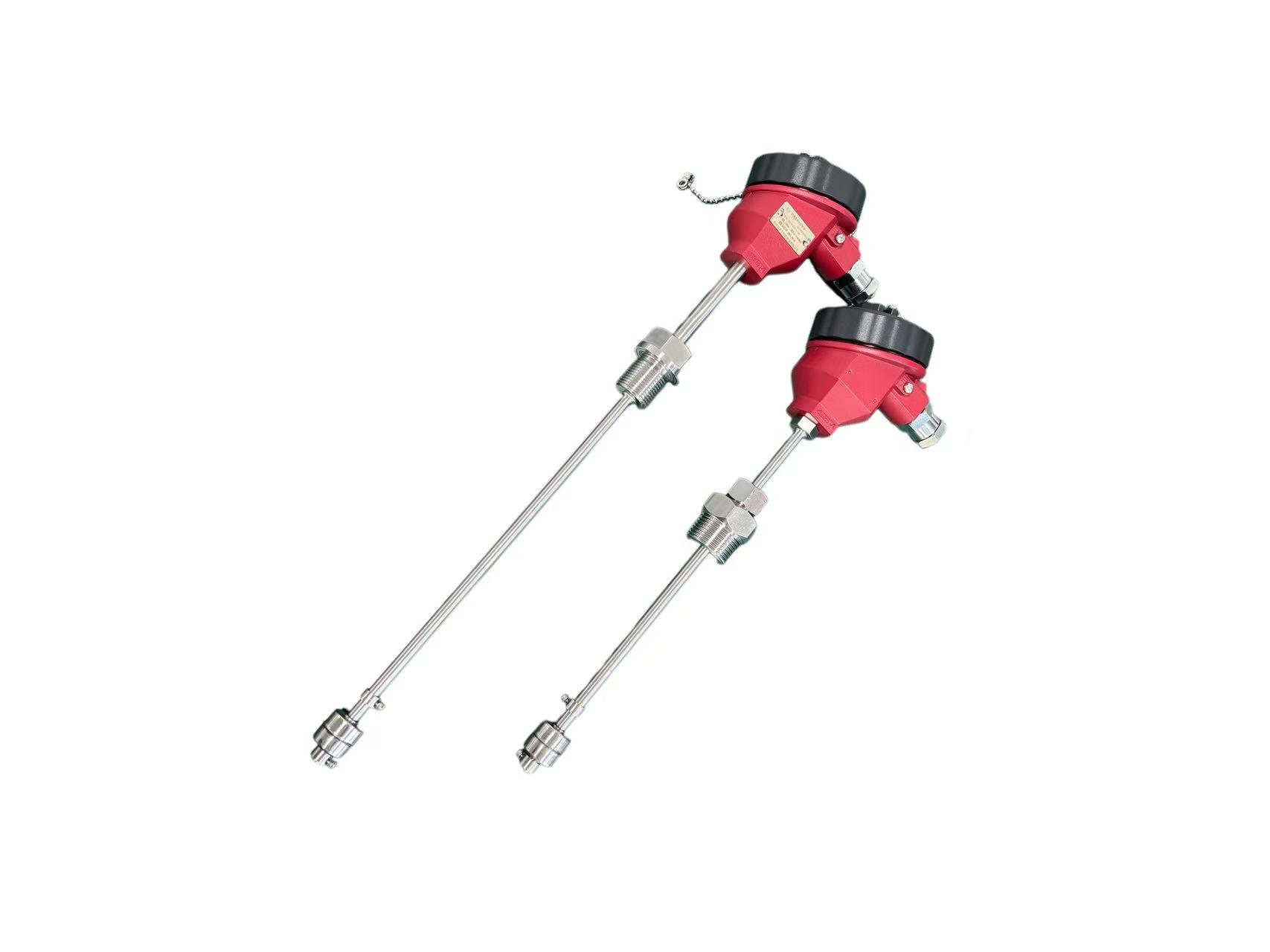
What is a Rod Float Level Switch?
The Rod Float Level Switch (also known as a linked float level switch) is a robust and highly reliable device designed for point-level detection in various industrial applications. By utilizing a simple magnetic coupling mechanism, it provides accurate level control and alarm signaling for industries ranging from electronics and power to water treatment and chemical processing.
As a specialist in industrial automation, ZINACA provides this deep dive into how these switches function and why they are the preferred choice for complex liquid management.
Working Principle: Magnetic Coupling
The operation of a rod float level switch is straightforward, relying on the movement of a magnetic float along a sealed guide rod.
Magnetic Interaction: A sealed, non-magnetic guide rod houses one or more reed switches at predefined positions. A float, containing a special magnetic element, is fitted onto this rod.
Switch Actuation: As the liquid level rises or falls, the float travels with the liquid surface. When the float reaches a level corresponding to a reed switch inside the rod, the magnetic field from the float triggers the reed switch, opening or closing the contact.
Signal Output: This action generates a contact state signal, which can be directly processed by a PLC or monitoring system.
Control Range: Stainless steel stopper rings are placed at the top and bottom of the rod to lock the float's range of motion, ensuring it only triggers the switches within the desired zones.
Key Features and Advantages
The rod float level switch is engineered to operate reliably in diverse and challenging industrial conditions:
Non-Contact Detection: The electronics are fully sealed inside the rod and junction box, ensuring they never touch the process liquid. This prevents wear, corrosion, and tear.
Immunity to Process Variables: The switch is largely unaffected by foam, conductivity, dielectric constants, pressure, vacuum, temperature, steam, condensation, bubbles, boiling effects, or vibration.
Passive Operation: As a passive contact device, it does not require external power for the sensing mechanism itself, making it highly versatile for generic signal processing.
Multi-Point Control: A single unit can be customized with multiple switches along the rod, allowing for complex multi-level control such as high, low, and intermediate setpoints.
High Protection and Low Cost: Featuring an IP65 or higher protection rating, the device offers simple installation, centralized wiring within the junction box, and significantly reduced cabling costs.
Customization and Selection Criteria
Since rod float level switches are often application-specific, ZINACA recommends considering the following factors when selecting your unit:
Material Compatibility: Choose based on your medium's properties, including acid/alkali resistance and temperature. Available materials include SUS304, SUS316L, PP, PVDF, and PTFE.
Configuration:
Basic Type: Factory-set at specific points for immediate installation.
Adjustable Type: Allows on-site operators to customize setpoints for maximum flexibility.
Critical Specifications for Ordering:
Number and position of actuation points.
Actuation form, such as Normally Open or Normally Closed.
Total length of the rod.
Process connection, including thread or flange specifications.
Operating temperature, pressure, and liquid density (specific gravity).
Installation and Maintenance
These switches are designed for "set and forget" reliability. Before installation, the device requires only a one-time calibration and is virtually maintenance-free. Their vacuum-sealed structure ensures they remain robust even in sewage treatment and aggressive chemical environments.
Why Choose ZINACA?
Tianjin ZINACA Intelligent Equipment Co., Ltd. specializes in customized rod float level switches. We provide a full range of material options and configurations tailored to your specific tank geometry and process medium.
Explore our full range of level solutions or contact our technical engineering team to discuss your customized configuration.
 WhatsApp
 Email
Email
 +8617320288925