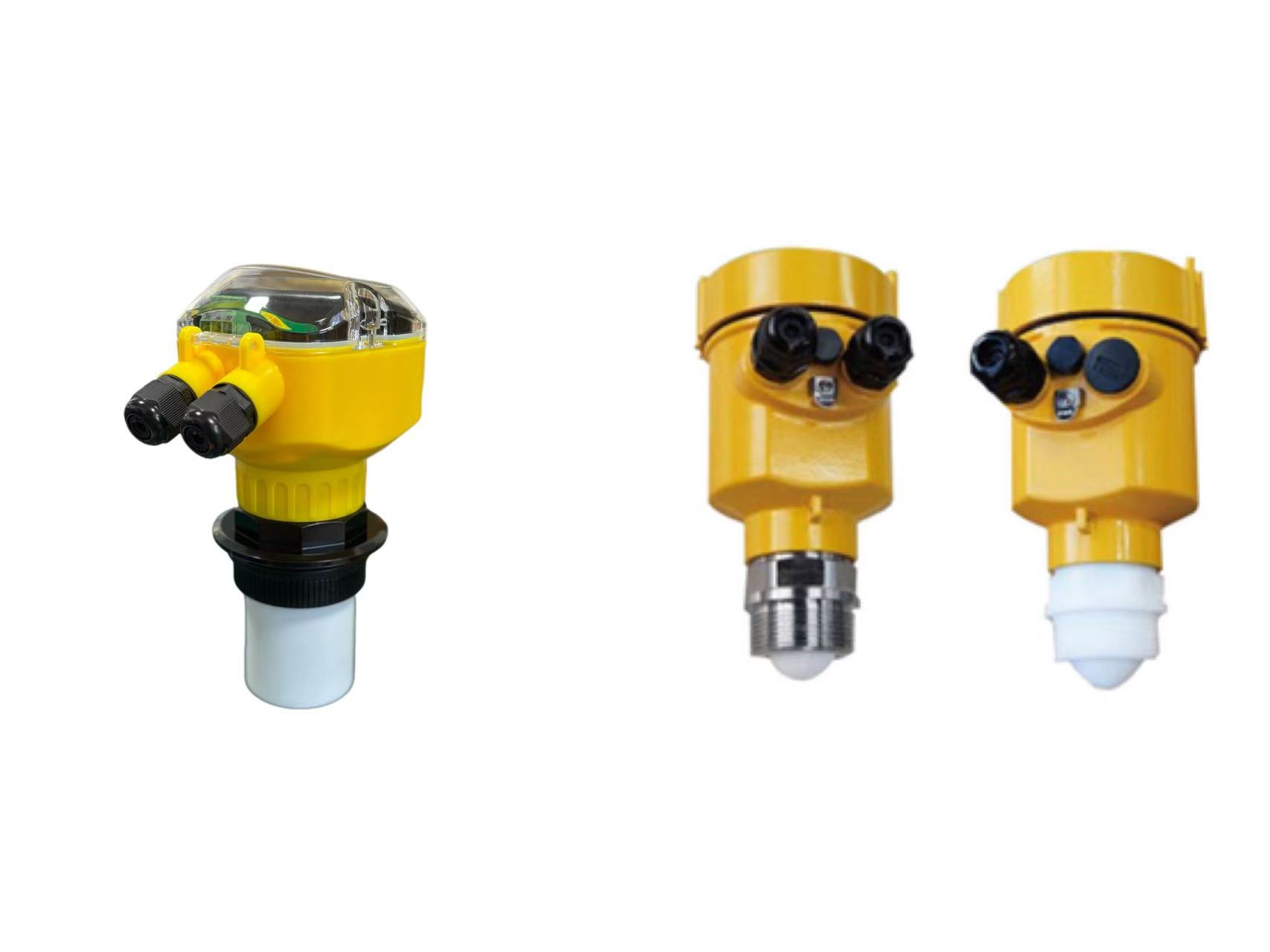
The Difference Between Radar and Ultrasonic Level Transmitters: A Detailed Comparison
In industrial automation, non-contact level measurement is essential for ensuring safety and efficiency. Radar and ultrasonic level transmitters are the two most common technologies used for this purpose. While both provide non-contact measurement, they differ fundamentally in physical principles, environmental adaptability, and precision.
As a professional instrumentation manufacturer, ZINACA Instruments provides this comprehensive analysis to help you make the right choice for your specific process conditions.
One. Measurement Principle: Electromagnetic Waves vs. Sound Waves
This is the most fundamental difference between the two technologies.
Radar Level Transmitter: Operates based on the time-of-flight principle using extremely short microwave pulses (electromagnetic waves). These waves travel at the speed of light. When the pulse hits the surface of the medium, it is reflected back to the antenna. The electronics then convert the travel time into a level signal.
Ultrasonic Level Meter: Controlled by a microprocessor, this device emits ultrasonic pulses (sound waves) from a transducer. The sound waves reflect off the liquid surface and are received by the same sensor. The distance is calculated based on the time interval between emission and reception, using the known speed of sound.
Two. Resistance to Temperature and Pressure
Radar Level Transmitter: Because microwaves do not require a medium to travel (they can move through a vacuum), they are not affected by pressure fluctuations. They have a very wide temperature range. Standard models handle -200 degrees C to 800 degrees C, with specialized ZINACA models reaching up to 1200 degrees C.
Ultrasonic Level Meter: Sound waves rely on air density, which is highly affected by temperature and pressure. These are generally used only in atmospheric pressure vessels. The probe temperature typically cannot exceed 80 degrees C, as temperature significantly alters the speed of sound.
Three. Environmental Adaptability
Radar Advantage: Radar is unaffected by vacuum and can penetrate steam, dust, and inert gases. High-frequency radar handles light foam well, providing a stable reading in complex chemical or oil-and-gas environments.
Ultrasonic Limitations: These cannot be used in a vacuum. If the liquid surface has heavy foam, high steam content, or significant dust, the sound waves will be absorbed or scattered, resulting in a loss of signal.
Four. Precision and Range
Radar Level Transmitter: Offers higher accuracy, typically at the millimeter level (plus or minus 1mm or 3mm). The measurement range is broad, with standard models reaching 35 meters and high-frequency 80G radar covering up to 100 meters.
Ultrasonic Level Meter: Precision is lower and fluctuates with environmental temperature. The range is generally limited to 0 to 30 meters, rarely exceeding 60 meters.
Five. Installation and Maintenance
Radar: Installation is flexible (top, bypass pipe, or stilling well). Debugging is fast via HART handheld programmers or software. With no moving parts, maintenance is minimal.
Ultrasonic: Installation must strictly account for the Blind Zone (Dead Band). The probe must be mounted a certain distance above the highest possible liquid level and must be perfectly perpendicular to the surface. If the surface is within the blind zone, the meter cannot provide an accurate reading.
Summary: Which One Should You Choose?
Choose Ultrasonic if: You have a limited budget, the medium is water or an acid/base solution at ambient temperature and pressure, the environment is clean without steam, and the range is relatively short.
Choose Radar if: You face high temperature or pressure, vacuum conditions, heavy steam or dust, turbulent surfaces with foam, or if you require millimeter precision over a long range (over 30 meters).
ZINACA Instruments: Customized Level Solutions
ZINACA Instruments produces high-precision radar level transmitters equipped with advanced micro-processing technology to filter out interference echoes. We offer 80GHz high-frequency radar for narrow tanks and guided wave radar for low dielectric media. Our OEM services allow for customized anti-corrosion materials like PTFE to match your chemical requirements.
For more information or a product quotation, visit our website atwww.zinacainstruments.comor contact our technical team.
 WhatsApp
 Email
Email
 +8617320288925