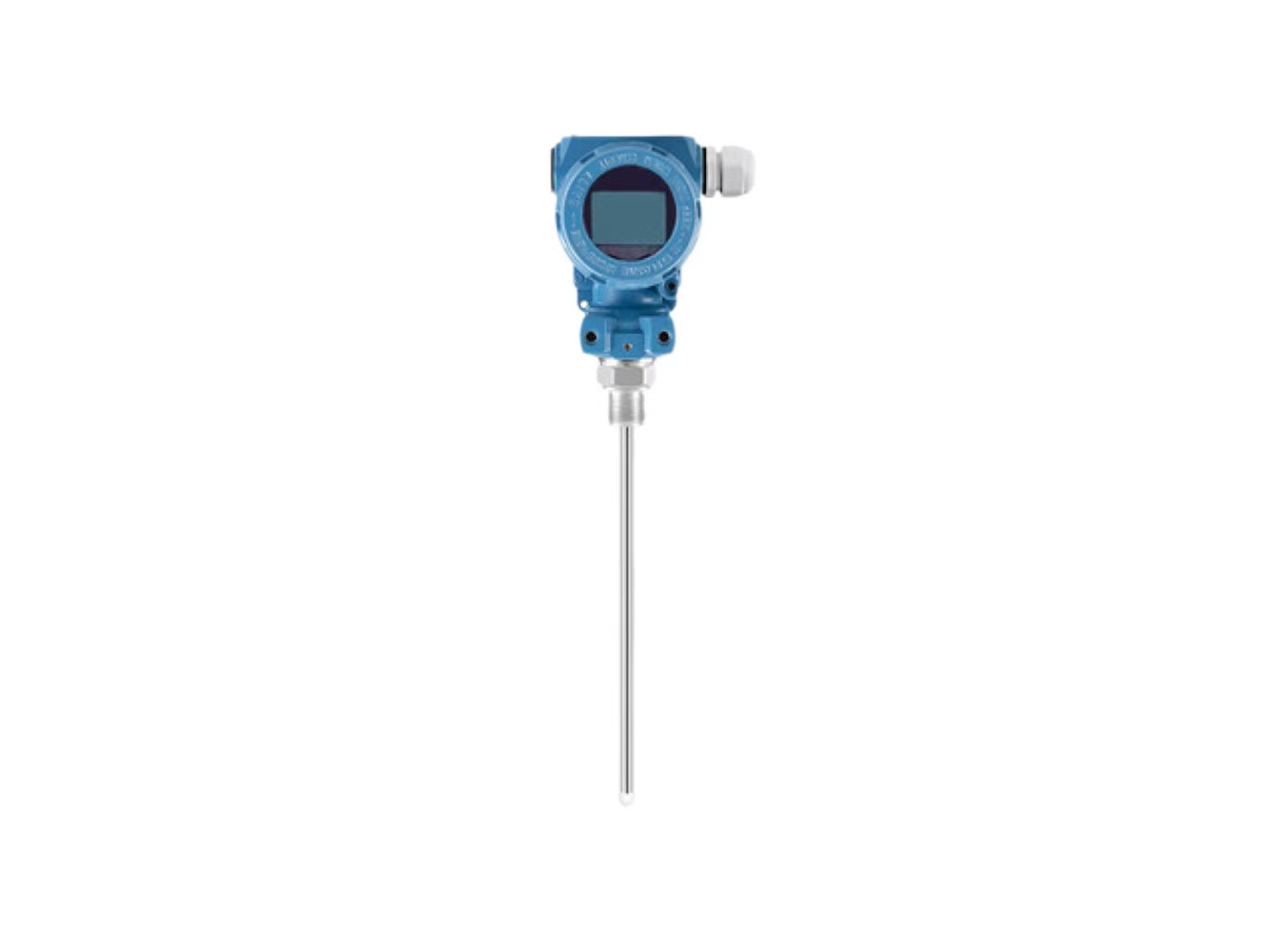
What is a Capacitive Level Transmitter? Principle, Functions, and Industrial Applications
In complex industrial production processes, precise monitoring of liquid levels in storage tanks is core to ensuring safety and efficiency. The Capacitive Level Transmitter has become an ideal choice for the petrochemical, power, and pharmaceutical industries due to its lack of mechanical wear, high sensitivity, and strong environmental adaptability.
As a professional manufacturer of industrial measurement instrumentation, ZINACA Instruments provides this in-depth analysis of how capacitive level transmitters work and their advanced features.
How a Capacitive Level Transmitter Works
The operation of a capacitive level transmitter is based on the electrical property of capacitance. Capacitance refers to the ability of a capacitor to store an electrical charge, which depends on the geometry of the electrodes, the distance between them, and the nature of the dielectric material between the electrodes.
One. Core Structure. A capacitive level transmitter typically consists of two main parts: the measurement electrode, installed inside the container in direct or indirect contact with the liquid, and the reference electrode, which is often the container wall (if metal) or an auxiliary electrode installed at the top.
Two. Measurement Process. When the liquid level changes, the medium surrounding the electrodes also changes. Because the dielectric constant of a liquid is much larger than that of air, as the liquid level rises, it covers more of the measurement electrode surface, increasing the total capacitance value between the electrodes.
Three. Signal Conversion. The transmitter monitors this minute shift in capacitance in real-time and compares it with a preset reference value. Finally, the device converts the change into an industrial standard 4-20mA current signal or voltage signal for transmission to a PLC or DCS system.
Advanced Features of Intelligent Capacitive Level Transmitters
Modern industry demands extreme measurement precision and intelligence. High-end capacitive level transmitters from ZINACA integrate several cutting-edge technologies:
Smart Temperature Compensation: Since capacitance values are sensitive to temperature fluctuations, our transmitters include built-in temperature sensors for real-time calibration and compensation, ensuring accurate readings even under extreme temperature differences.
Multi-point Level Measurement: Advanced transmitters can be equipped with multiple measurement electrodes, allowing for the simultaneous monitoring of liquid levels at different heights, which is highly useful for large storage tanks.
Intelligent Signal Processing: Modern units feature advanced signal processing for filtering, linearization, and fault detection, which effectively eliminates interference caused by liquid surface ripples or agitation.
Remote Monitoring and Communication: Many models support remote communication protocols like HART, RS485, or wireless transmission, allowing management to monitor data remotely from a central control room.
Explosion-proof and Anti-corrosion Design: For hazardous environments or corrosive liquids, these transmitters feature explosion-proof certifications and specialized coatings such as PTFE.
Key Characteristics of Capacitive Level Transmitters
High Precision: Provides continuous, linear, and accurate measurement results with minimal error.
Strong Stability: No moving mechanical parts reduces wear and failure, leading to a very long service life.
Wide Applicability: Can be used to measure not only conductive and non-conductive liquids but also the level of solid powders.
Low Maintenance: Supports automatic calibration and online fault diagnosis, significantly reducing manual maintenance costs.
Alarm Integration: Easily integrates with control systems to trigger high or low-level warnings, preventing tank overflows or empty pump operation.
Why Choose ZINACA Capacitive Level Transmitters?
ZINACA Instruments produces capacitive level transmitters designed for the harshest working conditions. When selecting a level transmitter, we consider the dielectric constant of the medium, the container material, and the operating temperature.
Our product advantages include diverse material options such as 316L stainless steel, Hastelloy, and various non-metallic coatings to handle strong acids and bases. We also utilize advanced anti-coating circuit designs that ignore the influence of material buildup on the probe, ensuring measurement integrity.
If you have any questions regarding the installation, calibration, or selection of capacitive level transmitters, visit our website atwww.zinacainstruments.comor contact our technical experts.
 WhatsApp
 Email
Email
 +8617320288925