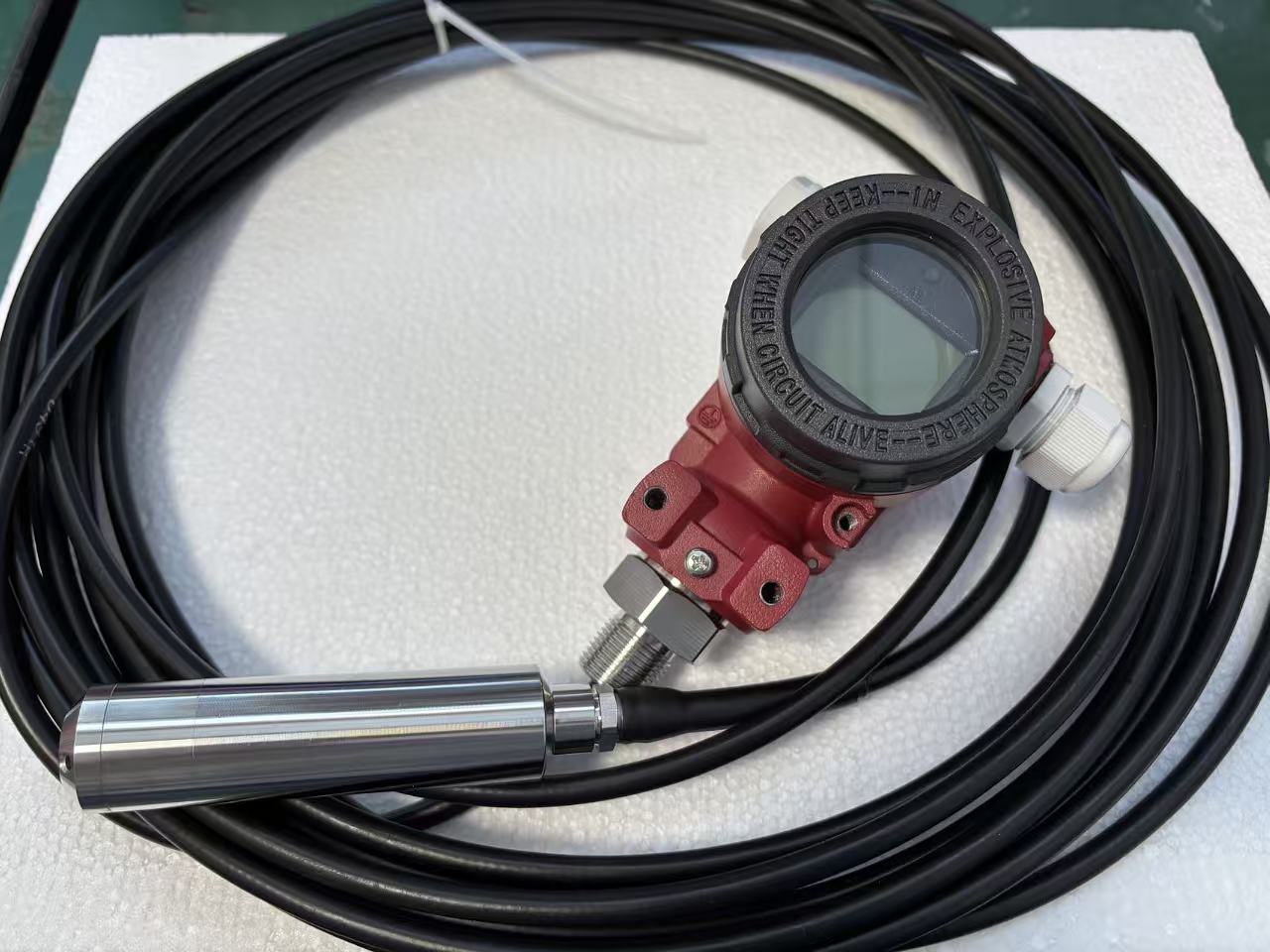
What is a Submersible Level Transmitter?
Overview of Submersible Level Transmitter
In the critical fields of water resource management, sewage treatment, petrochemicals, and general industrial tank monitoring, there is an exceptionally high demand for accuracy, real-time data, and reliability in liquid level measurement. Traditional measurement methods, such as float or capacitance level sensors, often struggle with stability due to interference from media viscosity, foaming, or sedimentation.
Our Submersible Level Transmitter (also known as a Submersible Pressure Transmitter) emerges as the ideal solution to these challenges. This is a multifunctional digital intelligent instrument developed using imported isolated pressure-sensitive components, combined with precision temperature compensation and an enhanced transmission circuit. It is specifically designed for the accurate measurement of liquid height in all types of conductive vessels and low-viscosity liquid media.
Based on the hydrostatic pressure principle, it converts liquid depth into a standard electrical signal linearly proportional to the height. With its solid-state structure, exceptional anti-interference capabilities, and broad media compatibility, our product is the preferred device for continuous level monitoring in high-rise water tanks, sewage treatment pools, and industrial storage containers.
What is a Submersible Level Transmitter?
Product Definition and Core Principle
A Submersible Level Transmitter (or hydrostatic level sensor) uses the static pressure generated by a liquid column to determine its depth.
The product is a solid-state structure, zero-moving-parts hydrostatic level transmitter. It measures the hydrostatic pressure exerted by the liquid column above the sensor when fully immersed. The conversion and amplification circuit utilizes high-quality imported components, providing standard DC 4-20 mA, 0-5V, 0-10V, or digital signal output (RS485, HART) for direct connection to A/D acquisition systems.
Working Principle: The hydrostatic pressure P exerted at the bottom of the sensor is directly proportional to the density of the liquid (ρ), the acceleration due to gravity (g), and the liquid depth (h). Since the liquid density and gravitational acceleration are typically constant in a specific environment, the measured pressure P maintains an accurate linear relationship with the liquid level height h. The transmitter converts this pressure signal into a standard current or voltage output.
Main Application Fields:
The Submersible Level Transmitter is suitable for all media types and low-temperature liquids, especially for vessels without volume restrictions, such as:
Sewage treatment plants for sewage pool level measurement, unaffected by sedimentation.
High-rise water tanks for level detection, ensuring stable water supply operations.
Large storage containers like oil tanks, water cisterns, and water towers.
Hydrological monitoring and measurement of reservoir/river levels.
Summary of Core Features
Our Submersible Level Transmitter offers several key technological advantages:
Wide Media Compatibility: Capable of high-precision measurement across a broad range of media, from clean water to sewage, oil, and even high-viscosity liquids. It remains unaffected by media foaming or deposition.
High Reliability and Durability: The solid-state structure with no moving parts ensures extremely high reliability and a long service life. Utilizing new materials like 316L Stainless Steel/Ceramics/Diffused Silicon, it offers excellent fatigue resistance and durability.
Excellent Anti-Interference: Features power reverse polarity protection, bypass capacitor filtering, and shielding measures to achieve powerful anti-electromagnetic/radiofrequency interference capability (up to 30V/m), ensuring stable signal transmission in harsh field conditions.
How Does a Submersible Level Transmitter Work?
The operation of a submersible level transmitter consists of three main stages: pressure sensing, signal transmission and compensation, and output.
Pressure Sensing and Hydrostatic Measurement
Submersible Installation: The sensor part of the transmitter is fully immersed at the bottom of the liquid, suspended or fixed by its specialized cable, which also functions as the atmospheric pressure compensation tube.
Hydrostatic Pressure Acquisition: The hydrostatic pressure generated by the liquid column acts directly upon the transmitter’s internal isolating diaphragm or pressure-sensitive element (e.g., Diffused Silicon or Ceramic sensor).
Reference Pressure Compensation: As a gauge pressure device, the internal sensor must reference the ambient atmospheric pressure. A hollow vent tube (breather tube) inside the cable connects the back side of the sensor to the atmosphere. This real-time compensation ensures that the sensor measures only the pressure of the liquid column, not fluctuations in barometric pressure.
Signal Conversion and Compensation
Electrical Conversion: The sensing element converts the detected hydrostatic pressure into a weak voltage signal.
Precision Temperature Compensation: The transmitter incorporates an internal temperature sensor. The microprocessor uses a precision temperature compensation algorithm to correct for zero-point and span drift caused by temperature changes. Within the compensated temperature range of 0°C to 50°C, drift is kept below 0.2%, ensuring high accuracy.
Enhanced Transmission Circuit: The circuit features an optimized design with power reverse-polarity protection and overload current limiting, ensuring reliability in poor power-supply environments. Furthermore, its robust shielding measures give it an exceptional EMI/RFI resistance of up to 30 V/m.
Output and Diagnostics
Signal Output: The compensated and amplified signal is converted into standard industrial signals. The transmitter offers multiple output options to suit different control systems:
Analog Outputs: 4-20 mA, 0-5V, 0-10V.
Digital Outputs: RS485 (supporting Modbus protocol) or HART protocol, allowing direct connection to A/D acquisition systems for remote monitoring.
High Reliability and Stability: The solid-state structure ensures high shock and vibration resistance (less than 0.01% variation at 200 Hz G), as well as excellent long-term stability (annual drift less than ± 0.1%).
Applications of Our Submersible Level Transmitter
Due to its high reliability and environmental adaptability, our Submersible Level Transmitter is the ideal choice for dependable and accurate level monitoring in various critical sectors.
Main Application Fields
Sewage Treatment and Environmental Engineering: Sewage Pool Level Measurement: Its design characteristics make it highly suitable for precise level measurement in sedimentation tanks, regulation pools, and aeration basins at sewage treatment plants.
Water Resource Management and Urban Supply: Water Tower and Reservoir Monitoring: Used for monitoring the levels in high-rise water tanks, water towers, underground wells, and reservoirs, ensuring the stable operation of water supply systems and remote data collection.
Industrial Tanks and Process Control: Oil/Low-Viscosity Media Measurement: Measuring the level of oil or other low-viscosity, non-specific media stored in open industrial tanks.
Hydrology and Marine Monitoring: Suitable for remote data acquisition systems used in monitoring river, lake, tidal, and ocean water levels.
Automated Data Acquisition: Digital output options like RS485 or HART allow the transmitter to connect directly to remote A/D acquisition systems, enabling automated and intelligent remote surveillance.
Types of Our Submersible Level Transmitter
Depending on the application environment and media characteristics, our Submersible Level Transmitter offers various probe structure types.
Main Probe Structure Classification
Cable Type: The most common and flexible type, suitable for general tanks, pools, and deep well measurements. Wide range capability, from 0.2 m up to 500 m.
Rod Type: The transmitter is fixed on a rigid rod, suitable for smaller tanks or narrow containers where higher mechanical rigidity and resistance to lateral forces are required. Shorter range capability, typically from 0.2 m up to 3 m.
Armored Cylinder Type: The cable is protected by a metal armor sheath, enhancing resistance to abrasion and mechanical damage. Suitable for harsh environments with agitation or floating debris. Wide range capability, from 0.2 m up to 500 m.
Corrosion-resistant Type: The probe housing and cable sheath are made from special materials (like PTFE Polytetrafluoroethylene), specifically designed for measuring corrosive chemical liquids. Typical range is 0.5 m up to 20m.
How to Choose the Right Submersible Level Transmitter?
Selecting the correct submersible level transmitter requires a comprehensive consideration of media characteristics, measurement range, accuracy requirements, and environmental conditions.
Selection Guide
Determine Range and Installation
Type: Range: Determine the maximum depth to be measured (e.g., 10 m water depth). Our products are customizable up to 500 m. Probe Structure: Choose Cable Type (standard), Rod Type (for rigidity), or Armored Cylinder Type (for high-wear environments) based on container size and media environment.
Media Compatibility and Corrosiveness:
Media: Determine if the liquid is corrosive. Material Selection: Clean water and oil typically use 316L Stainless Steel housing. Corrosive chemicals must use the Corrosion-resistant Type, with the probe housing and cable sheath made of specialized materials like PTFE.
Accuracy and Stability Requirements:
Accuracy Grade: 0.5% is standard for industrial monitoring; 0.2% should be chosen for high-precision applications. Stability: Ensure annual drift is less than ± 0.1% to minimize maintenance and recalibration frequency.
Output Signal and System Integration: Confirm the signal type required by your PLC or DCS system (4-20 mA analog is standard; RS485 or HART is preferred for digital remote acquisition).
Submersible Level Transmitter Price
The product price of a Submersible Level Transmitter will vary based on specific parameters, depending on the following key factors:
Accuracy Grade: 0.2% accuracy provides higher precision than 0.5% and is therefore priced higher.
Probe Type and Material: Specialized materials for corrosive media (PTFE housing) and customized sensors incur higher costs.
Range Depth: Deeper ranges require longer cable lengths, increasing the cost of cabling materials and armored protection.
Output Signal: Transmitters with HART or RS485 digital communication capabilities are typically priced higher than pure analog output models.
If you wish to inquire about the latest pricing for our Submersible Level Transmitter, please feel free to contact us for a current quotation.
Custom Submersible Level Transmitter OEM Service
ZINACA Instruments is a professional manufacturer of industrial automation instrumentation equipment. We specialize in providing highly reliable and high-performance solutions for level, pressure, flow, and temperature measurement.
Our OEM/ODM Service Advantages include:
Custom Range and Depth: Customizing the precise range according to the customer's specific vessel or well depth (from 0.2 m to 500 m).
Special Material Customization: Customizing the probe housing (PTFE), diaphragm (Ceramic/316L), and cable sheath materials for corrosive or special media.
Structure and Protection Customization: Providing customized cable lengths, additional armored protection, or specialized mounting accessories.
Private Labeling and Certification: Offering private labeling (OEM) services and ensuring products meet international quality standards and protection ratings.
If you are seeking Submersible Level Transmitter OEM/ODM Services, please contact our professional team. We are ready to offer flexible and cost-effective collaboration proposals.
Supplier of Submersible Level Transmitter
As a supplier committed to manufacturing high-performance industrial instrumentation, ZINACA Instruments offers highly reliable and accurate Submersible Level Transmitters for global applications.
Our products ensure continuous and stable level monitoring in demanding environments like sewage treatment, water resource management, and industrial control, leveraging imported isolated pressure-sensitive components, powerful anti-interference and anti-vibration capabilities, and an IP68 protection rating.
ZINACA Instrument commits to providing exceptional long-term stability (annual drift less than ± 0.1%), thereby minimizing the need for on-site maintenance.
Please contact us to receive more information, technical specifications, and the latest quotation for our Submersible Level Transmitters.
 WhatsApp
 Email
Email
 +8617320288925