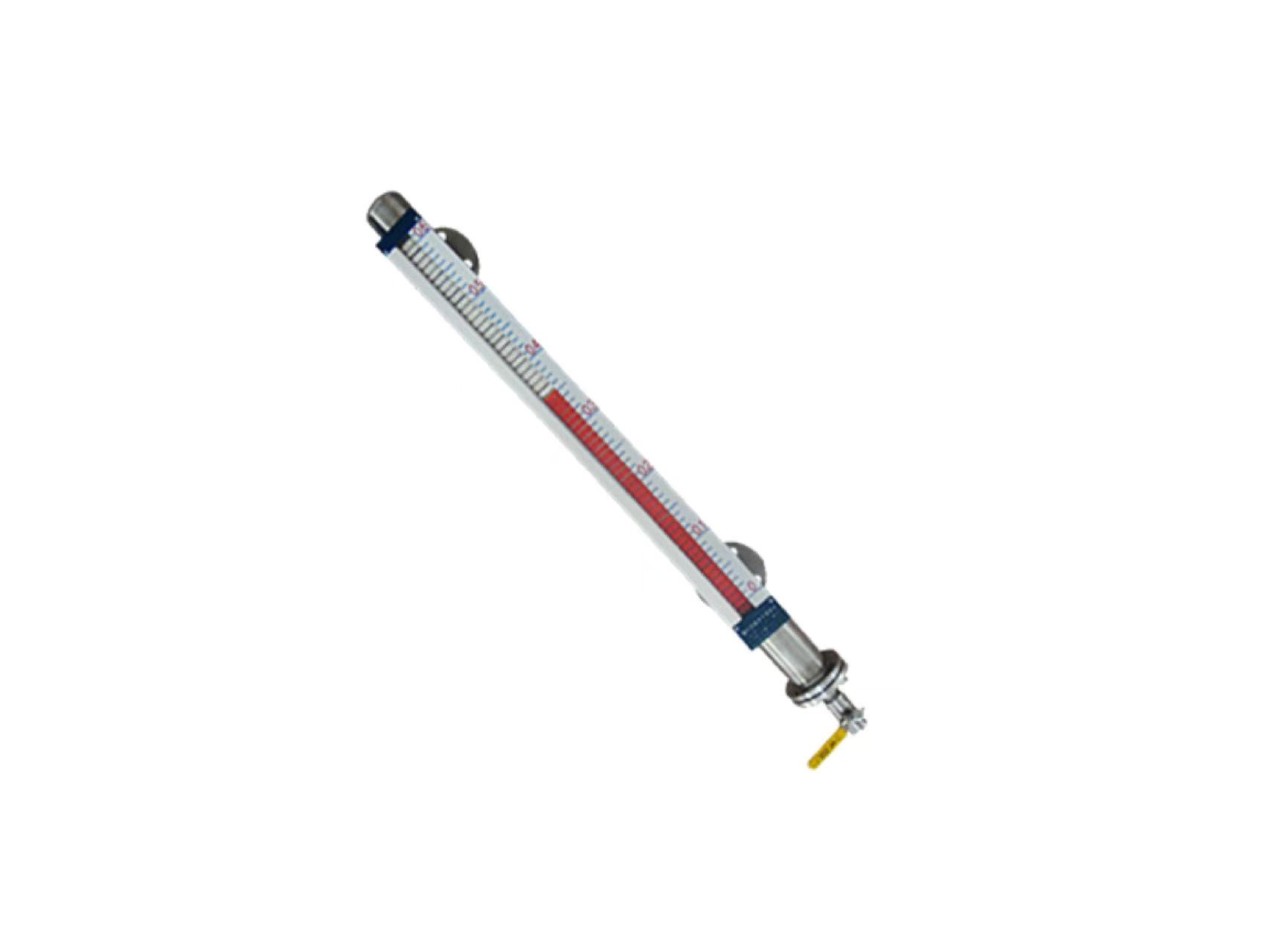
What is a Magnetic Level Indicator?
A Magnetic Level Indicator (MLI), also commonly known as a Magnetic Flap Level Gauge, is a widely used instrument for liquid level measurement. It is highly valued in industries such as chemical processing, petroleum, power generation, and food production due to its simple structure, ease of installation, and long service life.
As a specialist in industrial automation, ZINACA provides this comprehensive overview of how MLIs utilize magnetic coupling to provide safe and highly visible level monitoring.
Working Principle: Buoyancy and Magnetic Coupling
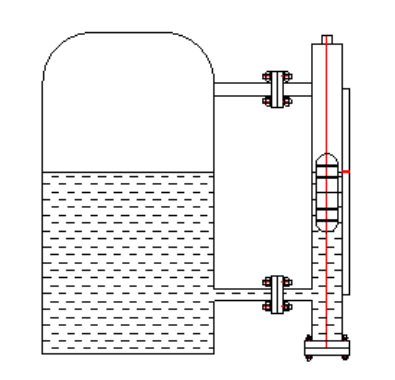
The operation of a Magnetic Level Indicator is based on the principles of buoyancy and magnetic attraction.
Core Components: The device consists of a float (containing a high-strength permanent magnet), a non-magnetic bypass chamber (connected to the tank), and an external indicator rail equipped with magnetic flaps (or rollers).
The Interaction: As the liquid level in the tank changes, the level in the bypass chamber changes accordingly. The magnetic float inside the chamber rises or falls with the liquid.
Visual Display: As the float moves, its internal magnetic field acts through the chamber wall to flip the external magnetic flaps. These flaps typically have two colors (e.g., red and white). As the float rises, the flaps flip from white to red, creating a clear color boundary that directly represents the liquid level.
Structural Features and Advantages
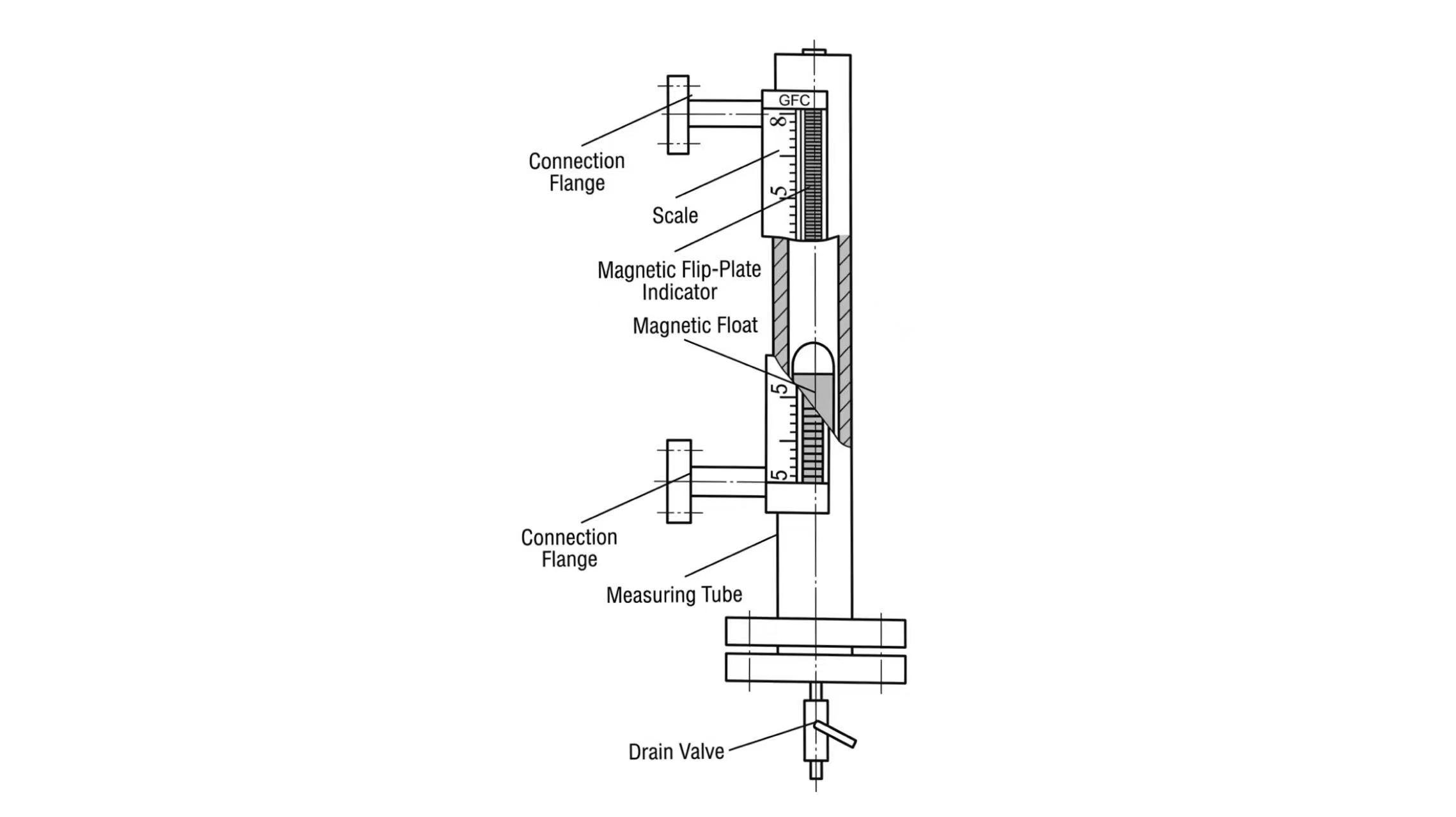
Magnetic Coupling (No Mechanical Wear): Since the float and the indicator are coupled magnetically through the chamber wall, there is no mechanical contact. This eliminates wear and tear and prevents accuracy degradation over time.
Reliable and Intuitive Display: The high-contrast colored flaps offer excellent visibility even from a distance. The display range can be customized to suit specific tank heights.
Simplified Installation: Usually mounted to the side of a vessel via flanges, making it easy to install on both existing and new tanks.
High Pressure and Temperature Resistance: Designed for harsh industrial environments, many models can withstand extreme temperatures and high pressures where glass gauges would fail.
Leak-Proof and Safe: Because the bypass chamber is a sealed metal pipe, the risk of leakage is minimized. This makes it ideal for toxic, corrosive, or hazardous media.
Key Application Areas
MLIs are the preferred choice for measuring dangerous or high-value liquids:
Chemical Industry: Used in reactors and storage tanks containing corrosive or volatile chemicals.
Oil and Gas: Monitoring levels in fuel tanks and pipelines where high reliability and precision are required.
Food and Beverage: Provides accurate monitoring while maintaining strict hygiene and safety standards.
Water and Wastewater Treatment: Increasingly used for monitoring levels in processing and storage basins.
Pharmaceuticals: Offers precise, contamination-free measurement for sensitive media.
Installation and Maintenance Best Practices
To ensure long-term accuracy and stability, consider the following:
Proper Positioning: Ensure the indicator is perfectly vertical and aligned with the vessel to prevent the float from sticking. Use appropriate flange sizes and sealing materials to prevent leaks.
Media Compatibility: Select the correct materials (e.g., Stainless Steel, PVC, or PTFE-lined) based on the temperature, pressure, and corrosiveness of the liquid.
Temperature Considerations: Extreme ambient or process temperatures can affect the magnets. Ensure the model selected is rated for your specific environment.
Cleaning and Visibility: Regularly clean the external display window and flaps, especially in dusty or corrosive environments, to maintain clear visibility.
Calibration and Inspection: Although stable, periodic calibration is recommended. In high-pressure/high-temperature applications, check the float's integrity and the chamber for sediment or scaling that could hinder movement.
Conclusion: A Safe and Visual Solution
The Magnetic Level Indicator is an indispensable "visual sentry" for industrial tank management. Isolating the process liquid within a sealed chamber and displaying the level via magnetic coupling, it provides a safe, clear, and maintenance-free solution for even the most challenging liquids.
For more information on customized MLI configurations or material selection for corrosive media, visit ZINACA at www.zinacainstruments.com or contact our technical support team.
 WhatsApp
 Email
Email
 +8617320288925