What is a Strain Gauge Pressure Transmitter?
A Strain Gauge Pressure Transmitter is a highly reliable device that converts mechanical deformation into an electrical signal to measure pressure. It belongs to the category of piezoresistive sensors and is widely used across various industries due to its durability, high accuracy, and strong resistance to shock and vibration.
As a specialist in industrial automation and instrumentation, ZINACA provides this comprehensive analysis of how strain gauge technology functions and the differences between its main structural types.
Working Principle: Piezoresistive Effect and Force Balance
The operation of a strain gauge pressure transmitter relies on a two-step physical conversion: mechanical strain and resistance change.
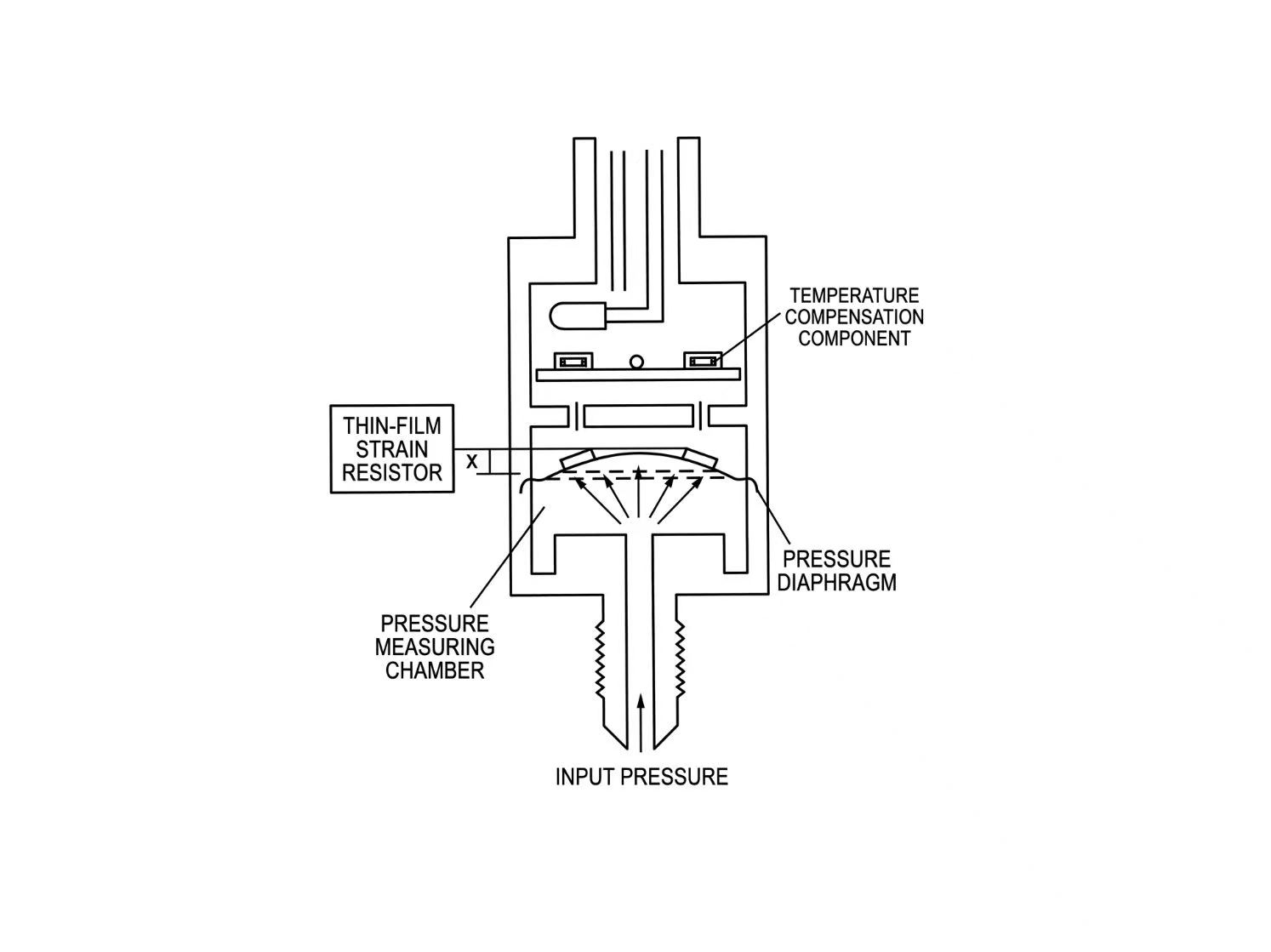
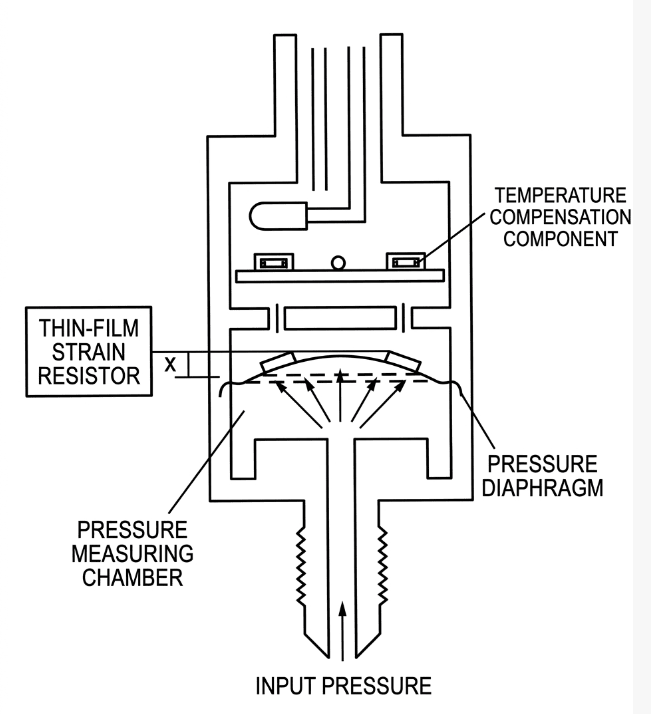
Strain Generation: When pressure from a closed container or system is applied to an elastic element (such as a tube, diaphragm, or cylinder), the element undergoes a minor dimensional change, which is known as strain.
Resistance Alteration: Fine metallic conductors called strain gauges are securely bonded to this elastic element. As the element expands or contracts under pressure, the strain gauges stretch or compress with it.
Signal Output: The change in the physical dimensions of the strain gauge alters its electrical resistance. By integrating these strain gauges into a Wheatstone bridge circuit, the resistance change is converted into a proportional voltage signal, which is then amplified into a standard industrial output (like 4-20mA).
Two Main Structural Types of Strain Gauge Transmitters
Depending on the measurement range and application requirements, strain gauge pressure transmitters are typically designed in one of two configurations:
Flat Tube Pressure Transmitters (For Low-Pressure Measurement)
Structure: This design utilizes a flattened elastic tube that is pinched at both ends. One end remains open to receive the process pressure, while the other end is sealed. Two strain gauges are strategically bonded to the tube—one on the top surface and one on the bottom surface.
Operation: When process pressure enters the open end, the tube tends to round out due to the internal force, changing its cross-sectional dimensions. The attached strain gauges experience this deformation, altering their resistance in direct proportion to the applied pressure.
Cylindrical Pressure Transmitters (For Medium to High-Pressure Measurement)
Structure: This type consists of a robust cylindrical tube with an open, threaded bottom end for process connection and a sealed top capped with a lid. It features a hexagonal section in the middle to facilitate wrench tightening during installation.
Strain Gauges Placement: Two active sensing strain gauges are mounted around the outer periphery of the cylindrical tube where the pressure deformation occurs. Additionally, two temperature-compensating strain gauges are placed on the cap (a non-strained area).
Operation: High pressure enters the open cylinder base, causing the tube walls to expand slightly. The active sensing gauges stretch, changing their resistance. The compensation gauges on the cap do not experience the pressure strain but experience the same ambient temperature, allowing the system to cancel out any thermal drift and maintain strict accuracy.
Key Technical Advantages
Temperature Compensation: By utilizing passive gauges in non-strained zones, the transmitter automatically corrects measurement errors caused by environmental temperature fluctuations.
High Overload Capacity: The underlying metal structures (cylinders or tubes) can withstand immense pressure spikes without catastrophic failure.
Linear Output: The mechanical deformation of premium spring steel or stainless steel elements remains highly linear within their elastic limits, ensuring simple calibration and precise data.
Industrial Application Reference
Flat Tube Types: Ideal for low-pressure gas monitoring, HVAC systems, and ventilation duct pressure controls.
Cylindrical Types: Widely deployed in high-pressure hydraulic systems, oil and gas extraction, aerospace testing, and injection molding machinery.
Tianjin ZINACA Intelligent Equipment Co., Ltd. manufactures advanced strain gauge pressure transmitters engineered from high-grade stainless steel and specialty alloys. Our sensors combine laser-welded isolation diaphragms with high-precision Wheatstone bridge technology to deliver millimeter-level consistency even in high-vibration and cyclic-pressure environments.
To explore our full catalog of pressure, level, and flow instruments, visit our official website atwww.zinacainstruments.comor reach out to our engineering support team for tailored solutions.
 WhatsApp
 Email
Email
 +8617320288925