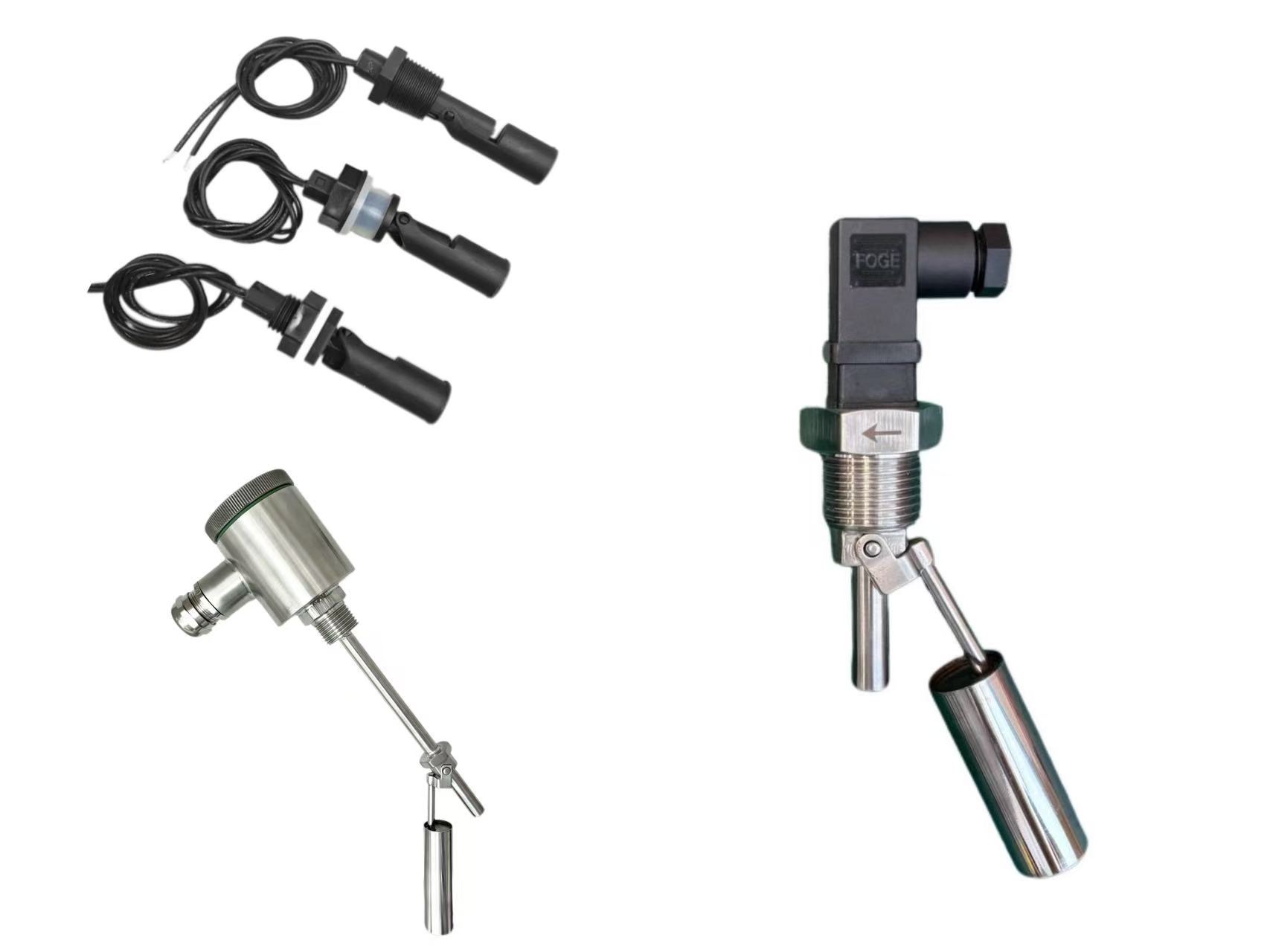
What is a Mini Float Level Switch?
The Mini Float Level Switch is a highly efficient, compact, and cost-effective device designed for point-level detection in small tanks and equipment. Its simple mechanical structure ensures high reliability across various industrial and commercial applications.
As a specialist in precision sensing, ZINACA Instruments provides this technical breakdown of the mini float level switch’s capabilities.
Working Principle: Magnetic Reed Interaction
The operation of a mini float level switch is direct and purely mechanical, requiring no complex electronic circuits to detect the liquid.
Structural Setup: A non-magnetic metal (stainless steel) or plastic (PP) stem contains one or more sealed reed switches. A hollow float, equipped with an internal ring-shaped permanent magnet, slides along this stem.
The Switching Action: As the liquid level rises or falls, the float moves accordingly. When the float’s internal magnet aligns with the reed switch inside the stem, the magnetic field forces the reed contacts to close (or open), generating an electrical signal.
Contact States: "Normally Open" (NO) and "Normally Closed" (NC) refer to the state of the switch when no liquid is present (the dry state).
Basic Technical Parameters
Standard configurations for ZINACA mini float switches include:
Temperature Range: -20°C to 120°C (Stainless Steel models); up to 80°C (PP plastic models).
Pressure Resistance: Up to 1.5 MPa.
Contact Capacity: 70W / 250VAC, 200VDC.
Maximum Switching Current: 0.7A.
Maximum Operating Current: 1.0A.
Note: Customized versions for higher pressures or temperatures are available upon request.
Installation and Usage Guidelines
To ensure the accuracy and longevity of your level switch, follow these industrial installation standards:
Avoid Turbulence: Install the switch away from the liquid inlet. Incoming flow can cause the float to bounce, leading to false signals.
Agitated Environments: If installed in a tank with an agitator, use a "still pipe" (wave guard) or a protective baffle to shield the float from waves.
Mounting Options: Use L-shaped brackets for concrete walls. When using flange connections, ensure the inner diameter of the pipe is larger than the float diameter.
Electrical Matching: The load of the controlled circuit must match the contact capacity of the switch. For high-power loads, use the switch to trigger an intermediate relay.
Liquid Density: The specific gravity (density) of the measured liquid must be greater than the specific gravity of the float.
Calibration: Actuation points are factory-set to the user's specifications. Do not adjust the float position or stop rings manually to avoid damaging the calibration.
Conclusion: Simple, Compact, and Reliable
The mini float level switch is the go-to solution for high/low limit alarms in water dispensers, humidifiers, medical equipment, and small industrial tanks. Its lack of complex parts makes it virtually maintenance-free once installed correctly.
For more information on customized stem lengths or material selections (SUS304 vs. PP), visit ZINACA Instruments at www.zinacainstruments.com or contact our engineering support team.
 WhatsApp
 Email
Email
 +8617320288925